
LRO Images Reveal New Lunar Crater Formed by May 2024 Impact
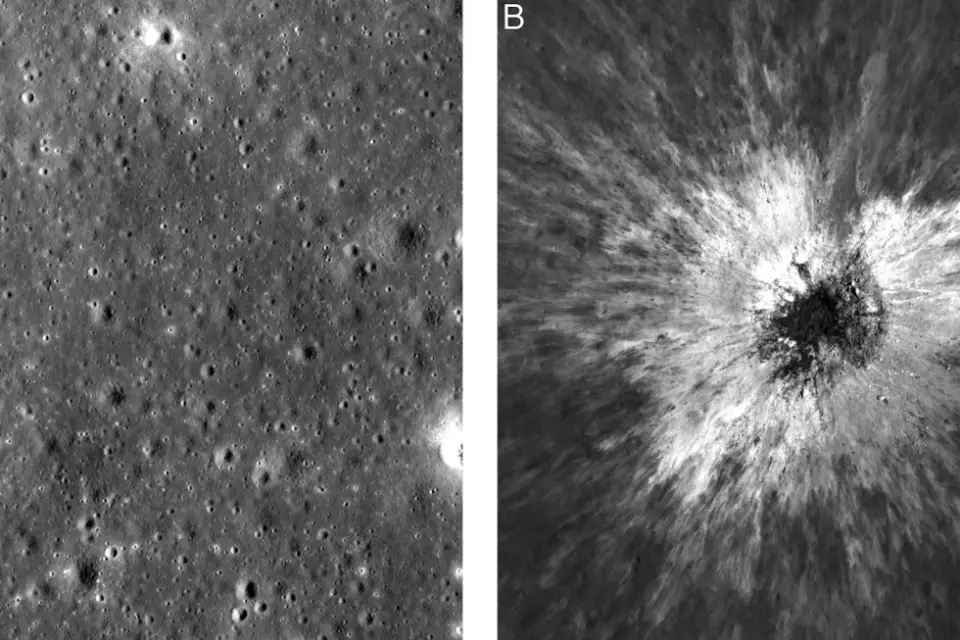
NASA's Lunar Reconnaissance Orbiter has identified a new crater on the Moon's surface, captured in images from May 2024. The discovery was announced by AP News on September 16, 2026, and involves imagery provided by Intuitive Machines. This finding adds to the growing catalog of recent lunar impacts, though the specific cause of this particular crater is not detailed in the primary report.
Key points
- NASA's Lunar Reconnaissance Orbiter (LRO) captured before-and-after images of a new crater on the Moon.
- The images were taken in May 2024.
- The discovery was reported by AP News on September 16, 2026.
- Intuitive Machines is credited with providing the imagery or data for the discovery.
- The article notes the crater is 'newly-discovered' but does not specify its size or the object that caused it in the provided text.
Background
This discovery follows a series of recent lunar impact events documented in 2026. In August 2026, a SpaceX Falcon 9 upper stage crashed into the Moon, creating a 60-foot (18-meter) crater, which was confirmed by both NASA's LRO and South Korea's Danuri orbiter. This event highlighted the growing issue of space debris impacting the lunar surface. The May 2024 crater mentioned in the current report predates this 2026 event but contributes to the ongoing scientific interest in monitoring fresh lunar impacts, whether from natural asteroids or human-made debris.
Why it matters
The identification of new craters, even those discovered retrospectively, is crucial for understanding the Moon's recent geological history and the impact of space activities. As private and government missions increase, tracking these impacts helps assess risks to future lunar infrastructure and provides data for planetary defense and space governance discussions.
What to watch
NASA and other space agencies will likely continue to analyze the May 2024 imagery to determine the size, depth, and composition of the ejecta to identify the impactor. This data may be compared with the August 2026 SpaceX debris impact to refine models of lunar surface changes and debris tracking.
Want the full story? Read the original reporting
Read on AP News