
22 Years Ago: NASA’s Genesis Mission Crashes in Utah, Shattering Solar Wind Samples
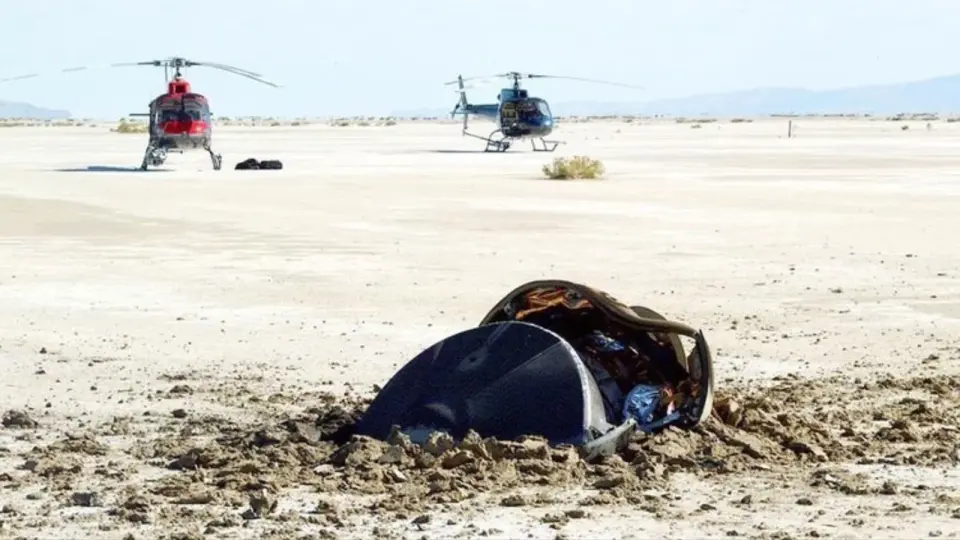
On September 8, 2004, NASA’s Genesis spacecraft crash-landed in the Utah desert after a parachute failure. This $264 million mission, the first robotic sample-return effort since Apollo 17, aimed to collect solar wind particles at the L1 Lagrange point, approximately 1 million miles from Earth. The impact shattered the ultrathin semiconductor wafers used to capture atoms, forcing scientists to manually recover thousands of shards. Despite the failure, researchers successfully salvaged enough material to analyze the sun’s composition, marking a significant, albeit flawed, milestone in space exploration.
Key points
- Genesis was NASA’s first sample-return mission since 1972 and the first to retrieve material from beyond the Moon.
- The spacecraft collected solar wind particles using ultrathin semiconductor wafers while orbiting the L1 Lagrange point.
- A design flaw caused the parachute to fail, resulting in a high-impact crash in the Utah desert.
- The impact shattered the sample containers into thousands of tiny shards, requiring manual recovery by scientists.
- Despite the crash, researchers successfully salvaged and analyzed the solar wind samples.
Background
This event highlights the challenges of robotic sample-return missions, a theme relevant to current NASA efforts. Recent archive coverage notes the complexity of orbital mechanics and spacecraft servicing, such as the canceled rescue of the Swift gamma-ray observatory due to attitude-control failures. Additionally, the Artemis II crew’s recent Congressional Space Medal of Honor recognition underscores the ongoing push for human and robotic exploration beyond Earth, building on the foundational, albeit imperfect, attempts of the early 2000s.
Why it matters
The Genesis mission demonstrated the extreme difficulty of returning delicate samples from deep space. While the crash was a technical failure, the successful recovery of shattered samples proved that robotic sample-return was feasible, paving the way for future missions. It highlighted the critical importance of reliable landing systems and provided valuable data on solar wind composition, contributing to our understanding of the sun’s interaction with the solar system.
What to watch
NASA continues to refine sample-return technologies for future missions, including those targeting the Moon and Mars. The lessons from Genesis, particularly regarding parachute reliability and sample preservation, inform current engineering standards for robotic landers. Additionally, ongoing solar observation missions, such as those tracking coronal mass ejections, benefit from the foundational data collected by earlier probes like Genesis.
Want the full story? Read the original reporting
Read on space.com