
Hubble’s deep dive shows Andromeda winding down its star formation
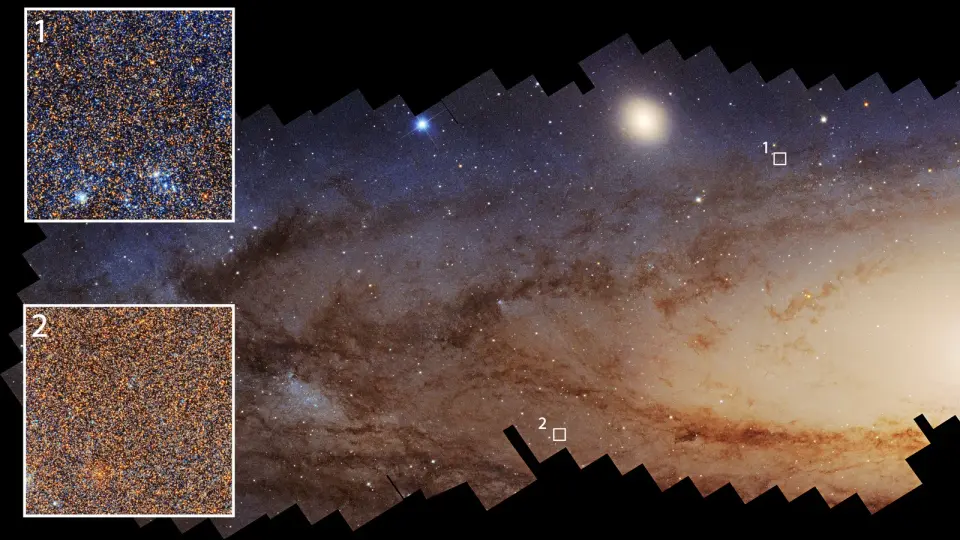
Using two major Hubble surveys mapping roughly two-thirds of Andromeda’s disk, researchers traced star formation over the past 500 million years and found the galaxy’s rate has declined from about 1 solar mass per year to roughly 0.2 per year, with most recent star formation concentrated in a ring about 32,000 light-years from the center. This winding-down pattern suggests Andromeda is returning to a quiescent state after a past starburst likely tied to a merger with its companion M32; its collision with the Milky Way, about 5 billion years away, remains uncertain. The work, published July 27, 2026 in The Astrophysical Journal, underscores Hubble’s detailed view and points to broader surveys by NASA’s Roman Space Telescope.
- Hubble telescope takes one of the most detailed looks at neighboring Andromeda galaxy ever — Space photo of the week Live Science
- Andromeda’s star formation is slowing down Astronomy Magazine
- NASA’s Hubble Shows Star Formation in Andromeda Galaxy Winding Down NASA Science (.gov)
- Milky Way's neighbour Andromeda Galaxy losing its ability to form new stars: Study | Andromeda Galaxy is about 2.5 mn light-yrs away | Inshorts Inshorts
- Star formation in Andromeda has been declining for half a billion years Universe Space Tech
Want the full story? Read the original reporting
Read on Live Science