
JWST Reveals Filament Recycling That Feeds Supermassive Black Holes
TL;DR
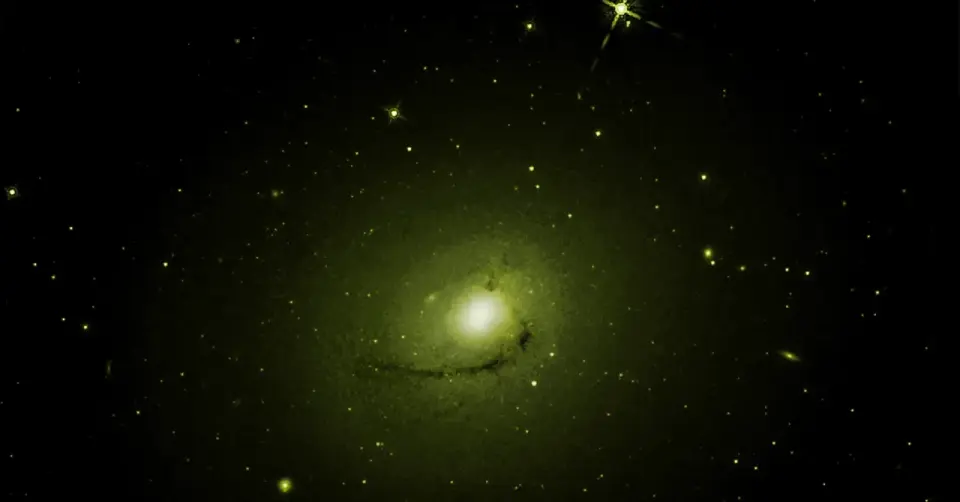
New JWST observations of NGC 4696 show an 800-light-year rotating gas disk fed by filaments that cool and funnel gas toward the central black hole; magnetic fields transfer angular momentum, enabling accretion, while the disk’s wobble shifts jets to heat gas more evenly, illustrating a self-sustaining cosmic recycling that lets black holes keep growing and may occur in other clusters.
- It’s Becoming Clear Why Black Holes Never Run Out of Fuel WIRED
- James Webb Space Telescope discovers how black holes feed themselves Space
- JWST captures rare glimpse of early black hole growing inside network of young galaxies Phys.org
- The James Webb Space Telescope spent nearly eight hours staring into NGC 4696, a galaxy 145 million light-years away, and watched a river of cool gas pour into an 800-light-year disk spinning at 600 kilometers per second, feeding the supermassive black Space Daily
- JWST captures black hole recycling its own fuel MSN
Want the full story? Read the original reporting
Read on WIRED