Tag

Accretion

All articles tagged with #accretion

Distant Black Hole Fades in a Human-Scale Timespan
space14 days ago

Distant Black Hole Fades in a Human-Scale Timespan

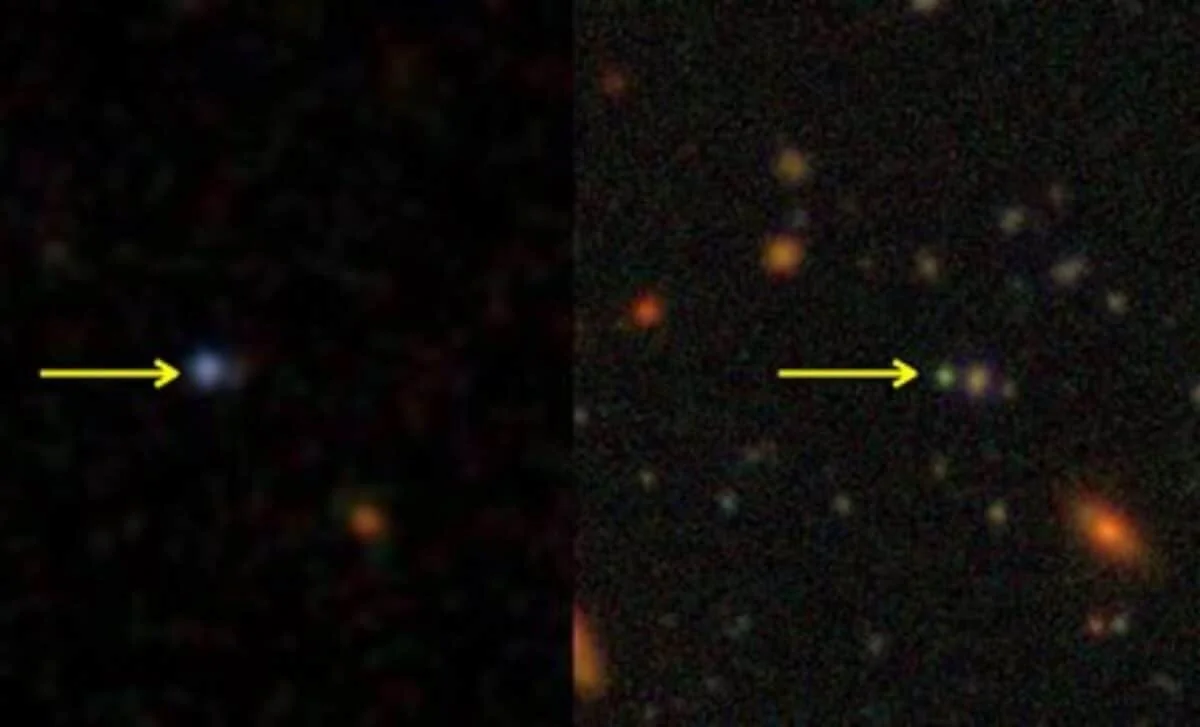
Astronomers tracked galaxy J0218−0036 (about 10 billion light-years away) and found its central supermassive black hole dimmed by about 20x overall and ~50x in the active nucleus from the early 2000s to 2023. Dust obscuration was ruled out, pointing to an intrinsic drop in accretion with the Eddington ratio falling from ~0.4 to ~0.008. The observed e-folding timescale is roughly 2,000 days in the observed frame (~700 days rest frame), far faster than standard models predict, suggesting a change in accretion mode and challenging current black hole growth theories.

From Frenzy to Freeze: Chandra Maps a 10-Billion-Year Slowdown in Black Hole Growth
science16 days ago

From Frenzy to Freeze: Chandra Maps a 10-Billion-Year Slowdown in Black Hole Growth

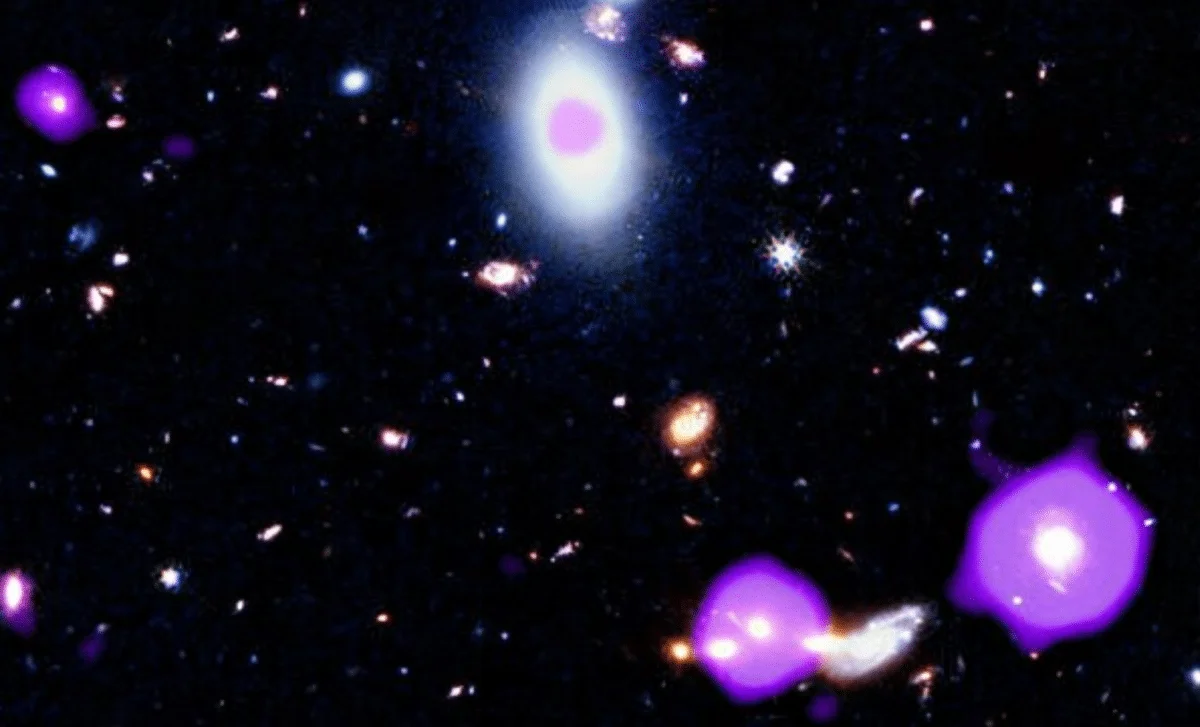
NASA’s Chandra X-ray Observatory shows that supermassive black holes grew rapidly in the early universe but have slowed dramatically over more than ten billion years, likely due to dwindling cold gas, fewer galaxy mergers, and feedback processes; the study combines multiple X-ray datasets to provide a comprehensive view of this long-term decline and its implications for how galaxies evolve.

"Measuring the Speed of Neutron Star Jets: A Breakthrough Discovery"
astronomy2 years ago

"Measuring the Speed of Neutron Star Jets: A Breakthrough Discovery"

Astronomers have successfully measured the speed of jets produced by an accreting neutron star for the first time, revealing a speed of 38 percent of the speed of light. This breakthrough could help answer questions about the mechanisms accelerating these jets and their potential impact on galaxy development. The study, published in Nature, utilized a combination of telescopes to observe the jets and may have broader implications for understanding the similarities and differences between jets produced by black holes and neutron stars.

"Unveiling the Origins of Intense Light in Tidal Disruption Events"
astronomy2 years ago

"Unveiling the Origins of Intense Light in Tidal Disruption Events"

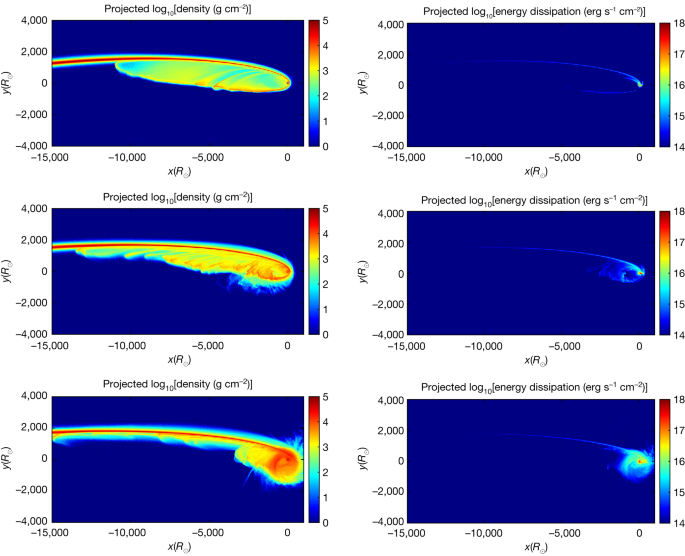
A study suggests that the peak light in tidal disruption events, where a star is torn apart by a black hole, may originate from shocks between the debris stream and the accretion disk. The research, based on simulations, proposes that these stream-disk shocks can produce the observed optical and ultraviolet emission in such events, shedding light on the mechanisms driving these dramatic astronomical phenomena.

Cracking the Code: Unraveling the Magnetic Secrets of Black Hole Accretion
science-and-technology2 years ago

Cracking the Code: Unraveling the Magnetic Secrets of Black Hole Accretion

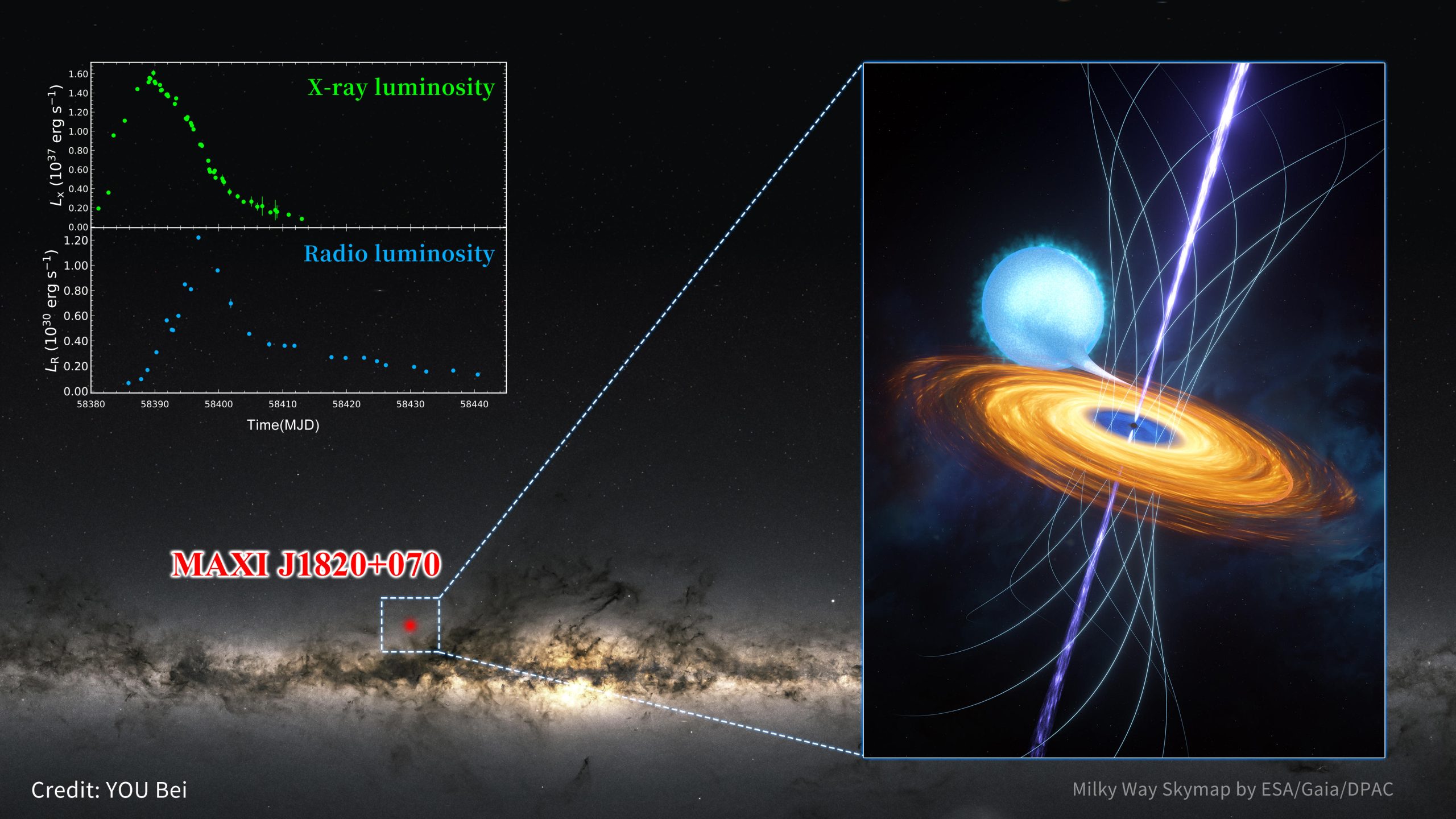
Scientists have made a breakthrough in understanding the magnetic field transport processes and the formation of a magnetically arrested disk (MAD) near a black hole. Using multi-wavelength observations of the black hole X-ray binary MAXI J1820+070, researchers discovered that the radio emission from the black hole jet and the optical emission from the outer region of the accretion flow lag behind the hard X-rays from the inner region by about eight and 17 days, respectively. These observations provide direct evidence for the existence of a MAD and shed light on the formation and transport mechanisms of magnetic fields in black hole accretion.

Astro Spin: Unraveling the Mystery of Rapid Astrophysical Rotation
astronomy2 years ago

Astro Spin: Unraveling the Mystery of Rapid Astrophysical Rotation

Only black holes and neutron stars can spin hundreds of times per second, usually by accreting material from a nearby companion. The objects need to be small and dense with strong surface gravity to maintain such high spin rates. Accretion of additional matter can speed up the spin, and the spin is maintained by the weak magnetic field of millisecond pulsars, which produces predictable pulsed emissions.

Stunning Detail Reveals Black Hole and Powerful Jet.
astronomy2 years ago

Stunning Detail Reveals Black Hole and Powerful Jet.

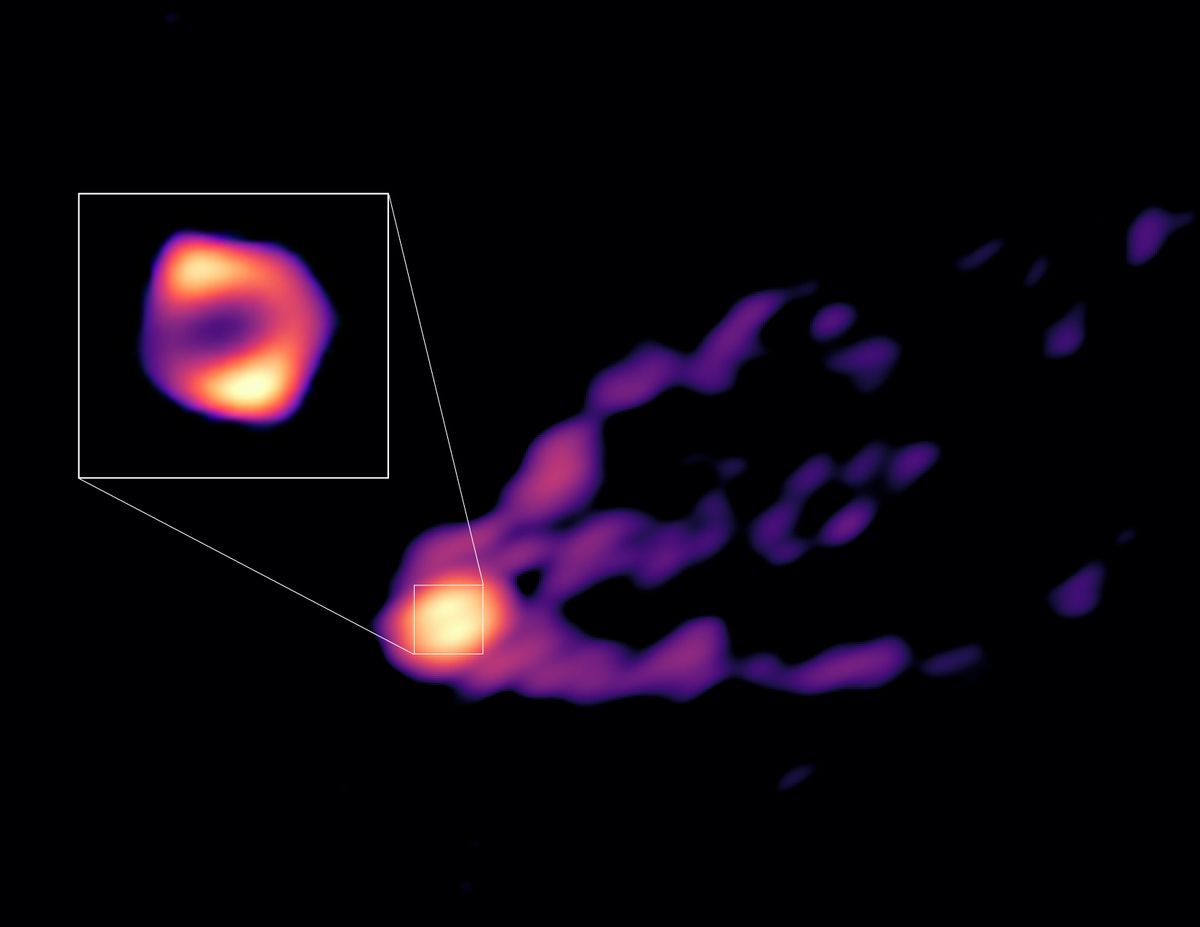
Researchers at the Shanghai Astronomical Observatory have captured a panoramic image of the black hole and its jet in Messier 87 (M87) at a new 3.5 mm wavelength, revealing more details about the surrounding material and ring-like structure. Surprising findings suggest possible winds causing turbulence around the black hole. The participation of ALMA and GLT in the GMVA observations and the resulting increase in resolution and sensitivity of this intercontinental network of telescopes has made it possible to image the ring-like structure in M87 for the first time at the wavelength of 3.5 mm.

"First-ever direct image of black hole's powerful jet reveals new insights"
astronomy3 years ago

"First-ever direct image of black hole's powerful jet reveals new insights"

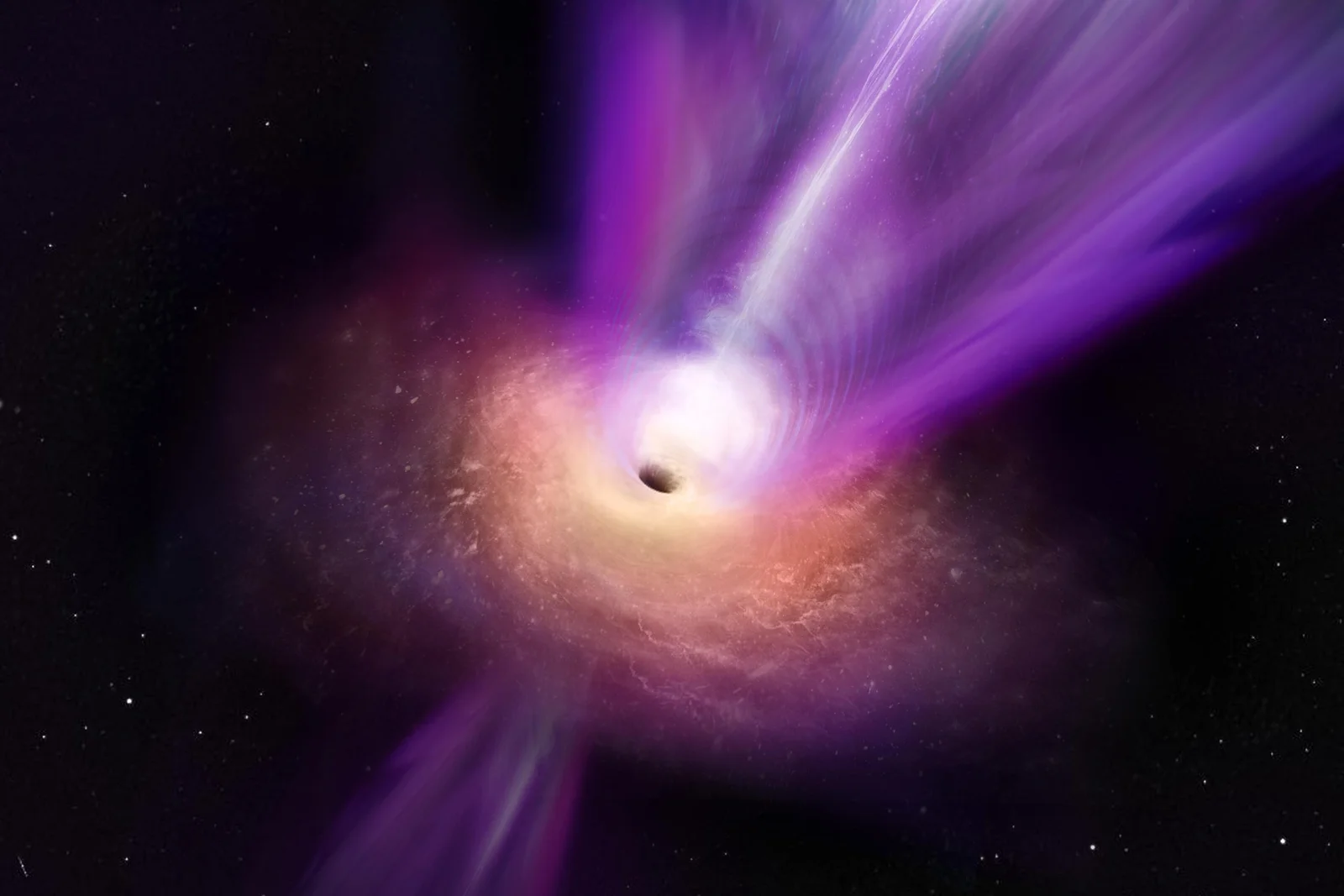
Astronomers have captured the first direct image of a black hole as it blasts out a powerful jet. The image shows how the base of such an astrophysical jet connects to matter swirling around a supermassive black hole before being fed to its surface. The historic first image of the M87 central supermassive black hole was taken by the Event Horizon Telescope (EHT) collaboration in 2017 and unveiled two years later. This new image of M87 and the outflow erupting from it was created using 2018 data from radio telescopes with the Global Millimetre VLBI Array (GMVA), the Greenland Telescope and the Atacama Large Millimeter/submillimeter Array (ALMA).