
JWST spots solar-system-sized 'black hole star' in the early universe
TL;DR
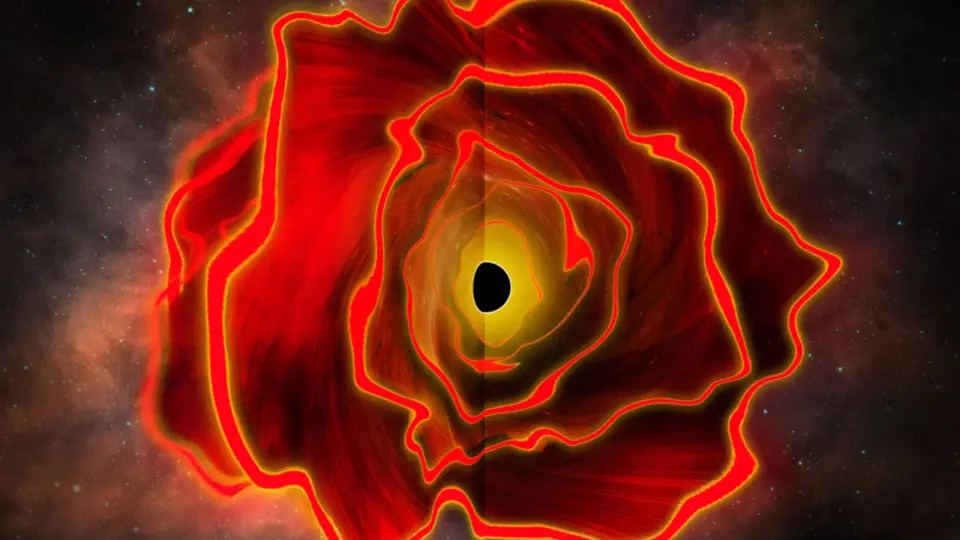
Astronomers using the James Webb Space Telescope have spotted MoM-BH*-1, a solar-system-sized, red, gas-enshrouded object about 660 million years after the Big Bang. Interpreted as a black hole star—a massive black hole wrapped in a cocoon of dense gas—the object could be the best evidence yet for this hypothetical class and may explain the mysterious 'little red dots' seen by JWST. The central black hole could weigh up to about 100,000 solar masses, and while previous candidates existed, MoM-BH*-1 is farther away and thus more informative; further observations are needed to confirm the model and understand how such objects form.
Topics:sciencespace#black-hole-star#early-universe#james-webb-space-telescope#little-red-dots#mom-bh-1#space
- Black hole star? Solar-system-size 'dot' from the early universe is our best evidence yet of a brand-new type of cosmic object Live Science
- A gas-enshrouded and gas-reddened black hole at cosmic dawn Nature
- Astronomers discover black hole star for the first time ever FOX Weather
- Astronomers Peered at the Early Universe and May Have Discovered a New Kind of Celestial Object: Black Hole Stars Smithsonian Magazine
- Astronomers identify new type of 'black hole star' in universe while hunting space mystery KCCI
Want the full story? Read the original reporting
Read on Live Science