
Katalyst Stabilizes LINK Spacecraft, Sets Late-August Rendezvous with Swift Observatory
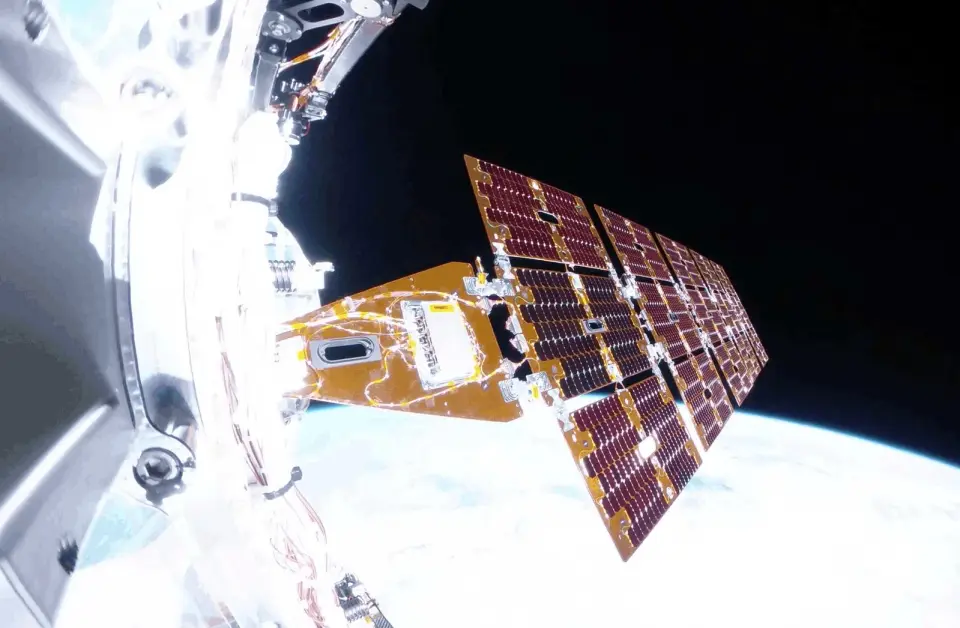
Katalyst Space Technologies has successfully slowed the spin of its LINK spacecraft, reducing its rotation from 9 to 1.47 degrees per second using electric thrusters. The company plans to upload a software update to restore attitude control and reach NASA’s Neil Gehrels Swift Observatory by late August. This mission aims to boost the 22-year-old observatory’s orbit before it decays, a high-risk operation that could extend the telescope’s life and prove commercial on-orbit servicing capabilities.
Key points
- LINK spacecraft spin reduced from 9 to 1.47 degrees per second using less than 100 grams of fuel.
- Katalyst plans to upload a flight software update to enable attitude control in the current configuration.
- Rendezvous with Swift Observatory is now targeted for late August, a few weeks later than originally planned.
- Swift Observatory is expected to deorbit late this year or early next year without intervention.
- The $30 million mission is the first attempt by Katalyst to grapple and boost another satellite.
Background
LINK launched on July 3, 2026, on a Pegasus rocket to service NASA’s Swift Observatory. The mission, a collaboration between NASA, Katalyst Space, and Northrop Grumman, aims to raise Swift’s orbit by approximately 150 miles to prevent its decay. Swift, a 22-year-old gamma-ray burst observatory, lacks the ability to raise its own orbit and is expected to fall back to Earth by late 2026 or early 2027 if not boosted. The mission is considered high-risk but offers significant benefits to NASA and the broader space industry by demonstrating on-orbit servicing capabilities.
How outlets are covering it
SpaceNews reports that Katalyst is making progress in recovering from LINK’s technical issues, noting that the company has not disclosed the cause of the attitude control loss or how much fuel remains. CNN emphasizes the uncertainty of the mission’s outcome, highlighting the risk that Swift could deorbit if the rescue fails. NASA Science confirms the progress in slowing the spin and the plan to upload a software update, framing the mission as a critical step in preserving Swift’s scientific value. Space.com focuses on the urgency of the situation, noting that engineers are racing to save the stricken spacecraft before it is too late. All sources agree on the technical progress but differ in their emphasis on the risks and implications of the mission.
Why it matters
The success of the LINK mission could extend the life of NASA’s Swift Observatory, allowing it to continue observing gamma-ray bursts and other cosmic events. It also represents a significant milestone for commercial on-orbit servicing, demonstrating the feasibility of robotic spacecraft grappling and boosting other satellites. This capability could be crucial for future missions and the sustainability of space infrastructure.
What to watch
Katalyst plans to upload a flight software update in the coming days to restore full attitude control of LINK. The company aims to reach Swift Observatory by late August, a few weeks later than originally planned. If successful, LINK will grapple Swift and use its thrusters to raise the observatory’s orbit, preventing its decay and extending its operational life.
- Katalyst Space makes progress in restoring control of Swift servicing spacecraft SpaceNews
- Risky mission to save NASA’s falling observatory faces issues of its own CNN
- LINK Spacecraft Recovery Progressing for NASA’s Swift Boost NASA Science (.gov)
- Engineers race to save stricken LINK rescue spacecraft before it's too late Space
- NASA's bid to save a prized space telescope takes an alarming turn Yahoo
Want the full story? Read the original reporting
Read on SpaceNews