Tag

Link Spacecraft

All articles tagged with #link spacecraft

NASA Aborts Swift Telescope Rescue as LINK Spacecraft Fails
space3 months ago

NASA Aborts Swift Telescope Rescue as LINK Spacecraft Fails

NASA has officially canceled the rescue mission for the Neil Gehrels Swift Observatory after the commercial LINK spacecraft suffered critical attitude control failures. The mission, designed to capture the aging telescope and boost it to a higher orbit, was abandoned on August 19, 2026. Without intervention, Swift is expected to reenter Earth's atmosphere and burn up before the end of 2026. While the primary objective failed, NASA and Katalyst Space Technologies will continue limited proximity operations to gather data for future satellite servicing missions.
Katalyst Space Restabilizes LINK After Software Fix Enables Swift Rescue
space3 months ago

Katalyst Space Restabilizes LINK After Software Fix Enables Swift Rescue

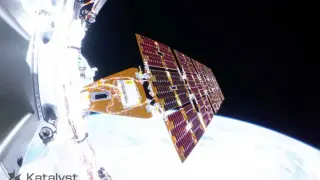
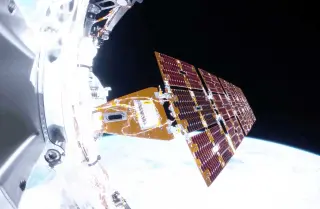
Katalyst Space Technologies has successfully uploaded a flight software update to its LINK spacecraft, resolving attitude control issues that threatened the mission to save NASA’s Neil Gehrels Swift Observatory. The update allows LINK to stabilize using remaining actuators, enabling it to resume maneuvers toward Swift. Swift, currently at 216 miles altitude, faces potential reentry by mid-2026 if not boosted. The $30 million mission aims to raise Swift’s orbit before it drops below 185 miles, where boosting becomes difficult.

Katalyst Stabilizes LINK Spacecraft, Sets Late-August Rendezvous with Swift Observatory
space3 months ago

Katalyst Stabilizes LINK Spacecraft, Sets Late-August Rendezvous with Swift Observatory

Katalyst Space Technologies has successfully slowed the spin of its LINK spacecraft, reducing its rotation from 9 to 1.47 degrees per second using electric thrusters. The company plans to upload a software update to restore attitude control and reach NASA’s Neil Gehrels Swift Observatory by late August. This mission aims to boost the 22-year-old observatory’s orbit before it decays, a high-risk operation that could extend the telescope’s life and prove commercial on-orbit servicing capabilities.

NASA's Swift rescue mission stabilizes after LINK spacecraft spin crisis
space3 months ago

NASA's Swift rescue mission stabilizes after LINK spacecraft spin crisis

The commercial rescue mission to save NASA's Neil Gehrels Swift Observatory from reentry has made critical progress after the LINK spacecraft stabilized its spin. Katalyst Space successfully reduced the vehicle's rotation from 9 degrees per second to 1.47 degrees per second using electric thrusters. Teams are now uploading new flight software to maintain stability before attempting to align with Swift's orbit. The mission aims to boost the aging telescope to a higher altitude to extend its scientific life by several years.

Katalyst Space Stabilizes Failing Swift Rescue Craft with Thruster Workarounds
space-and-technology3 months ago

Katalyst Space Stabilizes Failing Swift Rescue Craft with Thruster Workarounds

Katalyst Space’s LINK spacecraft, tasked with rescuing NASA’s Swift observatory, suffered a critical failure last week that caused it to tumble and lose communication. After a 24-hour blackout and a hard reset that damaged its reaction wheels, engineers have successfully slowed the spin using electric thrusters. The mission is now delayed until late August as teams develop new control algorithms to navigate with reduced hardware.

Private LINK mission to rescue NASA's Swift telescope from burning up in Earth's atmosphere
space-exploration4 months ago

Private LINK mission to rescue NASA's Swift telescope from burning up in Earth's atmosphere

NASA launched the LINK servicing satellite aboard a Pegasus XL rocket to rendezvous with the aging Swift Observatory and tow it into a higher, stable orbit to prevent its reentry into Earth's atmosphere. LINK, built by Katalyst Space Technologies, will use robotic arms to capture Swift and then fire ion thrusters to gradually raise the duo’s orbit over months, extending Swift’s scientific life for years at a cost of about $30 million — a private mission that could mark the first private capture of a U.S. government satellite.