
Lunar water scarcity caps moon city ambitions, scientists warn
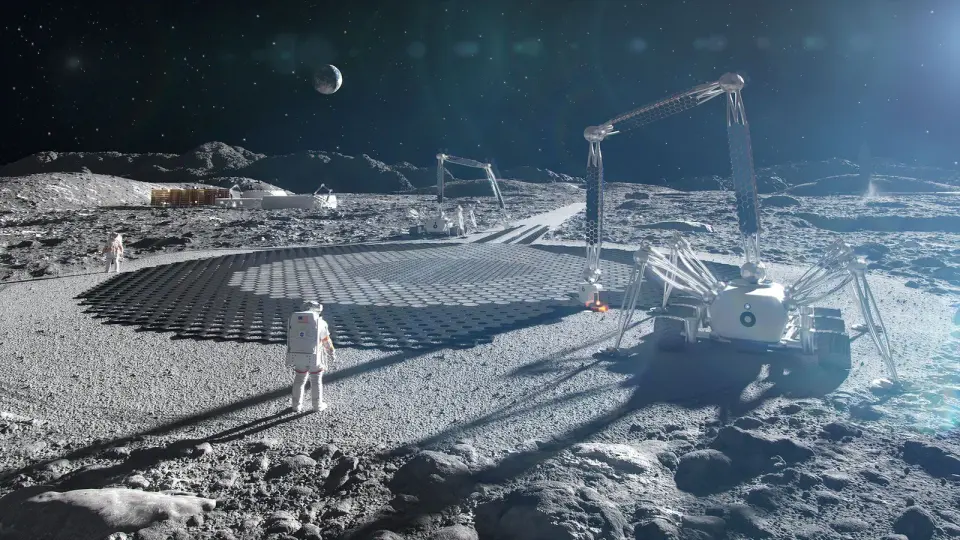
A new study in Frontiers in Space Technologies argues that lunar water reserves are insufficient to support large-scale cities. Researchers Martin Elvis and Jonathan McDowell calculate that even with optimistic estimates of a billion tons of ice, a million-person settlement would run dry within 100 years. While small 'moon villages' of 1,000 people are sustainable, large metropolises face severe power and water constraints, challenging recent bold claims by SpaceX and NASA.
Key points
- Elvis and McDowell published a study in Frontiers in Space Technologies analyzing the sustainability of lunar settlements based on available water and power.
- They estimate that a billion tons of lunar water ice, an optimistic figure, could only sustain a million-person city for 100 years with 98% recycling efficiency, or just two years without recycling.
- The researchers suggest that settlements should remain small, around 1,000 people, to ensure long-term sustainability, comparable to winter-over populations in Antarctica.
- Power generation is also a critical challenge; nuclear power would be necessary for populations exceeding one million, while solar power might suffice for smaller groups.
- The study calls for international cooperation in managing lunar water resources, warning that a lack of cooperation could lead to a 'free-for-all' scenario.
Background
Recent announcements, including Elon Musk's claim that SpaceX is shifting focus to building a self-growing city on the Moon within a decade, and NASA's $20 billion plan for a lunar base, have fueled speculation about large-scale human presence on the Moon. However, this new research provides a reality check, highlighting the physical limits of lunar resources. Previous missions, such as NASA's Artemis IV, aim to land astronauts near the lunar South Pole as early as 2028, where water ice is believed to be abundant. The study's findings suggest that while small settlements are feasible, the vision of large lunar cities may be unrealistic given current technological and resource constraints.
How outlets are covering it
Space.com presents the findings as a cautionary tale, emphasizing the limitations of lunar water and the need for efficient recycling. ABC News frames the study as a tempering of grand lunar ambitions, highlighting the contrast between the optimistic claims of SpaceX and NASA and the scientific reality. Both outlets agree that while large cities may not be feasible, small settlements and scientific missions remain viable. The researchers themselves, as reported by ABC News, stress the importance of international cooperation to avoid a 'free-for-all' in managing lunar resources.
Why it matters
The study's findings have significant implications for the future of lunar exploration and settlement. It suggests that while the Moon may not support large cities, it can still host small, sustainable settlements that contribute to scientific discovery and technological advancement. The emphasis on international cooperation and efficient resource management could shape future policies and missions, ensuring that lunar exploration is sustainable and beneficial for all.
What to watch
NASA's Artemis IV mission, planned for 2028, will land astronauts near the lunar South Pole, where water ice is believed to be abundant. The U.S. and China also have robotic missions scheduled to search for water ice in the region. The findings of this study may influence the design and scope of these missions, emphasizing the need for efficient water recycling and power generation. International cooperation in managing lunar resources will also be a key focus in the coming years.
- No cities on the moon — there isn't enough water, scientists say (op-ed) space.com
- Forget lunar metropolises: Water limits could cap moon's population, scientists say ABC News - Breaking News, Latest News and Videos
- The Moon Doesn’t Have Enough Water For Musk’s ‘Self-Growing’ City Of Millions, Researchers Say Forbes
- No cities on the moon—there isn't enough water, scientists say Phys.org
- A City On The Moon Would Last 100 Years At Best In Most Generous Scenario Of Water Availability IFLScience
Want the full story? Read the original reporting
Read on space.com