
NASA Tests High-Power Lithium Thruster to Cut Mars Trip to Three Months
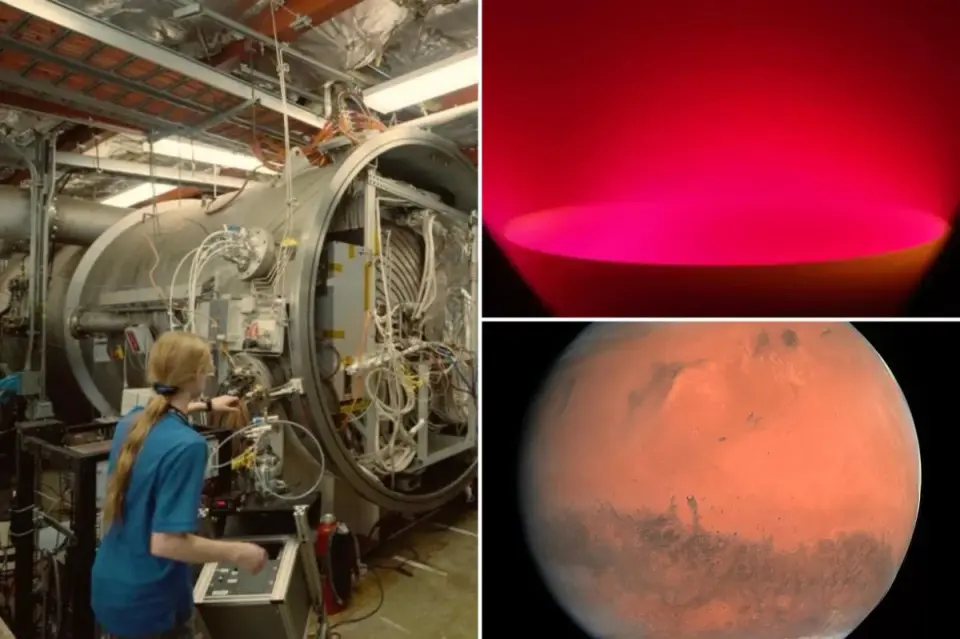
NASA has successfully tested a new lithium-fed electromagnetic thruster at the Jet Propulsion Laboratory, achieving power levels up to 120 kilowatts. This technology, which exceeds the output of current spacecraft by more than five times, aims to reduce travel time to Mars from nine months to three, potentially shortening total mission duration to two years.
Key points
- NASA Marshall announced the completion of tests for a lithium metal vapor thruster at JPL in Southern California.
- The prototype reached 120 kilowatts of power, surpassing the thrusters on the Psyche mission by over 25 times.
- The technology is designed to be paired with a nuclear power source to accelerate crewed missions to Mars.
- Current chemical rockets take approximately nine months to reach Mars, with a total mission duration of up to three years.
- The new propulsion system could cut transit time to three months, reducing the total round-trip mission to about two years.
- NASA Administrator Jared Isaacman described the test as a significant step toward sending astronauts to the Red Planet.
Background
This development follows recent scientific discoveries regarding Mars, such as Curiosity’s finding of honeycomb-like polygons on the surface, which offer clues about the planet's past climate. While earlier archive items focused on exoplanet atmospheres and Pluto’s surface chemistry, this new propulsion technology directly addresses the logistical challenges of human exploration, building on the agency's ongoing efforts to make crewed Mars missions feasible within shorter timeframes.
Why it matters
Reducing transit time is critical for astronaut safety, as shorter exposure to cosmic radiation and life-support system strain lowers the risk of health issues during long-duration missions. This technological breakthrough could make crewed Mars missions more viable and potentially enable faster robotic exploration across the solar system.
What to watch
NASA plans to use data from this initial firing to inform a series of upcoming tests. The agency will continue strategic investments in this high-power electric propulsion technology to further validate its performance and integrate it with nuclear power sources for future missions.
Want the full story? Read the original reporting
Read on New York Post