
Swift Observatory Resumes Final Observations as Rescue Mission Ends
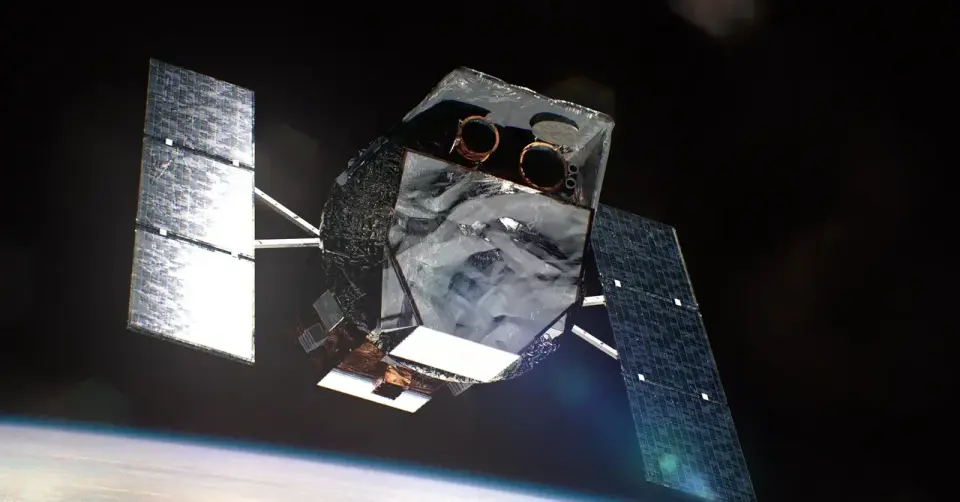
NASA’s Neil Gehrels Swift Observatory is preparing for atmospheric reentry after a failed commercial rescue attempt. The satellite’s telescopes have been restarted to capture final data before it burns up, likely by year’s end.
Key points
- Swift’s X-ray and UV telescopes have resumed operations after being powered down to conserve energy during the failed rescue mission.
- The Burst Alert Telescope remains offline but is expected to restart within a few weeks.
- Katalyst Space’s LINK spacecraft failed to boost Swift’s orbit due to attitude control issues but completed technology demonstrations before deorbiting.
- Swift is expected to reenter Earth’s atmosphere by the end of 2026 due to increased atmospheric drag from solar activity.
Background
Swift, launched in 2004, has been a key tool for observing transient cosmic events. In August 2026, Katalyst Space’s LINK spacecraft attempted to boost its orbit but failed due to technical issues. Swift’s orbit has since decayed, accelerating its reentry timeline.
How outlets are covering it
WIRED emphasizes the scientific value of Swift’s final observations, while NASA highlights the success of LINK’s technology demonstrations despite the mission’s failure. Space.com notes that LINK approached Swift but did not make contact, confirming the rescue’s failure. ABC News provided no relevant content.
Why it matters
Swift’s reentry marks the end of a 21-year mission that provided critical data on supernovae and gamma-ray bursts. The failed rescue highlights challenges in commercial satellite servicing, but the technology tested may inform future missions.
What to watch
Swift will continue observing until its altitude drops below 185 miles, after which operations will become difficult. It is expected to reenter the atmosphere by the end of 2026.
- A Satellite Falling Out of Orbit Embarks on Its Final Mission wired.com
- Commercial Spacecraft for NASA’s Swift Boost Continues Tech Demo NASA Science (.gov)
- LINK spacecraft gets close to NASA's Swift Observatory, but not close enough to save it Space
- Rescue satellite gets close to NASA's doomed telescope, even if it can't save it ABC News - Breaking News, Latest News and Videos
- NASA’s Swift Observatory resumed science observations, at least for now Popular Science
Want the full story? Read the original reporting
Read on wired.com