
New Data Suggests Solar Flares May Have Intensified the 2018 Mars Dust Storm That Killed Opportunity
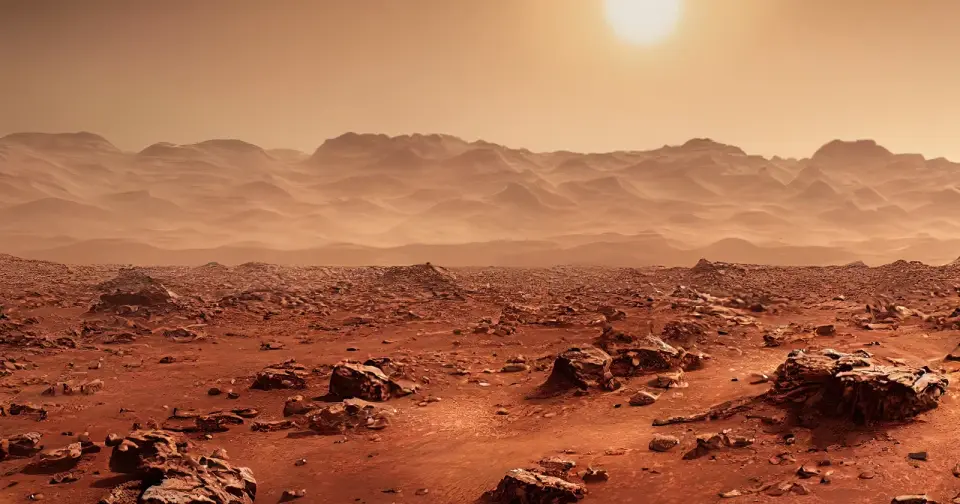
A 2018 global dust storm on Mars blocked sunlight for months, draining the solar panels of NASA’s Opportunity rover and ending its 15-year mission. New research suggests that solar energetic particle events may have amplified this storm, heating the lower atmosphere and potentially worsening the conditions that silenced the rover.
Key points
- The 2018 storm covered 35 million square kilometers by June 19, blocking sunlight until Opportunity’s last transmission on June 10.
- Opportunity’s battery fell below 24 volts, triggering a low-power fault that shut down all systems except the mission clock.
- New analysis of MAVEN and Trace Gas Orbiter data indicates solar flares may have heated Mars’ lower atmosphere by 50 degrees Celsius during the storm.
- Researchers found this heating effect only when solar particle events coincided with dust storms, suggesting a synergistic interaction.
- NASA formally closed the Opportunity mission in February 2019, eight months after the final signal, citing the inability to recharge the batteries.
Background
Opportunity was designed for 90 Martian days but operated for over 14 years, driving 45.16 kilometers. Its longevity relied on seasonal winds cleaning its solar panels and robust batteries that retained 85% capacity after 5,000 cycles. The 2018 storm was the first planet-encircling event observed by a full orbital fleet, providing unique data on atmospheric dynamics and water loss mechanisms.
How outlets are covering it
Space Daily emphasizes the physical fragility of solar-powered equipment in Martian weather, noting that while winds are gentle, the dust opacity reached a critical level of 10.8. Gizmodo and Universe Today focus on the new scientific finding that solar energetic particles may have compounded the dust storm’s effects. While Space Daily highlights the immediate mechanical failure, the other outlets stress that this is a preliminary finding based on limited data, with researchers cautioning that more evidence is needed to confirm the link between solar activity and storm intensity.
Why it matters
This discovery challenges the assumption that Martian weather is driven solely by local atmospheric conditions. If solar storms can amplify dust events, future missions must account for space weather in their design and timing. It also highlights the vulnerability of solar-powered equipment on Mars, reinforcing the shift toward nuclear power for long-duration missions.
What to watch
Researchers plan to analyze data from the 2024 solar storm to see if similar heating effects occurred. Continued monitoring by ESA’s Trace Gas Orbiter will help determine if the synergy between solar particles and dust storms is a recurring phenomenon that affects Martian climate and mission planning.
- On Mars, a dust storm in 2018 grew large enough to cover the entire planet, blocking sunlight for months and draining the solar panels of the Opportunity rover until it went silent — ending a mission that had lasted 15 years Space Daily
- Solar Storms Create a Risk for Mars Exploration Scientists Hadn’t Expected Gizmodo
- Mars' Double Storm Problem Universe Today
- Opportunity was built for a ninety-day mission and a target of six hundred metres, and it ran for fourteen and a half years and forty-five kilometres, until a planet-wide dust storm in 2018 blotted out the sun over Perseverance Valley and its final transmission was Space Daily
Want the full story? Read the original reporting
Read on Space Daily