
NASA's Swift Telescope Rescue Aborted After LINK Satellite Fails
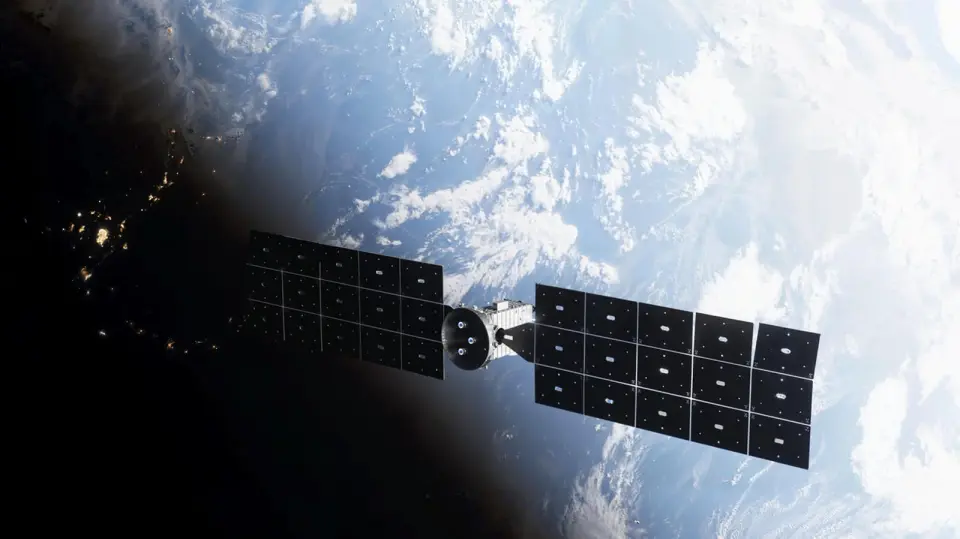
NASA and Katalyst Space Technologies have officially canceled the mission to rescue the Neil Gehrels Swift Observatory. The LINK satellite, designed to capture and boost Swift into a stable orbit, suffered critical attitude-control failures shortly after launch. Due to insufficient fuel and technical issues, LINK cannot perform the rescue. Swift is expected to reenter Earth's atmosphere later in 2026. NASA will now use LINK for demonstration maneuvers to gather data for future satellite servicing operations.
Key points
- NASA and Katalyst Space Technologies announced the cancellation of the LINK mission to rescue the Swift Observatory due to ongoing attitude-control issues.
- The LINK satellite, launched on July 3, 2026, experienced a rapid spin in late July, leading to the loss of communication and control systems.
- Katalyst attempted to recover the satellite using remaining propulsion, but this consumed too much xenon fuel to safely boost Swift into a higher orbit.
- The Swift Observatory, launched in 2004, is expected to reenter Earth's atmosphere later in 2026, ending its 22-year science mission.
- LINK will still attempt a rendezvous with Swift to perform demonstration maneuvers, aiming to gather data for future in-space servicing capabilities.
Background
The Neil Gehrels Swift Observatory, a NASA space telescope launched in 2004 to study gamma-ray bursts, began decaying out of orbit due to atmospheric drag. In 2025, NASA awarded Katalyst Space Technologies a $30 million contract to develop the LINK satellite, designed to capture Swift and boost it into a stable orbit. The mission was intended as a test of commercial space capabilities and in-space servicing technology. Swift's original mission was planned to last two years, but it operated for nearly 22 years. The LINK satellite was designed, built, tested, and launched within nine months.
How outlets are covering it
Jalopnik emphasizes the technical failure of the LINK satellite, noting that it went into a rapid multi-axis spin in late July, leading to a cascade of failures in its reaction wheels and thrusters. Jalopnik highlights that Katalyst used remaining propulsion to recover the satellite, but this consumed too much xenon fuel to complete the rescue. The New York Times, cited by Jalopnik, reports that the spin was due to faulty maneuvering thrusters. CNN focuses on the broader implications of the mission, noting that NASA and Katalyst are reframing the mission as a demonstration for future in-space servicing. CNN highlights that NASA Administrator Jared Isaacman stated that the mission was worth attempting despite the failure, as it advanced capabilities for future satellite servicing. AP News provides a neutral overview, noting that the mission was called off due to ongoing attitude-control issues, and that LINK will still attempt a rendezvous with Swift to gather data. All sources agree that the Swift Observatory will reenter Earth's atmosphere later in 2026, and that the lessons from the LINK mission will be valuable for future satellite servicing operations.
Why it matters
The failure of the LINK mission highlights the challenges and risks associated with in-space servicing and satellite rescue operations. It underscores the need for robust and reliable technology for future space missions. The lessons learned from this mission will be valuable for developing future satellite-servicing capabilities, which are essential for maintaining and extending the life of space assets. The mission also demonstrates the growing role of commercial space companies in supporting NASA's missions and advancing space technology.
What to watch
LINK will attempt a rendezvous with Swift to perform demonstration maneuvers, aiming to gather data for future in-space servicing operations. NASA will rely on its other active observatories to fill the gap left by Swift's reentry. The agency will continue to prioritize finding new options to react rapidly to cosmic events. Katalyst Space Technologies will use the lessons learned from the LINK mission to develop a repeatable playbook for future satellite-servicing missions.
- NASA Can't Rescue The Satellite That Was Going To Rescue Another Satellite After All Jalopnik
- NASA Updates Next Steps for Commercial Swift Boost Mission NASA (.gov)
- How a Wahoo ended up on a space rescue mission UVA Today
- Rescue mission is called off for NASA’s aging Swift space telescope AP News
- Rescue mission can’t prevent NASA observatory from falling to Earth CNN
Want the full story? Read the original reporting
Read on Jalopnik