
Roman Telescope Enters Commissioning Phase After Successful Launch
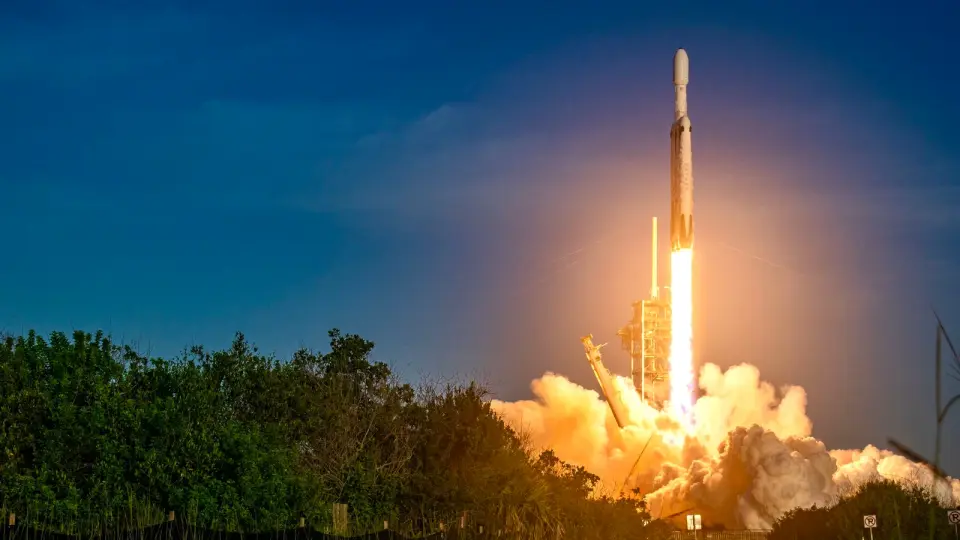
NASA’s Nancy Grace Roman Space Telescope has successfully launched and is now undergoing commissioning. The spacecraft, which lifted off on August 30, 2026, from Kennedy Space Center aboard a SpaceX Falcon Heavy, is on a three-month trajectory to the sun-Earth Lagrange Point 2 (L2). Mission teams have deployed key components, including solar panels and the aperture cover, and have begun testing the Coronograph Instrument. The telescope is expected to reach its final orbit approximately 100 days after launch, where it will begin a five-year prime mission to study dark energy, map dark matter, and discover exoplanets. NASA Administrator Jared Isaacman praised the mission’s potential to create a new atlas of the universe, while scientists highlighted its superior survey capabilities compared to Hubble and James Webb.
Key points
- The Nancy Grace Roman Space Telescope launched on August 30, 2026, at 7:26 a.m. ET from Launch Complex 39A at Kennedy Space Center.
- The spacecraft is currently in the commissioning phase, having deployed solar panels, high-gain antennas, and the aperture cover.
- A critical 3.5-minute engine burn on August 31 fine-tuned the trajectory toward the L2 point, located approximately 1.5 million kilometers from Earth.
- The Coronograph Instrument was powered on in early September and is undergoing calibration tests before science operations begin.
- Roman is expected to reach its final orbit around L2 approximately 100 days after launch, with first detailed images anticipated by January 2027.
- The telescope’s wide-field instrument offers a field of view more than 100 times larger than Hubble’s, enabling rapid surveys of the sky.
Background
The Roman Space Telescope is NASA’s next flagship observatory, following Hubble and James Webb. It is named after Nancy Grace Roman, NASA’s first chief of astronomy, who pioneered space-based observatories. The telescope has been in development for about a decade and is designed to complement existing missions by providing broader, faster surveys of the universe. Recent archive coverage noted that NASA had accelerated the launch date to accommodate the telescope’s early completion, and that the mission is part of a broader strategy to consolidate launch procurements and enhance astronomical capabilities.
How outlets are covering it
Space.com emphasized the technical milestones of the commissioning process, including the deployment of the aperture cover and the power-on of the Coronograph Instrument. CNN highlighted the scientific potential of Roman, describing it as a 'discovery machine' that could reveal billions of galaxies and tens of thousands of exoplanets. NASA’s official statement focused on the successful launch and the three-month journey to L2, noting that Roman is the fourth primary mission launched on a Falcon Heavy rocket. SpaceNews, while not directly covering the launch, reported on NASA’s consolidation of launch programs, which may influence future procurement strategies for missions like Roman. All sources agreed on the significance of the mission but differed in emphasis: Space.com and NASA focused on operational progress, while CNN highlighted the broader scientific implications and historical context.
Why it matters
The successful launch and commissioning of the Roman Space Telescope mark a significant milestone for NASA and the global scientific community. Roman’s advanced capabilities, including its wide-field instrument and coronagraph, will enable unprecedented surveys of the universe, potentially leading to discoveries in dark energy, dark matter, and exoplanets. The mission’s success could pave the way for future observatories, such as the Habitable Worlds Observatory, and provide a vast dataset for researchers worldwide. Additionally, the efficient launch and commissioning process demonstrate NASA’s ability to accelerate mission timelines and leverage commercial launch providers like SpaceX, setting a precedent for future space exploration efforts.
What to watch
Mission teams will continue testing and calibrating the Coronograph Instrument over the coming weeks. Roman is expected to reach its final orbit around L2 approximately 100 days after launch, with first detailed images anticipated by January 2027. Once in position, the telescope will begin its five-year prime mission, conducting surveys of the sky and transmitting data back to Earth. NASA may also consider extending the mission up to 10 years, depending on performance and funding. The success of Roman’s commissioning and initial operations will inform the design and development of future space-based observatories, including the Habitable Worlds Observatory.
- Roman Space Telescope live updates: NASA begins spacecraft commissioning process Space
- New NASA office to consolidate launch procurements SpaceNews
- NASA’s newest space telescope launches to spot ‘the weird, the rare and the unusual’ CNN
- NASA’s latest mission to map the cosmos takes off The Economist
- Igniting Roman’s Journey NASA (.gov)
Want the full story? Read the original reporting
Read on Space