
SpaceX Falcon 9 Upper Stage Confirmed to Have Impacted Moon, Creating New Crater
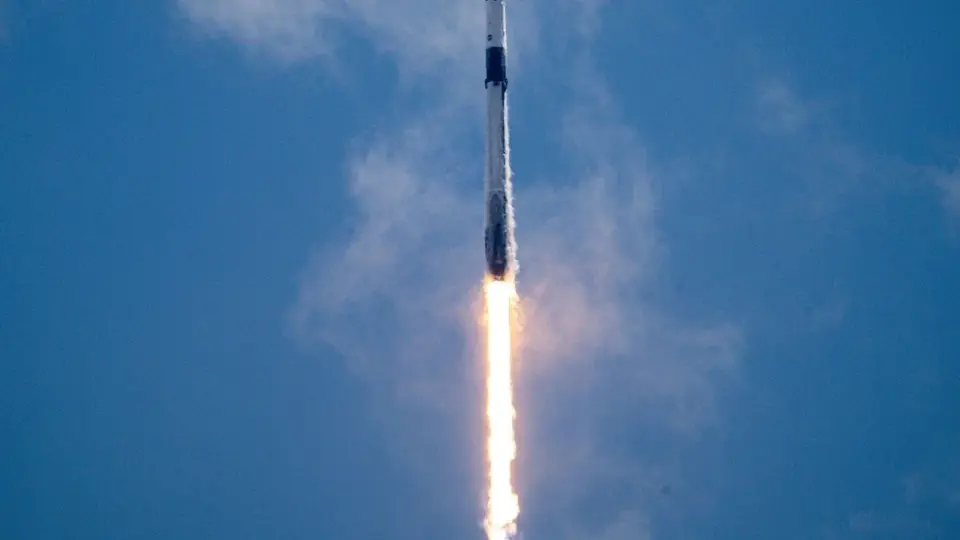
A spent SpaceX Falcon 9 upper stage, launched in January 2025, struck the Moon near Einstein Crater on August 5, 2026. The impact, traveling at approximately 5,400 mph, created a new crater 60 to 90 feet wide. NASA and independent astronomers confirmed the collision, which was caused by solar activity and gravity rather than deliberate disposal. While the impact was not visible to the naked eye, it provides valuable data for understanding lunar surface interactions and future debris mitigation strategies.
Key points
- The Falcon 9 upper stage, weighing approximately 4 tons, impacted the Moon near Einstein Crater on August 5, 2026, at 2:35 a.m. ET.
- The impact velocity was approximately 5,400 mph (2.43 km/s), creating a crater estimated to be 60 to 90 feet in diameter.
- NASA’s Center for Near Earth Object Studies confirmed a 100% probability of impact, while independent astronomers tracked the trajectory using public data.
- The collision was unintentional, resulting from solar activity and gravitational forces, not a deliberate disposal maneuver.
- NASA’s Lunar Reconnaissance Orbiter and South Korea’s Korea Pathfinder Lunar Orbiter are tasked with imaging the impact site, with data expected in the coming days.
- The event highlights concerns about space debris in lunar orbit, particularly as Artemis program missions increase near the Moon.
Background
This incident follows earlier reports in July and August 2026 regarding the trajectory of the SpaceX upper stage, which had been adrift since the January 15, 2025 launch of the Blue Ghost and Resilience lunar landers. Previous coverage noted the potential for a 5,400 mph impact and the scientific value of observing such an event. The current confirmation aligns with earlier predictions that the stage would strike the Moon near Einstein Crater, a region difficult to observe from Earth due to its location on the western limb.
How outlets are covering it
CNN and KCRA (via AP) emphasize the inevitability of the impact, with KCRA citing retired astrophysicist Jonathan McDowell’s assertion that the rocket is now 'in teeny, little pieces scattered over the moon.' CNN highlights the scientific opportunity to study lunar impacts and the growing concern over space debris as Artemis missions progress. NASA’s official statement frames the event as a training opportunity for tracking objects and a chance to refine debris mitigation practices, noting that controlled impacts are a technically accepted disposal method. WPEC’s coverage, while limited in the provided text, aligns with the general narrative of the impact creating a new crater. All sources agree on the unintentional nature of the collision and the lack of danger to Earth, but differ in emphasis: CNN and KCRA focus on the debris risk and scientific insights, while NASA stresses the procedural and training aspects of the event.
Why it matters
The impact underscores the growing challenge of space debris management in lunar orbit, particularly as the Artemis program plans to establish a sustained human presence on the Moon. Understanding the effects of artificial impacts on the lunar surface is crucial for mitigating risks to future missions and infrastructure. The event also highlights the need for improved tracking and disposal methods for upper stages from high-energy missions, as the Moon lacks an atmosphere to burn up debris. The data collected from this impact will inform future strategies for protecting lunar assets and ensuring safe exploration.
What to watch
NASA’s Lunar Reconnaissance Orbiter is expected to image the impact site in the coming days, providing visual confirmation of the crater. Scientists will analyze the ejecta plume and crater dimensions to refine models of lunar surface interactions. SpaceX and NASA are collaborating on future disposal paths for high-energy missions to prevent similar unintended impacts. As Artemis missions progress, increased attention will be paid to debris tracking and mitigation to protect future lunar infrastructure and astronauts.
- Abandoned SpaceX rocket slams into moon at 5,400 mph, carving new crater WPEC
- New crater likely to form after SpaceX rocket slams into the moon CNN
- Scientists are certain a wayward SpaceX rocket slammed into the moon as predicted KCRA
- NASA Will Attempt to Observe Rocket Part’s Lunar Impact NASA (.gov)
- What can scientists learn from a stray SpaceX rocket hitting the Moon? BBC
Want the full story? Read the original reporting
Read on WPEC