
Voyager 1 Reaches One Light-Day Milestone After Power Swap and Signal Glitch
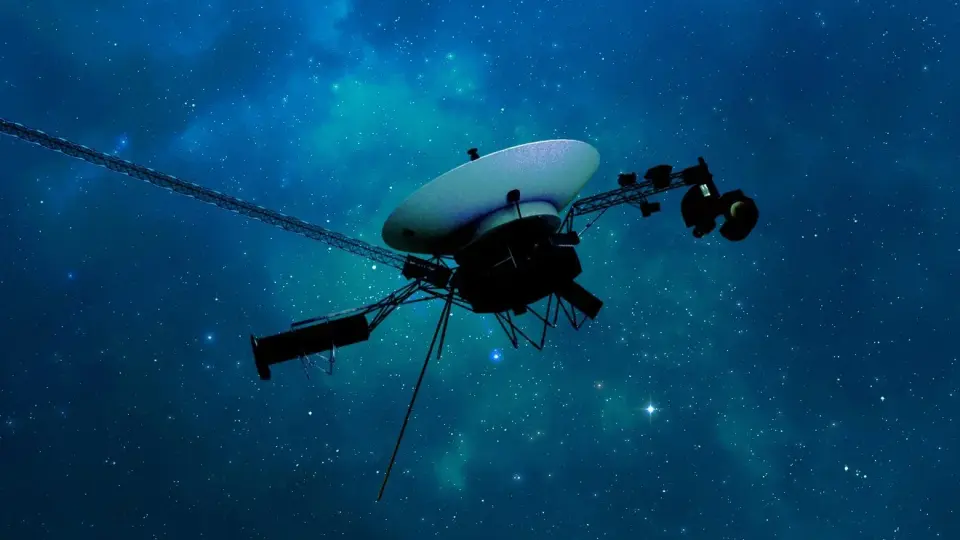
NASA’s Voyager 1 is set to become the first human-made object to reach a distance of one light-day from Earth on November 18, 2026. This milestone follows a successful 'Big Bang' power reconfiguration in September and a 48-hour communication outage in October that the spacecraft resolved automatically. The probe is now approximately 25.9 billion kilometers away, with signal delays totaling 48 hours for round-trip communication.
Key points
- Voyager 1 will cross the one-light-day mark on November 18, 2026, at a distance of 16.09 billion miles (25.89 billion kilometers) from Earth.
- In September, engineers performed a 'Big Bang' power swap, replacing three high-energy devices with low-power alternatives to extend the mission’s operational life.
- A 48-hour communication outage occurred between October 18 and 20, 2026, which the spacecraft resolved automatically by switching to backup thrusters.
- The spacecraft currently operates on approximately 200 watts of power, losing about 4 watts annually due to the decay of its plutonium fuel.
- NASA’s Deep Space Network continues to monitor the probe, which is traveling at 16.9 kilometers per second relative to the Sun.
Background
Voyager 1 launched on September 5, 1977, as part of a Grand Tour of the solar system. It flew past Jupiter in 1979 and Saturn in 1980, with a flyby of Titan altering its trajectory to exit the solar plane. The probe has been operating for nearly 50 years, with its radioisotope thermoelectric generators steadily losing power. Previous coverage noted concerns about funding cuts potentially ending the mission before its technical lifespan expires around 2035.
How outlets are covering it
Universe Today emphasizes the 'Big Bang' power swap as a critical fix that prevented the need to shut down another instrument in 2027. NASA Science focuses on the public celebration of the one-light-day milestone, inviting people to flash Morse code skyward. Space highlights the automatic resolution of the communication glitch, noting that the spacecraft entered a safe mode. Science Daily provides a detailed account of the power conservation efforts and the ongoing investigation into the October signal loss, noting that the spacecraft is now 48 hours away in communication delay.
Why it matters
The one-light-day milestone marks a historic achievement in human exploration, demonstrating the endurance of a spacecraft launched nearly half a century ago. The successful 'Big Bang' power swap and automatic resolution of the communication glitch highlight the ingenuity required to maintain deep-space missions as their power sources decay. This milestone also underscores the challenges of communicating with objects at such vast distances, where round-trip communication delays total 48 hours.
What to watch
NASA will continue to monitor Voyager 1 as it crosses the one-light-day mark on November 18, 2026. Engineers will investigate the cause of the October communication outage, while mission controllers will manage the spacecraft’s declining power reserves. The probe is expected to continue operating into the 2030s, with its signal strength diminishing over time.
- 'Big Bang' Fix Puts Voyager Across the 'One Light-Day' Mark Universe Today
- Damaged Interstellar Spacecraft Avi Loeb – Medium
- Shine Bright for Voyager’s Light‑Day NASA Science (.gov)
- NASA's Voyager 1 probe bounces back from communications glitch in interstellar space Space
- NASA’s Voyager 1 is about to reach a historic one-light-day milestone Science Daily
Want the full story? Read the original reporting
Read on Universe Today