
Voyager 1 Resolves Thruster Glitch Before Reaching One-Light-Day Milestone
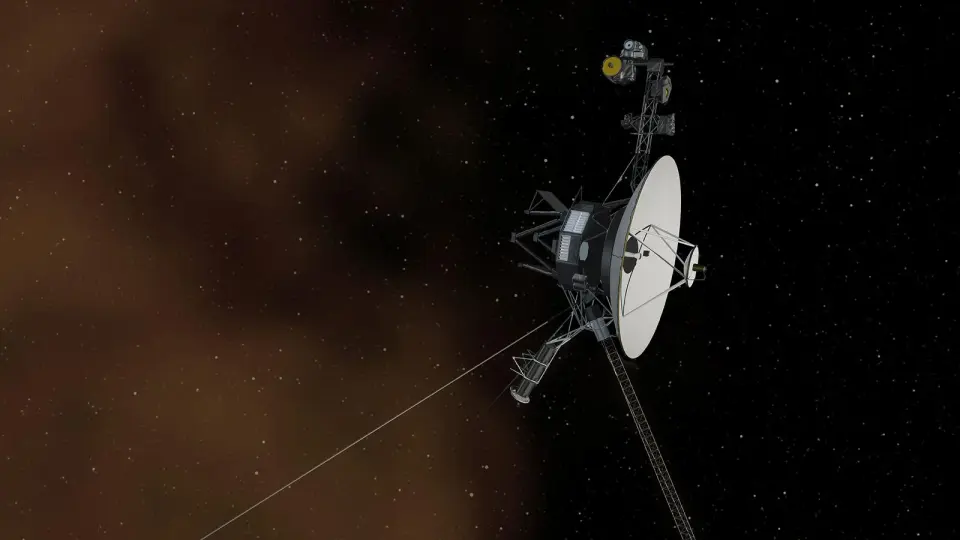
NASA’s Voyager 1 probe has resumed communication after a 48-hour outage caused by an automatic thruster switch. The spacecraft is now preparing for a historic milestone on November 18, 2026, when it will become the first human-made object to reach a distance of one light-day from Earth. Recent power-saving measures, dubbed the 'Big Bang,' have extended the probe’s operational life despite declining energy reserves.
Key points
- Voyager 1 lost contact with Earth between October 18 and 20, 2026, due to a communications glitch that resolved itself before engineers could intervene.
- The outage was caused by a primary thruster group going offline, triggering the spacecraft’s automatic fault protection mode to switch to backup thrusters.
- On November 18, 2026, Voyager 1 will reach a distance of 16.09 billion miles (25.89 billion kilometers), marking the first time a human-made object is one light-day from Earth.
- In early September 2026, engineers performed a 'Big Bang' power swap, replacing three high-power warming devices with lower-power alternatives to extend the mission's lifespan.
- The spacecraft currently loses approximately four watts of power annually, but the recent adjustments allow science instruments to operate longer than previously anticipated.
Background
Voyager 1 was launched on September 5, 1977, and crossed into interstellar space in 2012. It is the farthest human-made object from Earth, traveling at approximately 38,000 mph. The probe carries a Golden Record and has previously captured the 'Pale Blue Dot' image of Earth. Its twin, Voyager 2, launched in August 1977 and explored Uranus and Neptune. Both spacecraft are powered by radioisotope thermoelectric generators that convert plutonium decay into electricity.
How outlets are covering it
NASA’s Jet Propulsion Laboratory (JPL) emphasizes the unprecedented nature of the spacecraft’s autonomous response to the thruster issue, noting that engineers are still investigating the root cause. BBC Sky at Night Magazine highlights the 'Big Bang' power swap as a critical measure to ensure the probe reaches the light-day milestone with scientific instruments still active. Futura focuses on the communication challenges, noting that a full signal exchange now takes 48 hours, making remote troubleshooting increasingly difficult. All sources agree that the mission is expected to continue into the 2030s, though power levels are steadily declining.
Why it matters
The successful recovery of Voyager 1 demonstrates the resilience of aging deep-space technology and the effectiveness of automated safety protocols. Reaching the one-light-day milestone is a symbolic achievement for humanity, marking the farthest point ever reached by a human-made object. The ongoing power-saving efforts ensure that the probe can continue to provide scientific data from interstellar space for several more years, despite the diminishing energy from its plutonium power sources.
What to watch
NASA engineers will continue to monitor Voyager 1’s status and investigate the cause of the thruster glitch. The spacecraft is expected to reach the one-light-day distance on November 18, 2026, at 5:16 a.m. EST. NASA has invited the public to participate in a 'Shine Bright for Voyager' event on November 17, encouraging people to flash Morse code signals skyward to celebrate the milestone. Future power adjustments may be required as the plutonium continues to decay, potentially leading to the shutdown of additional instruments in the coming years.
- NASA's Voyager 1 probe bounces back from communications glitch in interstellar space Space
- Shine Bright for Voyager’s Light‑Day NASA Science (.gov)
- How long does a radio signal take to reach Voyager 1 and back once it is a light-day away, NASA answers Futura, le média qui explore le monde
- NASA’s Voyager 1 is about to reach a historic one-light-day milestone Science Daily
- NASA gets Voyager 1 back online after comms glitch – just in time for the probe to reach a mind-blowing milestone BBC Sky at Night Magazine
Want the full story? Read the original reporting
Read on Space