
Voyager 1 to Reach One Light-Day Distance on Nov. 18 Amid Power Constraints
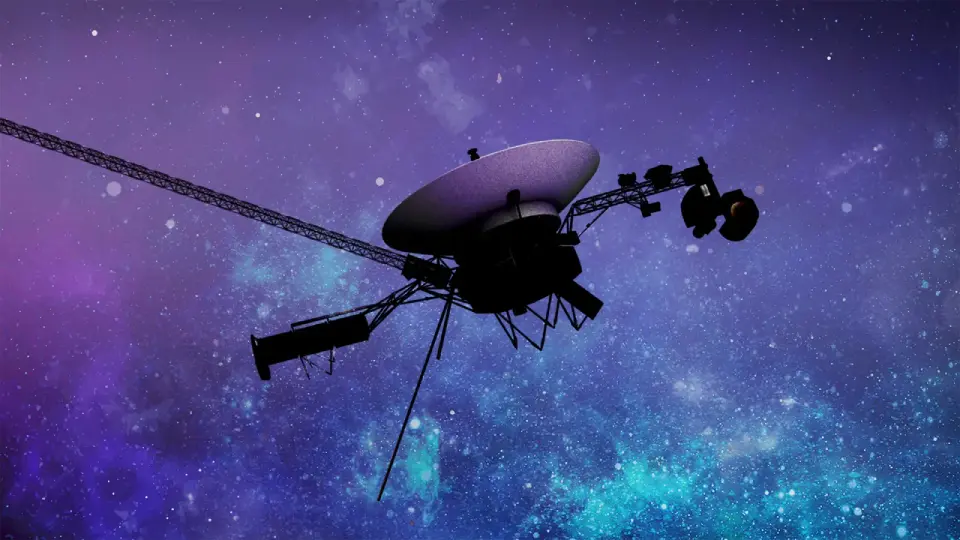
NASA’s Voyager 1 will reach a distance of one light-day from Earth on November 18, 2026, marking the farthest point any human-made object has traveled. The probe, launched in 1977, is currently 16.09 billion miles away, a distance that would take a human 612,015 years to walk. This milestone occurs as the spacecraft faces significant power constraints, with only two of its original ten instruments still active. NASA has recently implemented power-saving measures, including a system swap dubbed 'The Big Bang,' to extend the mission’s life. Communication with the probe now involves a 48-hour round-trip delay. While Voyager 1 is expected to lose contact with Earth around 2036, it will continue traveling through interstellar space indefinitely.
Key points
- Voyager 1 will reach one light-day from Earth on November 18, 2026, at 5:16 a.m. ET.
- The distance is approximately 16.09 billion miles (25.9 billion kilometers).
- The spacecraft currently travels at 37,763 mph, a speed achieved after a 1980 Saturn flyby.
- Only two of the original ten instruments remain active due to declining power from plutonium-238 decay.
- NASA completed a power-saving maneuver called 'The Big Bang' in September 2026 to extend the mission.
- Communication with Voyager 1 now requires a 48-hour round-trip for signals.
Background
Voyager 1 and its twin, Voyager 2, were launched in 1977 to study the outer planets. Voyager 1 entered interstellar space in 2012, becoming the first human-made object to do so. The spacecraft has faced various technical challenges over the years, including a 48-hour communication outage in October 2026, which was resolved. The 'Big Bang' power reconfiguration, completed in September 2026, involved swapping high-energy components for low-power alternatives to conserve energy. This milestone is part of a broader effort to extend the mission’s operational life despite dwindling power supplies.
How outlets are covering it
CNET emphasizes the symbolic nature of the one-light-day milestone and the challenges of maintaining the spacecraft’s power. Popular Science highlights the scientific value of Voyager 1’s data, particularly its role in studying the interstellar medium. Smithsonian Magazine focuses on the ingenuity of the Voyager team in keeping the spacecraft operational for nearly 50 years. NASA’s official release details the public engagement activities, including the 'Shine Bright for Voyager’s Light-Day' event, and the upcoming discussion at JPL. All sources agree on the significance of the milestone but differ in their emphasis: CNET and Popular Science focus on the technical and scientific aspects, while Smithsonian and NASA highlight the human and public engagement elements.
Why it matters
The one-light-day milestone underscores the enduring legacy of the Voyager mission and the ingenuity of NASA’s engineers in keeping the spacecraft operational for nearly 50 years. It also highlights the challenges of deep-space exploration, including the limitations of power and communication. The milestone serves as a reminder of humanity’s reach into the cosmos and the importance of continued investment in space exploration and scientific research.
What to watch
NASA will host a moderated discussion at JPL on November 19, 2026, featuring mission members and NASA leadership. The event will include a preview of the upcoming NASA+ Voyager documentary, planned for release in 2027. The public is invited to participate in the 'Shine Bright for Voyager’s Light-Day' event on November 17, 2026. Voyager 1 is expected to continue operating until the 2030s, with communication likely ending around 2036. The probe will continue traveling through space, eventually reaching the Oort Cloud in about 300 years.
- NASA’s Voyager 1 to Cross Historic One Light-Day Milestone on Nov. 18 CNET
- Voyager 1 is almost one light-day away from Earth Popular Science
- Voyager 1 Is the Farthest Human-Made Object in the Universe—and the Spacecraft Is About to Reach One Light-Day From Earth Smithsonian Magazine
- NASA Invites Media, Public to Join Voyager 1 One-Light Day Activities NASA (.gov)
- Dennis Mammana: Voyager 1 Nears Historic Milestone Nearly 50 Years Into Journey to the Stars Noozhawk
Want the full story? Read the original reporting
Read on CNET