
Voyager 1’s 48-Hour Silence Sparks Investigation as Power Conservation Efforts Continue
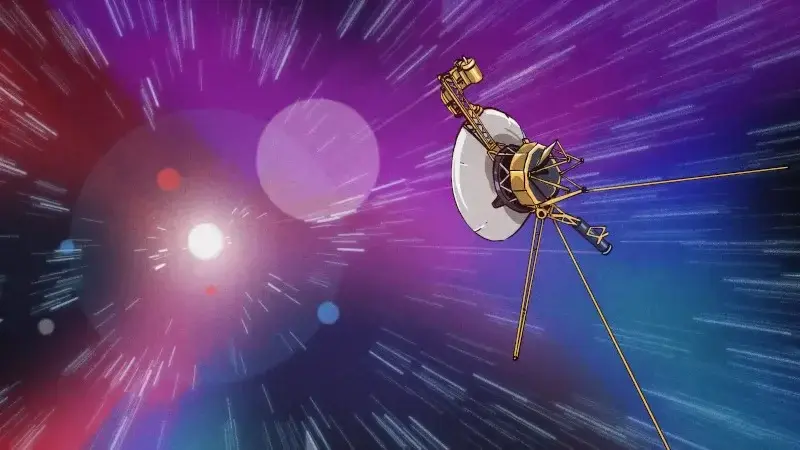
Voyager 1 lost contact with Earth for 48 hours in October 2026 before resuming communication. Engineers attribute the silence to a thruster failure that triggered a safe-mode protocol. The incident occurred shortly after a major power-saving update, highlighting the spacecraft's declining reliability as it approaches its 50th anniversary.
Key points
- Voyager 1 missed scheduled communications on October 18 and 19, 2026, before reconnecting on October 20.
- The outage lasted 48 hours, during which the Deep Space Network could not detect a signal from the probe.
- Diagnostic data indicates a group of thrusters went offline, causing the onboard computer to switch to backup units and enter a stable configuration.
- The incident occurred weeks after the 'Big Bang' power-saving update, which swapped three high-power devices for lower-power alternatives to extend mission life.
- Voyager 1 is currently 16 billion miles from Earth and is expected to reach the one-light-day distance milestone on November 18, 2026.
Background
Launched in 1977, Voyager 1 is the farthest human-made object from Earth, traveling at 38,000 mph through interstellar space. It is the only spacecraft to directly study the region beyond the heliosphere. The spacecraft relies on radioisotope thermoelectric generators that lose approximately four watts of power annually. Recent years have seen the deactivation of two science instruments to conserve energy. In September 2026, engineers completed the 'Big Bang' update, swapping three devices to lower-power versions to maintain heat distribution and extend operational life. This followed a similar update on Voyager 2. The mission has previously faced issues, including a 2023 antenna problem on Voyager 2 and a transmitter failure on Voyager 1 due to low power.
How outlets are covering it
NASA JPL and The Register emphasize the technical resolution, noting that the thruster swap was an automatic fault-protection response. JPL highlights the success of the 'Big Bang' update in extending mission life, while The Register frames the silence as a sign of the mission's inevitable end. Hackaday focuses on the uncertainty surrounding the cause, questioning if the blackout is linked to the recent power changes or recurring fuel line issues. Mashable underscores the emotional impact on mission control, describing the event as a 'scare' and noting the upcoming one-light-day milestone. All sources agree that the spacecraft is now in a phase where unexpected failures are anticipated due to aging electronics and diminishing power.
Why it matters
The incident underscores the fragility of NASA’s longest-running mission as it approaches its 50th anniversary. While the spacecraft remains operational, the 48-hour silence highlights the risks of operating 1970s-era electronics in the harsh environment of interstellar space. The successful recovery demonstrates the resilience of the mission team, but it also signals that future outages may be more frequent. The 'Big Bang' update aims to buy time, but the power margins are thin, with the potential for further instrument deactivation by summer 2027 if power levels continue to drop. This event serves as a reminder of the finite lifespan of these pioneering probes, which have provided unique data on the boundary of the solar system for nearly half a century.
What to watch
Engineers will continue investigating the root cause of the thruster failure to determine if it is related to the 'Big Bang' update or other aging components. The team will monitor Voyager 1’s status as it approaches the one-light-day distance milestone on November 18, 2026, where communication delays will reach 48 hours round-trip. Future updates may involve further power conservation measures or the deactivation of additional instruments if power levels fall below usable thresholds. The mission is expected to continue until the early 2030s, when power reserves may no longer support operations.
- Voyager 1 Briefly Goes Silent, Scaring Everyone Hackaday
- NASA’s Voyager 1 Conserves Power, Resolves Brief Communications Pause NASA Jet Propulsion Laboratory (JPL) (.gov)
- NASA's Voyager 1 mysteriously lost touch with Earth Mashable
- Voyager 1 gives controllers the silent treatment The Register
- NASA's Voyager 1 Resumes Communications After Glitch – Weeks Away From 1 Light-Day Milestone IFLScience
Want the full story? Read the original reporting
Read on Hackaday