
Voyager 1’s Brief Silence and Power Conservation Efforts
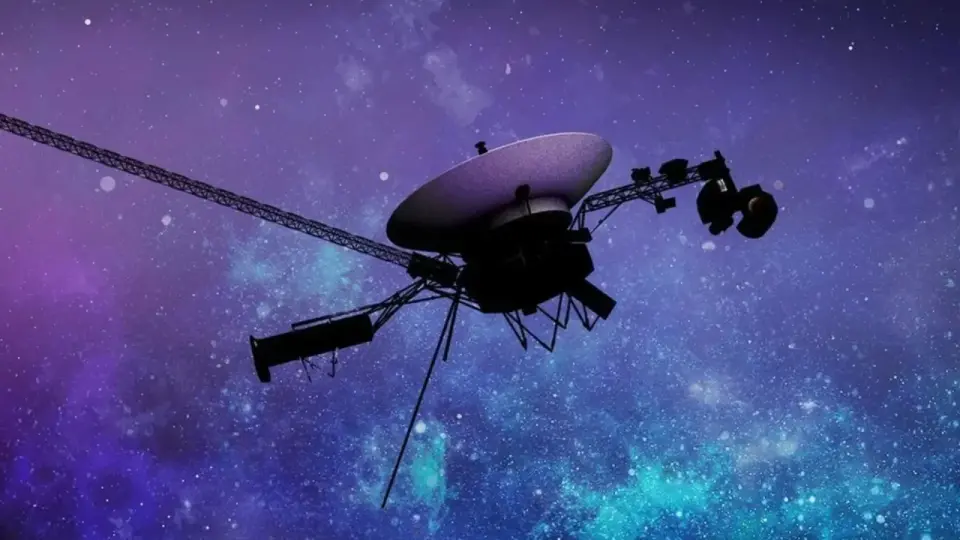
NASA’s Voyager 1, the farthest human-made object from Earth, experienced a brief communication blackout in mid-October 2026. The signal returned after 48 hours, but engineers are investigating an automatic thruster failure that triggered a safety mode. This incident occurred shortly after a major power-saving update and weeks before the probe reaches a one-light-day distance from Earth.
Key points
- Voyager 1 lost contact with Earth on October 18 and 19, 2026, when NASA’s Deep Space Network failed to detect its radio signal during scheduled attempts.
- Communication resumed on October 20, 2026, approximately 48 hours after the initial loss, with the spacecraft maintaining contact since then.
- Investigations revealed that a group of thrusters went offline, causing backup thrusters to activate automatically as part of a programmed fault protection system.
- In September 2026, engineers completed a power-saving procedure nicknamed the 'Big Bang,' switching off three devices and activating lower-power alternatives to extend the spacecraft's operational life.
- Voyager 1 is expected to reach a distance of one light-day from Earth on November 18, 2026, meaning radio signals will take 24 hours to travel in either direction.
Background
Voyager 1, launched in September 1977, has been operating far beyond its original five-year mission to study Jupiter and Saturn. It is currently traveling through interstellar space, beyond the heliosphere, and is the only spacecraft to have directly studied this region. The spacecraft relies on radioisotope thermoelectric generators (RTGs) that lose about four watts of power annually due to plutonium decay. Previous power-saving measures have already forced the shutdown of non-essential instruments to maintain operations.
How outlets are covering it
NASA and JPL emphasize the successful resolution of the communication issue and the recent 'Big Bang' power-saving effort, highlighting the team's ability to extend the mission's life. Hackaday and The Register focus on the fragility of the 50-year-old spacecraft, noting that such incidents highlight the inevitable end of the mission. While NASA views the thruster issue as a manageable anomaly, other outlets suggest it may be related to previous fuel line issues, underscoring the challenges of operating aging technology in deep space.
Why it matters
The incident underscores the technical challenges of maintaining spacecraft launched nearly half a century ago, especially as their power supplies weaken. The upcoming one-light-day milestone will significantly increase communication delays, making future troubleshooting more difficult. This event highlights the delicate balance between extending the mission's life and the inevitable decline of its systems.
What to watch
NASA engineers will continue investigating the cause of the communication loss and the thruster failure. The team will monitor Voyager 1's status as it approaches the one-light-day distance on November 18, 2026. Future communications will require up to 48 hours for a simple exchange, complicating any future troubleshooting efforts.
- Farthest human-made object in space loses contact, goes nearly one light-day away from Earth Interesting Engineering
- NASA’s Voyager 1 Conserves Power, Resolves Brief Communications Pause NASA Jet Propulsion Laboratory (JPL) (.gov)
- Voyager 1 Briefly Goes Silent, Scaring Everyone Hackaday
- Voyager 1 gives controllers the silent treatment The Register
- NASA's Voyager 1 mysteriously lost touch with Earth Mashable
Want the full story? Read the original reporting
Read on Interesting Engineering