
Voyager 1's brief silence raises alarms as it nears one-light-day milestone
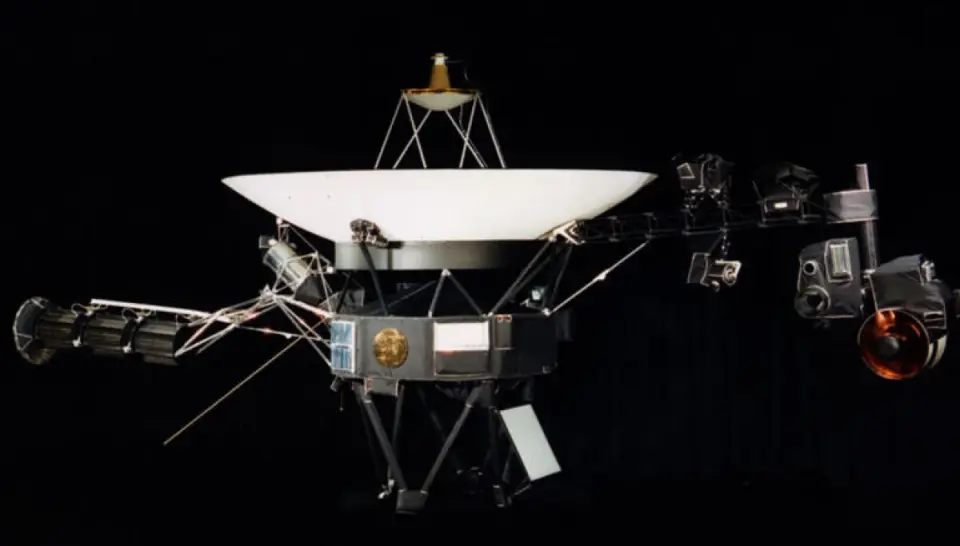
Voyager 1 unexpectedly lost contact with Earth for 48 hours in mid-October before resuming communication. Engineers believe a thruster failure triggered an automatic safety mode, but the incident highlights the aging spacecraft's vulnerability as it approaches a one-light-day distance from Earth.
Key points
- Voyager 1 missed scheduled communications on October 18 and 19, 2026, before re-establishing contact on October 20.
- The signal loss is attributed to a thruster group going offline, triggering an automatic fault-protection mode that switched to backup systems.
- The spacecraft is currently 16 billion miles from Earth and will reach a one-light-day distance on November 18, 2026.
- A recent 'Big Bang' power-saving maneuver in September extended the mission's life by swapping high-power devices for lower-power alternatives.
- Mission managers acknowledge the spacecraft is entering a phase where unexpected technical issues are increasingly likely due to aging hardware.
Background
Launched in 1977, Voyager 1 is the farthest human-made object from Earth, having entered interstellar space in 2012. The mission has relied on radioisotope thermoelectric generators, which lose approximately four watts of power annually. Recent efforts, including the 'Big Bang' power swap, aim to preserve remaining science instruments like the Cosmic Ray Subsystem and Magnetometer for at least another year.
How outlets are covering it
NASA and The Register agree that the communication gap was caused by an automatic fault-protection response to a thruster issue, though the exact trigger remains under investigation. Mashable emphasizes the 'mysterious' nature of the outage and the broader context of the mission winding down due to dwindling power. All sources highlight the upcoming one-light-day milestone on November 18, 2026, which will mean a 48-hour round-trip communication delay. While NASA focuses on the technical success of the 'Big Bang' power conservation, The Register and Mashable stress the fragility of the spacecraft as it approaches its 50th anniversary.
Why it matters
The incident underscores the precarious state of NASA's longest-running mission. As Voyager 1 approaches a one-light-day distance, communication delays will increase, making rapid response to technical issues more difficult. The successful recovery from this outage, combined with recent power-saving measures, suggests the spacecraft may continue operating for several more years, but it also signals that the end of the mission is approaching.
What to watch
Engineers will continue investigating the cause of the thruster failure. Voyager 1 is expected to reach a one-light-day distance from Earth on November 18, 2026, after which communication delays will extend to 48 hours for round-trip messages. The mission team will monitor the spacecraft's health as it approaches its 50th anniversary in 2027.
- Voyager 1 gives controllers the silent treatment The Register
- NASA’s Voyager 1 Conserves Power, Resolves Brief Communications Pause NASA Science (.gov)
- NASA's Voyager 1 mysteriously lost touch with Earth Mashable
- NASA's Voyager 1 Resumes Communications After Glitch – Weeks Away From 1 Light-Day Milestone IFLScience
- Voyager-1 breathes in interstellar space, Nasa pulls off another life-saving miracle India Today
Want the full story? Read the original reporting
Read on The Register