
Voyager's barely-there interstellar whisper still reaches Earth
TL;DR
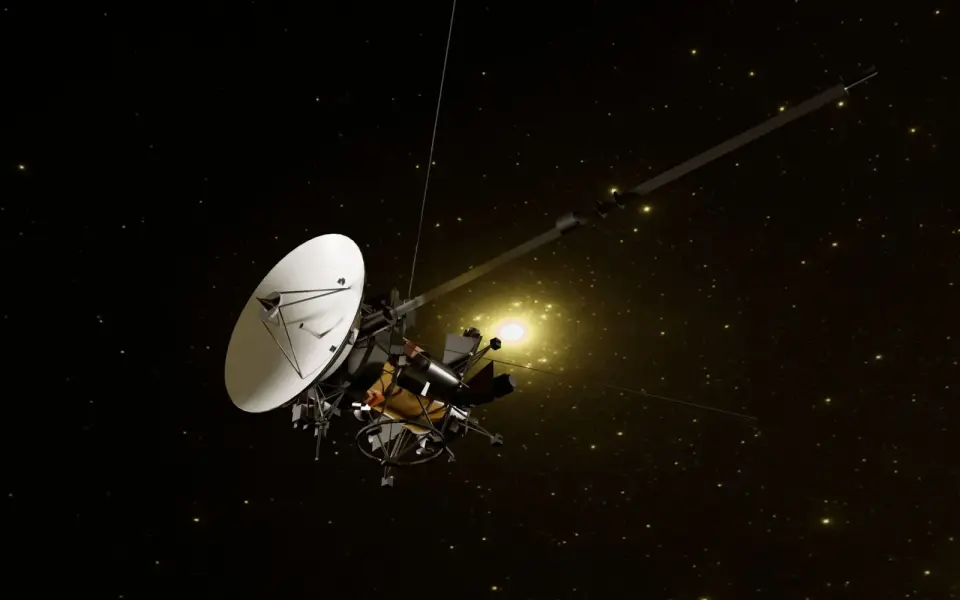
Even after more than four decades, Voyager 1's transmitter—powering a signal the strength of a household bulb—remains audible on Earth as an ultra-weak whisper. NASA's Deep Space Network and enhanced ground systems extract data about the heliopause and local interstellar medium from this fading signal, which travels tens of billions of kilometers and requires a round-trip of nearly two days. The probes’ aging hardware has forced engineers to repair and adapt memory and power management over the years, and while the plutonium power source will eventually silence the link, for now Voyager persists as a faint but scientifically valuable bridge to the edge of the solar system.
- Voyager's signal now reaches Earth as a whisper measured in fractions of a billionth of a watt, fainter than almost anything our antennas were built to hear Space Daily
- Voyager 1 Has Traveled Through Space at 38,000 Mph Since 1977 And Still Hasn't Reached 1 Light-Day ScienceAlert
- One Light-Day Away: Voyager's Epic Voyage Rediff
- Voyager Spacecraft: The Ultimate Power Management Challenge? EE Times
- Voyager 1 was launched in 1977 with a suite of 10 science instruments — as of 2026, only two remain switched on, and the spacecraft's nuclear power source loses roughly 4 watts every year, a slow drain that is now deciding what humanity still gets to learn fr ScienceBlog.com
Want the full story? Read the original reporting
Read on Space Daily