Tag

Voyager

All articles tagged with #voyager

space1 month ago

NASA Extends Voyager Probes’ Lifespan with Heat-Power Upgrade

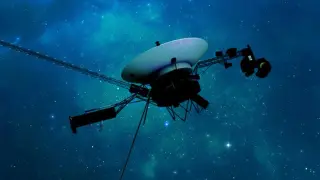
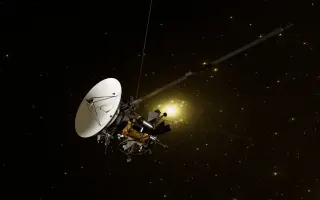
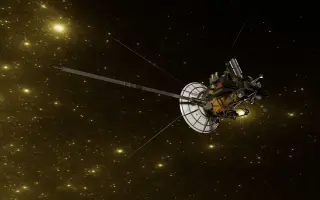
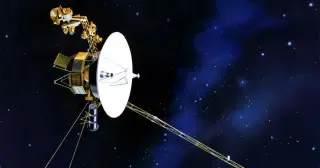
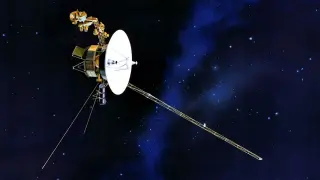
NASA completed a 'Big Bang' upgrade on Voyager 2 to save about 10 watts of power by reconfiguring instruments and heat distribution, extending its mission by 2–3 years; plans are underway to apply the same upgrade to Voyager 1 in the coming months, which could keep both spacecraft operational into the 2030s as their plutonium power sources gradually fade while they continue their vast journeys through the outer solar system.
NASA’s Bold ‘Big Bang’ Plan Buys Voyager 2 Another Year of Science
science1 month ago

NASA’s Bold ‘Big Bang’ Plan Buys Voyager 2 Another Year of Science

NASA engineers at the Jet Propulsion Laboratory executed a risky energy-saving move dubbed a 'Big Bang' to shut down nonessential systems and swap in lower-energy options on Voyager 2, preserving enough plutonium-generated power to keep three instruments functioning for about another year. The team plans to apply the same strategy to Voyager 1, extending the spacecrafts’ science while watts dwindle.

NASA extends Voyager 2's life with a Big Bang power tweak
space2 months ago

NASA extends Voyager 2's life with a Big Bang power tweak

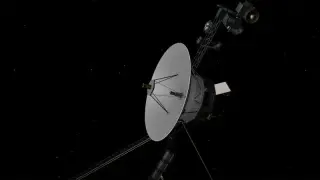
NASA has trimmed Voyager 2's power needs by shutting off nonessential systems and using lower-power equipment on its plutonium-powered RTG, allowing the probe's remaining three science instruments to operate for at least another year despite razor-thin power margins; two instruments were already disabled since 2024, and Voyager 1 will receive the same power tweak soon. The spacecraft continue to transmit interstellar data, with Voyager 2 about 142 AU and Voyager 1 about 171 AU from Earth, and signals taking roughly 24 hours to reach us.

Old Hardware, New Trick Could Extend Voyager 1’s Lifespan
science2 months ago

Old Hardware, New Trick Could Extend Voyager 1’s Lifespan

NASA’s Voyager 1 could gain extra years of operation thanks to a “big bang” power-saving maneuver tested on Voyager 2, which toggles off two heaters and an old data recorder while turning on two other heaters and a propulsion unit. The switch saves about 10 watts per year from the aging RTG, potentially allowing LECP (the Low-energy Charged Particles instrument) to run again and keeping two remaining instruments—plasma-wave and magnetic-field sensors—online as it drifts farther into interstellar space. If all goes well, Voyager 1 could approach one light-day from Earth this November, reach NASA’s projected 50th anniversary in 2027, and possibly extend operations into the 2030s.

NASA's 'Big Bang' fix extends Voyager 2's mission
space2 months ago

NASA's 'Big Bang' fix extends Voyager 2's mission

NASA's Jet Propulsion Laboratory's 'Big Bang' power-management fix on Voyager 2 disables two heaters and a heat-dissipating device while switching on lower-power components, plus a software update so safe-mode includes these devices. The result is about a year of extended data from Voyager 2's three remaining instruments; a similar plan is in place for Voyager 1 with thermal tests by late August. Launched in 1977 and powered by RTGs, both probes remain the farthest active spacecraft from Earth as they traverse interstellar space.

The Titan trade-off: Voyager 1's detour that ended planetary flybys
space2 months ago

The Titan trade-off: Voyager 1's detour that ended planetary flybys

In 1980, a rare outer-planet alignment forced NASA to choose between a close Titan encounter or continuing toward Pluto. They picked Titan, prioritizing a dense-atmosphere moon over a distant Pluto rendezvous, which meant Voyager 1 would never again have a planetary flyby as its path was bent out of the ecliptic. Voyager 2 continued to Uranus and Neptune, while Pluto wasn’t visited until New Horizons in 2015.

Io: The Solar System's Relentless Volcano World
space2 months ago

Io: The Solar System's Relentless Volcano World

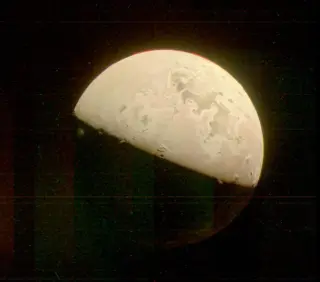
Io, Jupiter’s volcanically active moon with roughly 400 volcanoes and plumes hundreds of kilometres high, was first revealed by Voyager 1 in 1979 and is now understood to be powered by tidal heating that fuels local magma sources, continually resurfacing Io and feeding material into Jupiter’s magnetosphere.

Pulsars as Cosmic Address: Voyager’s Language-Free Map
space2 months ago

Pulsars as Cosmic Address: Voyager’s Language-Free Map

Voyager's Golden Record cover encodes a pulsar map and a hydrogen time standard to locate the Sun and roughly date the message, designed to work without a shared human language. Fourteen pulsars provide directional clocks (with a fifteenth pointing to the Galactic center for orientation), and a uranium-238 patch offers an independent age check. The scheme relies on interpretation and the galaxy's motion over time, reflecting a compact, language-free cosmic address with built-in redundancies and caveats.

Voyager's barely-there interstellar whisper still reaches Earth
space2 months ago

Voyager's barely-there interstellar whisper still reaches Earth

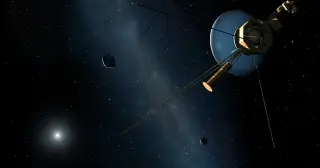
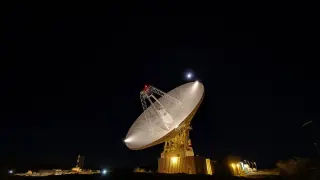
Even after more than four decades, Voyager 1's transmitter—powering a signal the strength of a household bulb—remains audible on Earth as an ultra-weak whisper. NASA's Deep Space Network and enhanced ground systems extract data about the heliopause and local interstellar medium from this fading signal, which travels tens of billions of kilometers and requires a round-trip of nearly two days. The probes’ aging hardware has forced engineers to repair and adapt memory and power management over the years, and while the plutonium power source will eventually silence the link, for now Voyager persists as a faint but scientifically valuable bridge to the edge of the solar system.

A Private Heartbeat on Voyager: The Golden Record’s Hidden Love Letter
space3 months ago

A Private Heartbeat on Voyager: The Golden Record’s Hidden Love Letter

NASA’s Voyager Golden Record carries a minute-long compressed recording of Ann Druyan’s brainwaves and heartbeat from 1977, recorded just after she and Carl Sagan agreed to marry. The clip, intended as a life-sign, sits alongside music, greetings and diagrams as a public time capsule, but it also preserves a private emotional moment that science cannot fully decode. As Voyager travels beyond 25 billion kilometres from Earth, the minute remains a human touch embedded in a machine, a reminder that our messages carry both data and intimate feeling into the cosmos.

Voyager Golden Record: Uranium Clock and Pulsar Map Date Its Cosmic Drift
space3 months ago

Voyager Golden Record: Uranium Clock and Pulsar Map Date Its Cosmic Drift

The article explains that the Voyager Golden Record carries two dating methods: a uranium-238 patch acting as a long-lived clock (half-life ~4.51 billion years) to measure how long the record has drifted since placement, and a pulsar map encoded on the cover that provides a second, independent time stamp via the regular pulsar periods. Together they let any finder, even without human context, determine the record’s age; the clock’s timescale dwarfs the disc’s expected survival, and while the odds of recovery are tiny, the clocks are designed to outlive the civilization that created them. Voyager is not aimed at any particular star and will remain adrift for millennia, with milestones like 24-hour light-time delays illustrating the probe’s great distance from Earth.

Ann Druyan’s Brainwaves Echo Across the Cosmos on Voyager’s Golden Record
space4 months ago

Ann Druyan’s Brainwaves Echo Across the Cosmos on Voyager’s Golden Record

The Voyager Golden Record includes an hour-long recording of Ann Druyan’s brainwaves and heartbeat, compressed into a one-minute track created in 1977 to guide thoughts about Earth’s history, civilization, and her love for Carl Sagan. Druyan intended it as a private meditation that could hint at inner life to any future listener, perhaps alien; today, neuroscience would say such thoughts are unreadable without the full context. The piece frames a hopeful, human, interior moment encoded for interstellar travel as Voyager 1 and 2 sail onward through interstellar space.

Voyager's interstellar greeting shifts from nudity to silhouette
space4 months ago

Voyager's interstellar greeting shifts from nudity to silhouette

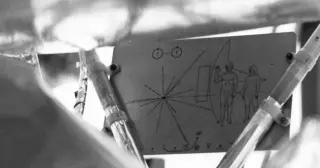
NASA's Voyager Golden Record team, led by Carl Sagan, briefly considered including a nude photograph of a man and a pregnant woman, but public backlash over the nude Pioneer plaque led to a silhouette image instead—a pure black outline showing a pregnant silhouette with the fetus visible inside, while a separate vertebrate-evolution diagram was approved. The record, carrying greetings, sounds, and images, was designed to endure for millions of years as humanity's interstellar message, but the nude depiction was ultimately rejected.