
Americas to witness 96% lunar eclipse as Earth casts shadow on Moon
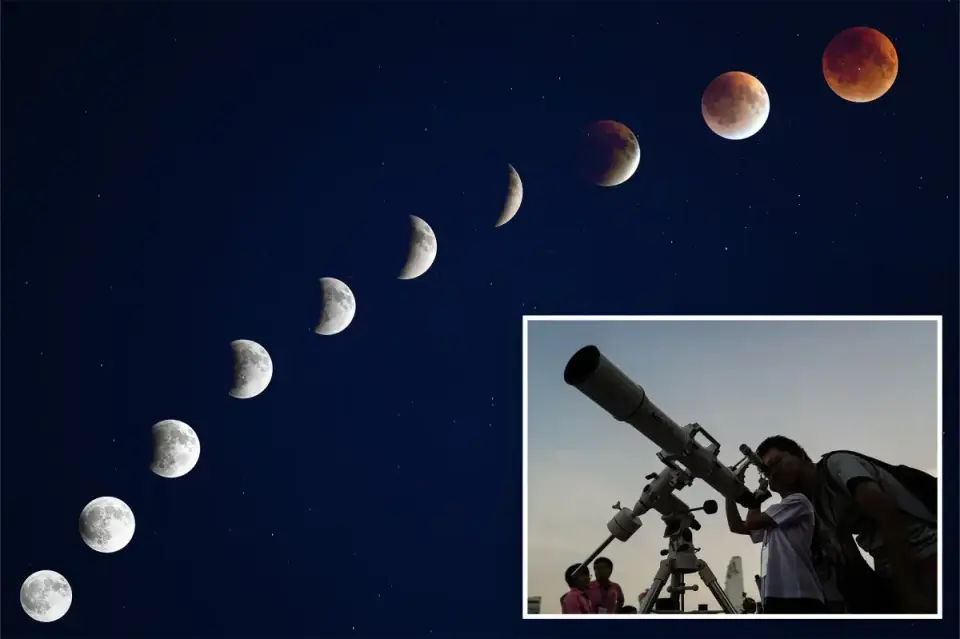
A near-total partial lunar eclipse will occur on August 27-28, 2026, with 96% of the Moon entering Earth's shadow. The Americas offer the best viewing conditions, while over 3 billion people globally can see part of the event. The eclipse peaks just after midnight EDT and lasts over five hours.
Key points
- The partial lunar eclipse will cover 96% of the lunar surface, making it the deepest of 2026.
- Nearly one billion people in the Americas will have full visibility of the event.
- The eclipse peaks just after midnight EDT on August 28, 2026.
- The entire event lasts 5.5 hours, with the partial phase lasting over three hours.
- The next total lunar eclipse visible from the Americas will not occur until 2029.
Background
This event follows a total solar eclipse in August 2026 and a total lunar eclipse in March 2026. It is the second lunar eclipse of 2026 and the fourth eclipse overall this year. Previous coverage noted the 96.2% coverage and the reddish hue caused by Earth's atmosphere filtering sunlight.
How outlets are covering it
The New York Post and AP News emphasize the Americas' prime viewing position, noting nearly one billion people will see the full eclipse. ABC News highlights the safety of naked-eye viewing and the reddish 'blood moon' effect. Space.com focuses on the 96.2% coverage and the event's significance as the deepest partial eclipse until 2028. All sources agree on the timing and visibility, but differ in emphasis: some highlight the global audience (3 billion people), while others focus on the Americas' exclusive view.
Why it matters
This eclipse provides a rare opportunity for billions to observe a near-total lunar event without special equipment. It also highlights the ongoing interest in lunar exploration, following NASA's Artemis II mission. The event serves as a reminder of celestial mechanics and the alignment of Earth, Moon, and Sun.
What to watch
The next total lunar eclipse will occur on New Year's Eve 2028, visible from Asia and Australia. The next total lunar eclipse visible from the Americas will be in 2029. Astronomers will continue to monitor lunar and solar eclipses as part of ongoing space exploration and public education efforts.
- Nearly one billion people in the Americas will have front-row views for near-total lunar eclipse New York Post
- Near-total lunar eclipse is coming up with the Americas in prime position AP News
- Partial lunar eclipse August 2026 — Where will it be visible from? Space
- Next week's partial lunar eclipse caps off a busy month of celestial splendor ABC News - Breaking News, Latest News and Videos
- Partial lunar eclipse to be visible over Long Island Newsday
Want the full story? Read the original reporting
Read on New York Post