
Leonid meteor shower peaks Nov 18 with modest rates but bright fireballs
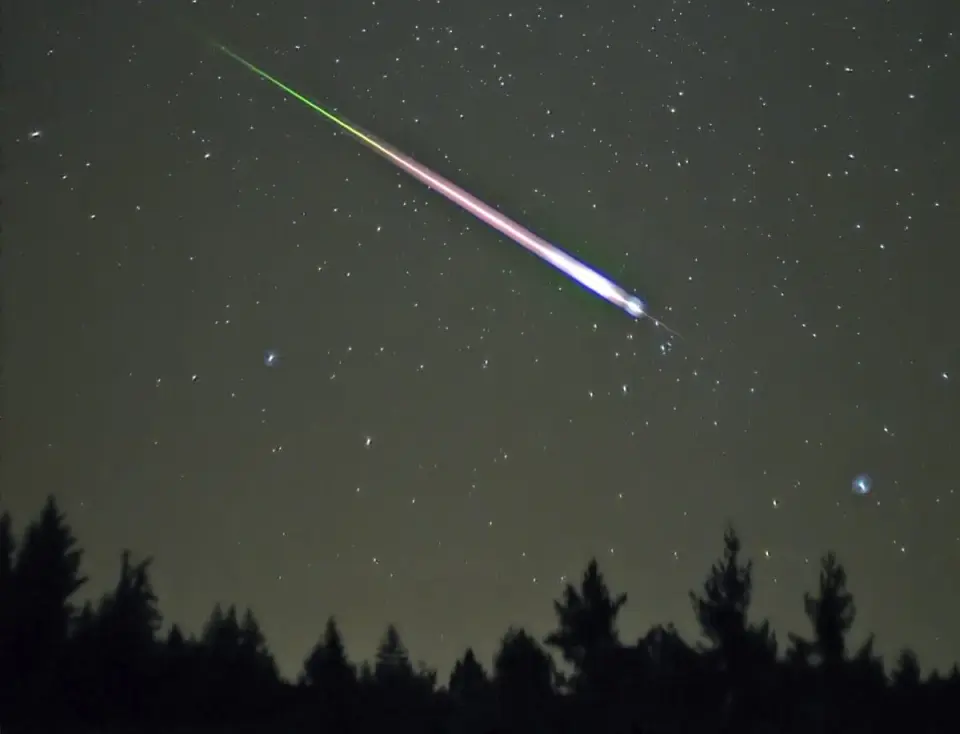
The Leonid meteor shower reaches its peak activity overnight on November 17-18, 2026, offering a modest display of up to 15 meteors per hour under ideal conditions. While rates are low compared to historical storms, the shower is notable for bright fireballs and persistent glowing trails. Best viewing occurs in the pre-dawn hours when the moon sets and the constellation Leo is high in the sky.
Key points
- Peak activity occurs between midnight and 5:30 a.m. on November 18, when the radiant in Leo is highest and the moon has set.
- The International Meteor Organization estimates up to 15 meteors per hour under pristine skies, while NASA cautions casual observers may see fewer than three.
- The shower originates from debris left by Comet 55P/Tempel-Tuttle, which orbits the sun every 33 years.
- No major meteor storm is expected this year; the next potential storm is forecast for 2033 or 2034.
- Observers are advised to use the naked eye, avoid light pollution, and allow 30 minutes for eyes to adapt to darkness.
Background
The Leonid meteor shower has a history of producing spectacular storms, most notably in 1833 and 1966, when rates exceeded 1,000 meteors per hour. The 1966 storm, which peaked at 144,000 meteors per hour, is often cited as the greatest in recorded history. Recent storms occurred in 1999, 2001, and 2002. The 2026 display is expected to be modest due to the parent comet’s current distance from the sun, but the shower remains active until November 30. Previous coverage noted clear skies and chilly temperatures in North Texas as favorable conditions for viewing.
How outlets are covering it
NASA and the International Meteor Organization differ in their expected meteor rates, with NASA cautioning that casual observers may see fewer than three meteors per hour, while the IMO cites up to 15 under ideal conditions. CNN emphasizes the need for dark skies and the absence of the moon, while Space.com highlights the historical significance of the Leonids and the potential for future storms in 2033-2034. Sky & Telescope notes the conjunction of Jupiter and Mars in Leo, which may aid in locating the radiant, and provides detailed planetary positions for the week. All sources agree that the 2026 display will be modest compared to historical storms, but the shower’s bright fireballs and persistent trails make it a notable event for stargazers.
Why it matters
The Leonid meteor shower offers a unique opportunity to observe material from the outer solar system entering Earth’s atmosphere. While the 2026 display is modest, it serves as a reminder of the periodic nature of meteor storms and the importance of dark skies for astronomical observation. The shower’s history has contributed to the scientific study of meteors, and future storms in 2033-2034 could provide significant data for astronomers. For casual observers, the event highlights the value of patience and preparation in stargazing, as even modest rates can produce memorable fireballs and trails.
What to watch
The Leonid meteor shower will remain active until November 30, 2026, with rates gradually declining after the peak. The next major meteor storms are expected in 2033 and 2034, when Comet 55P/Tempel-Tuttle is closer to the sun and may release more debris. Observers interested in additional meteor activity can look forward to the Geminids in December 13-14 and the Ursids in December 21-22. For those who missed the Leonids, the clear skies and dark conditions in the pre-dawn hours may also offer opportunities to observe other celestial events, such as the conjunction of Jupiter and Mars in Leo.
- Leonid meteor shower peaks tonight with fireballs over the US Yahoo Tech
- See the Leonid meteors this week — ‘the shower that started it all’ CNN
- 'It looked like every star in the sky was falling': Eyewitnesses remember the great Leonid meteor storm of 1966 Space
- This Week's Sky at a Glance, November 13 – 22 Sky & Telescope
- Dallas Weather: Clear skies, chilly temperatures and Leonid meteor shower peak FOX 4 News Dallas-Fort Worth
Want the full story? Read the original reporting
Read on Yahoo Tech