
Saturn Reaches Peak Brightness This Weekend as Rings Return to View
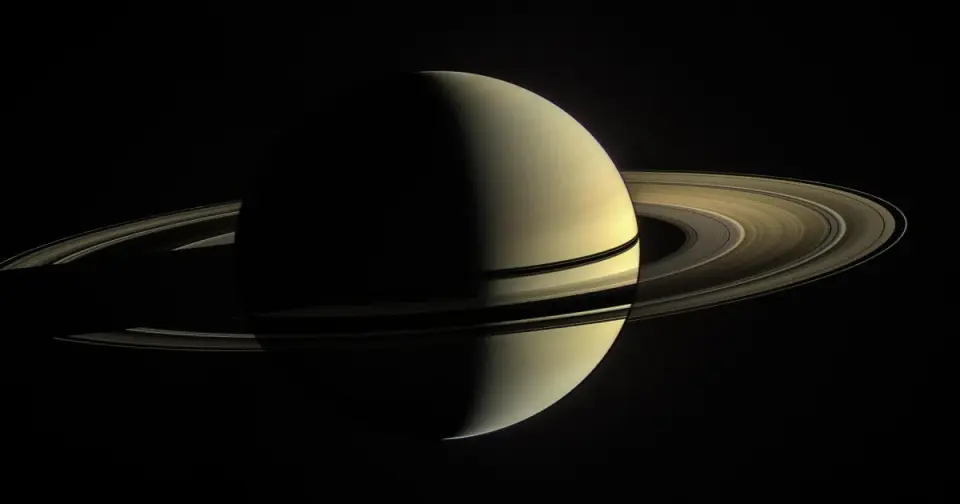
Saturn reaches opposition on October 4, 2026, making it the brightest and largest it will appear this year. Local observatories in Kansas City and Louisburg are hosting viewing events, while the planet's rings are once again visible after disappearing in 2025.
Key points
- Saturn reaches opposition on October 4, 2026, when Earth passes between the planet and the Sun, bringing it closest to Earth and maximizing brightness.
- The planet is visible to the naked eye as a bright, yellowish point of light that does not twinkle, but requires a telescope to see its rings clearly.
- Powell Observatory in Louisburg, Kansas, and Warko Observatory at the University of Missouri-Kansas City are hosting public viewing sessions this weekend.
- Saturn's rings, which appeared nearly edge-on and invisible in 2025, are now tilted at approximately 7 degrees, making them visible again through telescopes.
- The Seeliger effect is currently brightening Saturn's rings, a phenomenon where ring particles backscatter sunlight when the Sun is directly behind Earth.
Background
This event follows a period where Saturn's rings were nearly invisible due to their edge-on orientation in 2025. The current visibility aligns with the planet's 29-year orbital cycle, which dictates the angle at which Earth views the rings. Local interest in astronomy in Kansas City has been steady, with previous coverage focusing on other local events, but this celestial event offers a significant opportunity for public engagement with space science.
How outlets are covering it
KCUR emphasizes local accessibility, highlighting specific observatories in Kansas City and Louisburg that are open to the public, and provides practical tips for naked-eye identification. National Geographic focuses on the scientific significance of the ring's return, explaining the 13-to-15-year cycle of ring-plane crossings and the specific 7-degree tilt that makes them visible now. Sky & Telescope provides a detailed technical perspective, noting the Seeliger effect that is currently brightening the rings and offering precise timing for when Saturn is highest in the sky for optimal viewing.
Why it matters
This event provides a rare opportunity for the public to observe Saturn's rings in detail after a year of near-invisibility. It highlights the importance of local astronomical resources for education and public engagement, while also demonstrating the dynamic nature of planetary systems as they orbit the Sun.
What to watch
Skywatchers can expect to see Jupiter near the Moon on October 6, followed by the Draconid meteor shower peaking on October 8 and 9. The Orionid meteor shower will peak later in the month on October 21 and 22, offering up to 20 meteors per hour under good conditions.
- Kansas City can see Saturn at its brightest this weekend. Here's how to find it KCUR
- October skywatching guide: Hunter's Moon, meteor showers, Saturn at opposition and more you can't miss FOX Weather
- How to Get a Glimpse of Saturn's Rings This Week National Geographic
- This Week's Sky at a Glance, October 2 – 11 Sky & Telescope
- October’s Night Sky Will Bring 3 Meteor Showers, Peak Saturn, Northern Lights, and a Final Milky Way Show Travel + Leisure
Want the full story? Read the original reporting
Read on KCUR