
Voyager 1 Confirmed at One Light-Day Distance Despite Recent Data Glitch
NASA confirmed that Voyager 1 has reached a distance of one light-day from Earth, a milestone achieved on November 19, 2026. The spacecraft, launched in 1977, is now approximately 16.1 billion miles away, meaning radio signals take 24 hours to reach it and another 24 hours for a response. Although the probe recently experienced a temporary loss of science data, engineers confirmed the milestone using carrier signals and trajectory calculations. Voyager 1 remains the farthest human-made object, continuing to study interstellar space despite aging hardware and dwindling power.
Key points
- Voyager 1 crossed the one-light-day threshold on November 19, 2026, confirmed by NASA’s Jet Propulsion Laboratory.
- The distance is approximately 16.1 billion miles (25.9 billion kilometers), resulting in a 48-hour round-trip communication delay.
- The spacecraft stopped transmitting science and engineering data on November 14, but the carrier signal remained intact, allowing confirmation of its status.
- Voyager 1 is currently traveling at 38,000 mph and is powered by plutonium, with only two scientific instruments still active.
- Voyager 2 is expected to reach the same distance in 2035, though its operational status at that time is uncertain.
Background
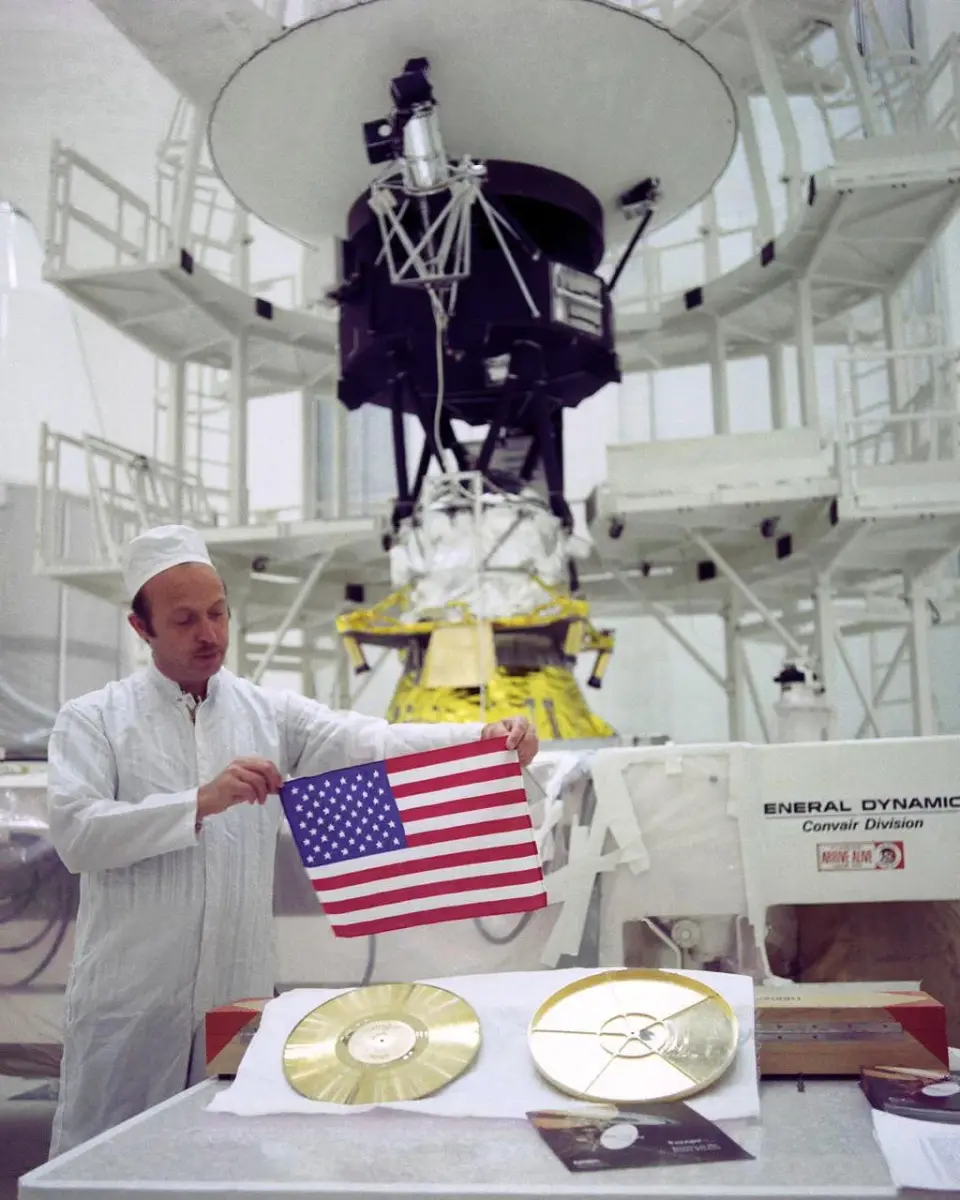
Voyager 1 and its twin, Voyager 2, were launched in 1977 with an original mission duration of five years. Both spacecraft have far exceeded their expected lifespans, with Voyager 1 entering interstellar space in 2012. The probes carry Golden Records containing sounds and images from Earth, intended as time capsules for any potential extraterrestrial discovery. Previous milestones include Voyager 1’s 1990 'Pale Blue Dot' photograph and its 1998 record as the most distant human-made object.
How outlets are covering it
AP News and NASA Science focused on the technical confirmation of the light-day milestone despite the recent data loss, emphasizing the resilience of the mission. CNN highlighted the operational challenges, including the 'Big Bang' power redistribution maneuver and the risks of aging hardware. The New York Times framed the event as a symbolic shift toward interstellar exploration, noting the rhetorical significance of the distance. All sources agreed on the milestone’s historic nature but differed in emphasis: AP and NASA stressed the engineering success, CNN detailed the power constraints, and The New York Times focused on the broader implications for future space missions.
Why it matters
The one-light-day milestone underscores the extreme distances of interstellar space and the technological ingenuity required to maintain communication with aging spacecraft. It highlights the challenges of operating deep-space probes with dwindling power and the importance of preserving data from Voyager 1 before it eventually ceases operations. The event also serves as a reminder of humanity’s reach into the cosmos and the potential for future missions to explore further.
What to watch
NASA engineers are investigating the cause of the recent data loss, which may take weeks to resolve due to the 48-hour communication delay. The mission team is monitoring Voyager 1’s power levels and instrument status, with the goal of extending its operational life as long as possible. Voyager 2 is expected to reach the one-light-day distance in 2035, but its ability to communicate by then is uncertain. Future missions to the interstellar medium will require decades of development, making the data from Voyager 1 and 2 invaluable.
- NASA’s Voyager 1 phones home from an awe-inspiring one light-day away AP News
- After 49 Years, Voyager 1 Is a Mind-Blowing One Light-Day From Earth The New York Times
- Voyager 1 is now one light-day from Earth CNN
- Voyager 1 Engineers Analyze Data Issue, Ready to Confirm Light-day NASA Science (.gov)
- Empire State Building glows gold for NASA's Voyager spacecraft | Space photo of the day for Nov. 19, 2026 Space
Want the full story? Read the original reporting
Read on AP News