
Curiosity’s 14-Year Journey Leaves Deep Marks on Its Wheels
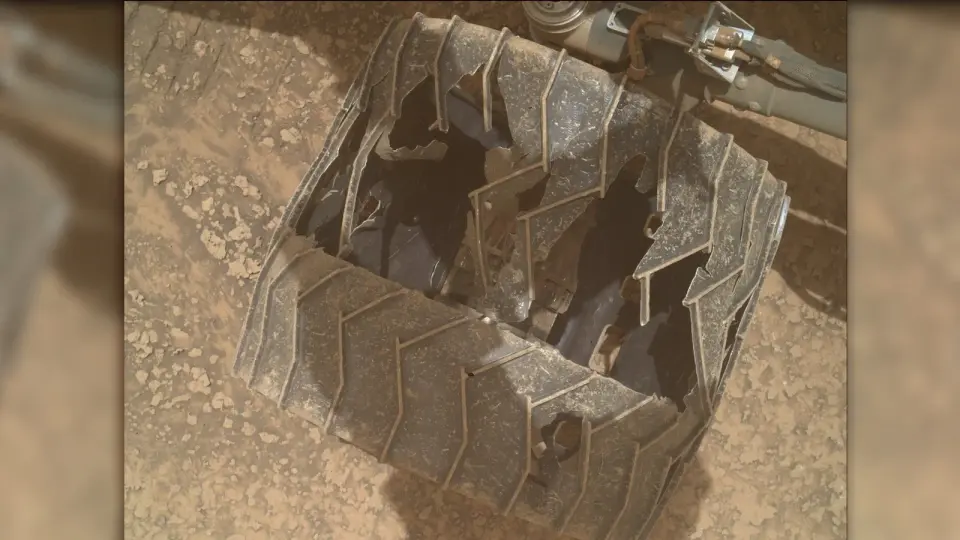
NASA's Curiosity rover has documented significant wear on its wheels after nearly 14 years on Mars. A new close-up image shows cracks and holes in the wheel structure, resulting from over 20 miles of travel across rugged terrain. Despite the damage, NASA and JPL state the wheels are still holding up well.
Key points
- Curiosity landed in Gale Crater on August 5, 2012, and has traveled over 20 miles (32 kilometers) since then.
- A new photo taken on July 23, 2026 (Sol 4963), reveals cracks and holes in one of the rover's wheels.
- The rover weighs over one ton, and the rocky Martian terrain has caused significant wear and tear over the years.
- NASA and JPL periodically inspect the wheels using the rover's cameras; a 2024 statement noted they are 'holding up well' despite the abuse.
- The rover continues its mission to search for signs of ancient life on Mars.
Background
Curiosity has been active on Mars for nearly 14 years, traveling over 20 miles across Gale Crater. Recent images have highlighted various surface features, including ancient sandstorm wreckage and honeycomb patterns, while also documenting the physical toll on the rover's hardware. The wheels have shown progressive damage over time, with earlier inspections noting cracks and holes, but the rover remains operational.
Why it matters
The condition of Curiosity's wheels is critical for its continued mobility and mission success. As the rover ages, understanding the extent of wear helps NASA assess its operational lifespan and plan future activities. The images provide valuable data on how the rover's components withstand the harsh Martian environment over long periods.
What to watch
NASA and JPL will continue to monitor the rover's wheels and overall health as it proceeds with its mission. Future inspections may reveal further damage or confirm the wheels' continued functionality, impacting the rover's operational timeline and scientific objectives.
Want the full story? Read the original reporting
Read on Space