Tag

Ai In Biology

All articles tagged with #ai in biology

technology24 days ago

AI-Guided Loop Accelerates Automated Enzyme Engineering

Researchers present REAP (Rank-guided Exploration for Automated enzyme reProgramming), a closed-loop AI-automation platform that uses a RankReg hybrid loss to learn from experimental feedback, enabling adaptive learning from single mutations to productive combinatorial variants. Applied to cytochrome P450 BM3 and SaSrtA, REAP achieved a 57-fold improvement in one case and up to 104-fold enhancement in the other, demonstrating a scalable, generalizable framework for fast biocatalyst discovery and enzyme-enabled synthesis.
UCSD study maps a molecular switch to prevent Alzheimer’s in mice
science4 months ago

UCSD study maps a molecular switch to prevent Alzheimer’s in mice

UC San Diego researchers have identified Chromogranin A as a potential molecular switch that could prevent Alzheimer’s-like memory loss; in mice, removing CgA protected against dementia, and peptides that interact with CgA may either provoke or prevent cognitive decline. An AI framework helped confirm consistent patterns across datasets and pinpoint peptides that could halt disease progression, suggesting a preventive, not curative, approach. While results are promising and described as safe in mice, human testing and further funding are needed.

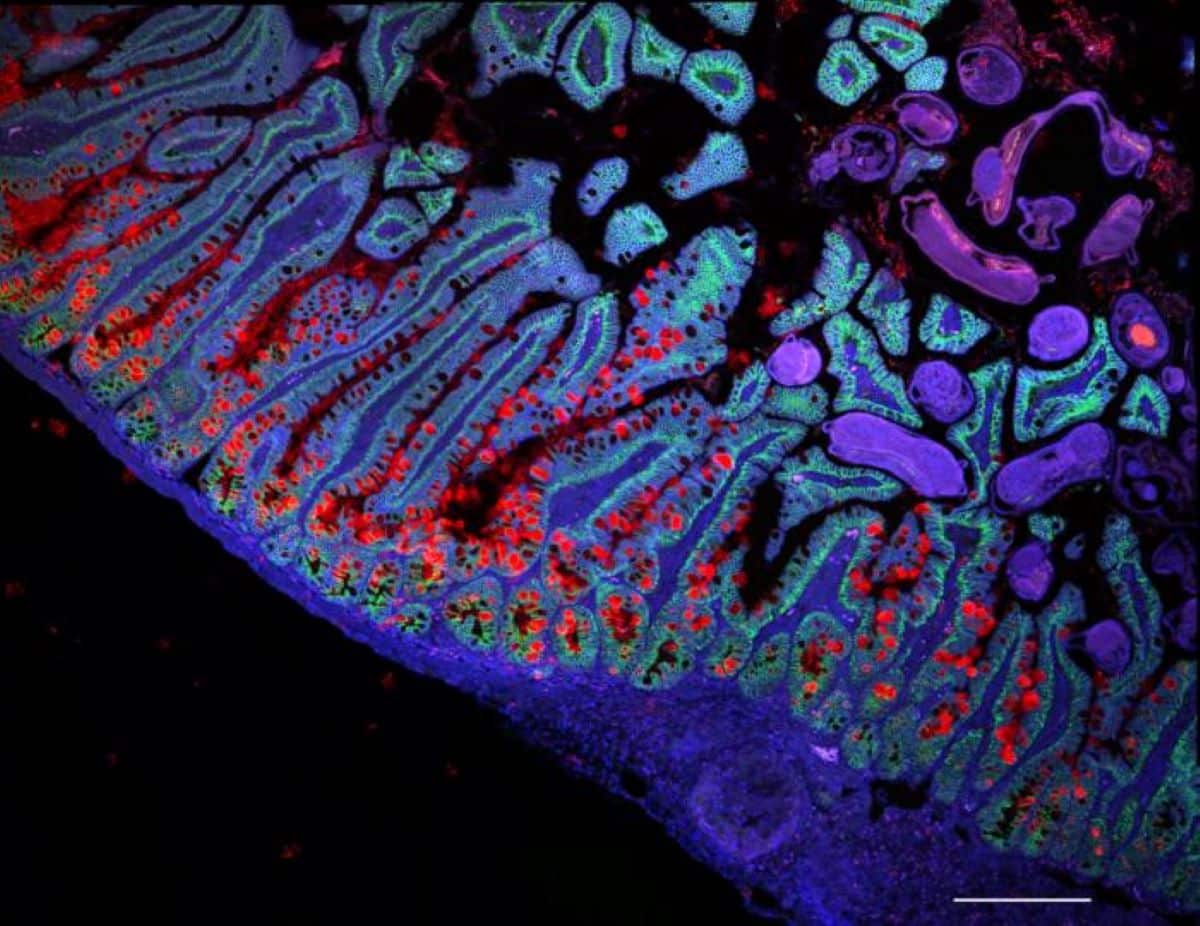
Breakthrough in Mapping the Human Cell Atlas Revolutionizes Disease Understanding
science1 year ago

Breakthrough in Mapping the Human Cell Atlas Revolutionizes Disease Understanding

The Human Cell Atlas (HCA) consortium has published over 40 studies that provide groundbreaking insights into human biology by mapping over 100 million cells from 10,000 individuals. These studies, which cover areas like brain development and COVID-19 lung responses, highlight the use of AI in understanding cellular mechanisms. The HCA aims to create a comprehensive "Google Maps" for cell biology to enhance diagnostics, drug discovery, and regenerative medicine, emphasizing diversity to ensure a globally inclusive understanding of health and disease.