Three smart devices—Ecobee Smart Thermostat Premium with SmartSensor, Sensibo Air Pro, and Eve Door & Window Contact Sensor—let you automate and optimize cooling. They offer smart control, climate-reactive cooling, indoor air monitoring, and open-window detection to save energy and extend HVAC life.
Europe’s late-June heat wave caused about 16,000 excess deaths across the continent, with Wallonia in southern Belgium reporting a single-day total of 313 deaths and a 77% higher-than-expected death rate from mid‑June to early July as hospitals struggled and temps topped 100°F. Yet locals and officials resist widespread air conditioning, with only about 20% of European homes cooled—citing power-grid strain, costs, and environmental concerns—while authorities focus on cooling spaces and renovations and doctors warn that vulnerable populations still need AC.
IndyBest tests Sony's reon pocket pro plus, a neck-worn thermoelectric cooler that directs cooling to the upper back, claiming up to 2°C more cooling than the previous model; with a redesigned neckband, adjustable vent, five cooling stages, smart auto mode, and a warming option, it beats handheld fans during Tokyo heat and the UK heatwave, but at £199 it's pricey and it won't replace a full air conditioner.
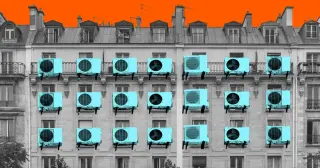
Record heat across Western Europe is pushing air conditioners from a luxury into a growing necessity, with European brands reporting double‑digit sales gains in markets like Italy, Spain, France, and the UK. Market observers say the trend is structural, driven by rising temperatures, aging housing, and public health concerns, even as Europe’s AC penetration remains far lower than the U.S. (about 1 in 5 households vs ~9 in 10 in the U.S.).
A fire at a children's care home in the Algiers suburb of Mohammadia killed 11 people and injured 19 after a faulty air-conditioning unit sparked an electrical blaze; rescuers battled the flames for hours, a carer died, and authorities including the prime minister visited survivors, amid calls for fire-safety audits and accountability.
As wildfire smoke blankets New York, experts warn that most window ACs primarily recirculate indoor air and won’t fully purify the air. Look for fresh-air dampers on units, maintain and replace filters every 4–6 weeks, seal gaps around windows (including accordion panels), and understand that central AC may not be prepared for sudden smoke. Portable ACs with single hoses can draw in more smoke; if possible, use air purifiers or DIY clean-air setups instead of relying on the AC for air quality. Also limit indoor pollutant sources and avoid strenuous activity during smoky conditions.
Texas’ prison system faces new wrongful death litigation and a pending federal case over deadly heat in unair-conditioned cells, as about 85,000 of its 141,000 inmates are housed without AC and interior temps can exceed 115F; advocates urge AC in all prisons within three years, a fix estimated at $1.3 billion funded via the state’s economic stabilization fund, while understaffing, water outages and alleged deliberate indifference are cited in the Coffield death of Jason Wilson and other heat-related concerns, with a court ruling in Austin anticipated in coming months.
New York City residents report rising electricity bills during a historic heat wave: 47% can run air conditioning comfortably, 44% have AC but limit use to keep costs down, and 9% have no AC or won’t say. The issue is tied to state levies on utilities, with Gov. Hochul proposing up to $200 energy rebates for more than 8 million New Yorkers as part of the budget. The poll of 614 voters conducted June 12–17 has a margin of error of ±3.96 percentage points, highlighting a cost-and-health tradeoff in this election year.
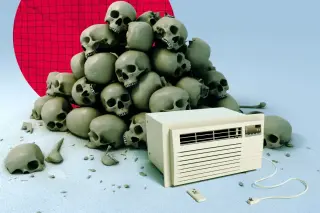
As Europe endures record heat waves, air conditioning becomes a political flashpoint in France and beyond: supporters say AC saves lives during extreme heat, especially for the vulnerable, while opponents warn it raises energy use and can worsen urban heat and emissions. The WHO advocates a holistic approach—cooling centers, insulation, trees, and flexible work schedules—to address a systemic heat crisis. Public figures are split: some leaders push broader AC adoption, while others, including Paris's mayor, urge restraint and emphasis on building efficiency. Across Europe, AC use is rising, prompting calls for balanced strategies that combine cooling with preventive measures rather than relying on machines alone.
A Space Daily analysis contrasts the U.S. and Europe on air conditioning: about 90% of American homes have AC versus roughly 20% in Europe, even as European summers warm roughly twice the global average. While AC saves lives during heatwaves, it boosts electricity demand and emissions, complicating grid and policy choices. Adoption in Europe is uneven and hampered by cost and infrastructure, but countries like Italy and the UK are increasing penetration. The gap persists amid ongoing warming and debates over energy-efficient, solar-powered cooling versus traditional, grid-heavy cooling.
France’s heatwave debate over personal cooling highlights a larger climate truth: while U.S. households rely heavily on air conditioning and contribute a sizable share of emissions, many poorer nations lack affordable cooling; overall AC accounts for about 3.2% of global emissions and roughly 7% of electricity use, underscoring climate change as much a problem of global inequality as of technology.
New York City Mayor Zohran Mamdani drew backlash online after recommending residents set their air conditioners to 78°F during a blistering heat wave that could push temperatures to 100°F, with critics calling the guidance impractical or political. Mamdani said the 78-degree rule would ease demand on the power grid and urged lighting and electronics to be minimized, while officials note DOE guidance of roughly 75–78°F and warned of high energy usage as NYC endures the hottest days since 2012. The backlash included jokes and mockery from critics and residents alike.
Paris deputy mayor Audrey Pulvar blamed the United States for last week’s record heatwave that killed roughly 1,000 people, arguing that heavy U.S. use of air conditioning fuels global warming. In an Instagram post, she criticized American journalists and influencers, urged broader ecological transitions in the United States, and noted France’s efforts to cut emissions. She also referenced the U.S. withdrawal from the Paris Agreement as part of the problem, while stressing that France is taking climate-adaptation steps.
During France’s record heat wave, Parisians confront scarce air conditioning in homes, hospitals, and schools, facing cultural myths about thermal shocks, high electricity costs, and environmental concerns; with temperatures rising and about 1,000 excess deaths, the conversation shifts from viewing AC as a luxury to recognizing cooling as a health necessity, prompting calls for broader cooling infrastructure and adaptation.
Amid a brutal heatwave, the European Commission declined to take a pro or con stance on private-home air conditioning, saying it won’t micromanage consumer choices and that the issue should be addressed through energy efficiency and building renovations; it left room to revisit if political context changes and highlighted an Electrification Action Plan to power heating and cooling from cleaner energy. The debate ties into the broader Green Deal rethink toward net-zero and decarbonisation, with renewables accounting for about 47% of EU electricity in 2025.