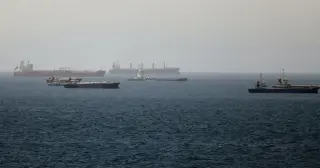
Windward data shows about 75% of ships in the Strait of Hormuz turning off AIS, with tankers leading the blackout, as missiles rain down, underscoring heightened risk and disruption in a critical global shipping lane.
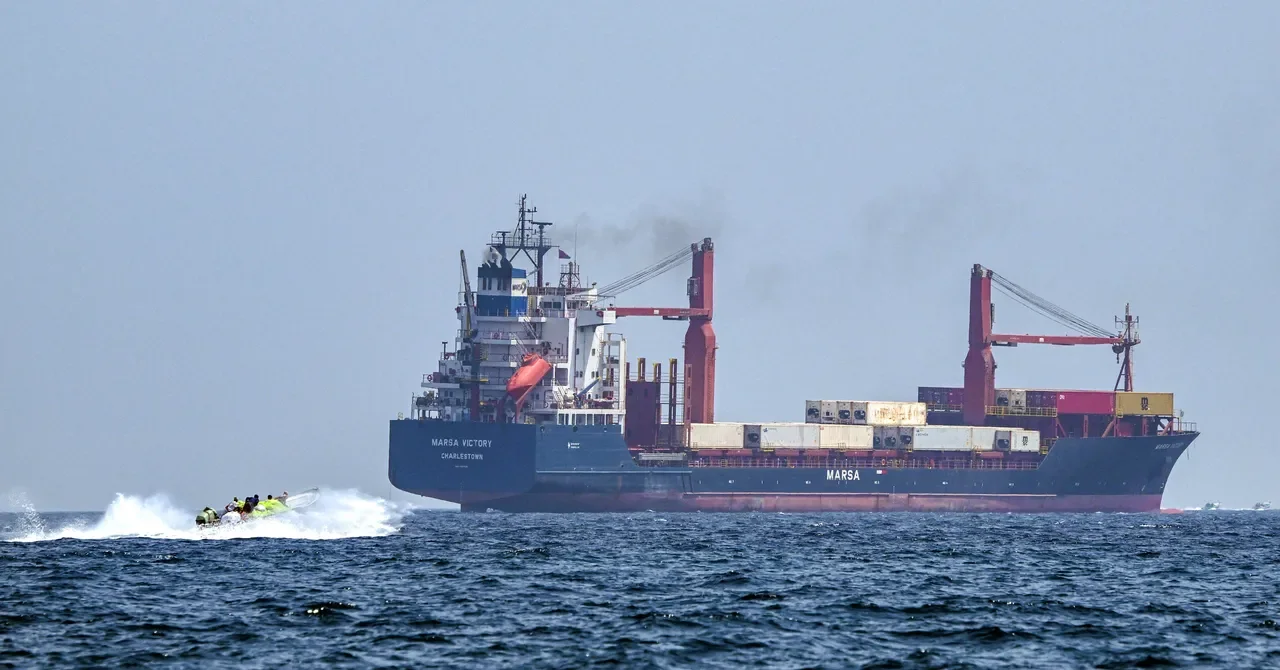
Iran says the Strait of Hormuz is closed, cutting shipping as trackers log only 12 transits on Sunday (down from 35), with several vessels turning off AIS; CENTCOM disputes the closure while commercial data shows thinner traffic as US–Iran talks continue, and oil prices slip slightly.
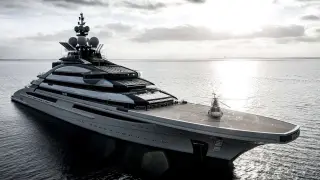
Nord, a $500 million private megayacht linked to Russian billionaire Alexei Mordashov, crossed the Strait of Hormuz in full view with AIS tracking, while oil tankers waited at the edge; the transit followed a defined corridor and highlights how sanctions and traffic constraints shape movement in crowded, strategic waterways.
GPS jamming off Iran is creating AIS position distortions near the Strait of Hormuz, making vessels appear on land or in strange clusters and raising collision risks as electronic warfare spills into Gulf waters. While Iran is suspected, there is no official confirmation; researchers use radar and satellite data to map the interference and are pursuing mitigations from anti-jamming antennas to alternative navigation methods (gyroscopes, accelerometers, star-mapping), though no solution is perfect. The episode highlights the vulnerability of open GNSS and the push toward more secure, multi-sensor positioning.
Windward’s analysis shows GPS and AIS interference in the Gulf has disrupted more than 1,100 ships since the Feb. 28 US-Israel strikes on Iran, with vessels appearing inland or near sensitive sites (including the Barakah Nuclear Power Plant). The disruption is largely jamming, though some spoofing is occurring, and about 21 new AIS‑jammed clusters have been identified, prompting officials to call the area “critical” as the conflict expands and navigational risks rise in the Strait of Hormuz and Gulf of Oman.
Researchers have observed nerve plasticity within the axon initial segment (AIS) in real-time, shedding light on the adaptability of axons. The study reveals that the number of sodium channels in the AIS can change rapidly, within an hour, through a process called endocytosis. This adaptability allows for fine-tuning of neural activity and is crucial for learning and memory. The research team used innovative techniques, including live imaging, to observe these changes and identify the molecular mechanisms behind them. This groundbreaking research provides unprecedented insight into the intricate processes of neuroplasticity.