Tag

Cicadas

All articles tagged with #cicadas

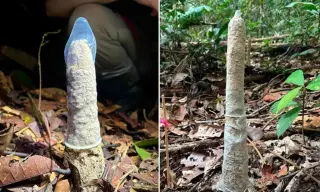
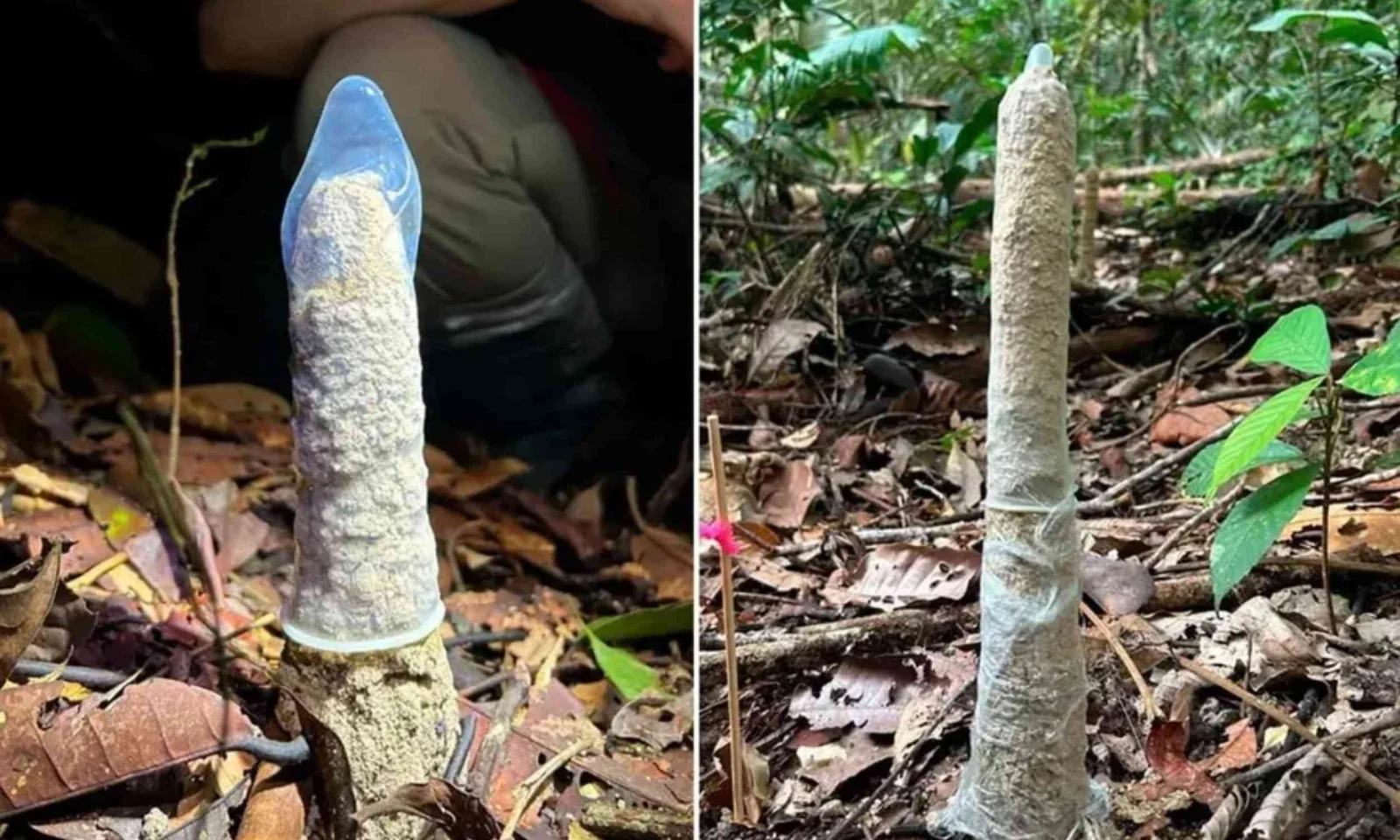
Condoms help scientists decode Amazon cicada mud towers
science28 days ago

Condoms help scientists decode Amazon cicada mud towers

Researchers in the Brazilian Amazon used condoms to seal cicada mud towers and found the structures help protect developing nymphs from predators (ants) and regulate air flow; larger towers rebound faster after disruption, suggesting the towers are an extended phenotype that aids survival during metamorphosis. The field study, conducted through Serrapilheira Institute and published in Biotropica, reframes these towers as an adaptive life-cycle tool rather than mere dirt.

Amazon cicada mud towers reveal a hidden survival tool
animals2 months ago

Amazon cicada mud towers reveal a hidden survival tool

Researchers studying Amazonian cicadas found that their mud towers protect underground nymphs from predators and help regulate air flow during metamorphosis, effectively making the towers an extended phenotype that boosts survival; experiments showing predator avoidance and airflow disruption also found tower size influences recovery, reframing the towers as purposeful biology rather than mere dirt (Biotropica).

"Earth's 32 Loudest Animals Revealed"
nature2 years ago

"Earth's 32 Loudest Animals Revealed"

The article explores 32 of the loudest animals on Earth, ranging from the blue whale, which can emit calls up to 188 decibels, to the tiny African cicada, whose mating call reaches 107 decibels. It highlights the diverse ways these animals use their loud calls for communication, mating, and hunting, and includes fascinating details about each species' unique vocalizations and behaviors.

"2024 Cicada Map: Where and When to Expect Brood XIX and XIII"
environment2 years ago

"2024 Cicada Map: Where and When to Expect Brood XIX and XIII"

A map by the U.S. Forest Service shows where cicadas from Brood XIX and Brood XIII will emerge in 2024, and Brood XIV in 2025. Brood XIX, the largest geographic brood, will be concentrated in Missouri and Illinois, while Brood XIII will inundate Illinois and Iowa. In 2025, Brood XIV will appear in Southern Ohio, Kentucky, Tennessee, and parts of West Virginia, Virginia, and North Carolina. Despite their large numbers, cicadas are not dangerous.

Cicada Emergence 2024: Maps, Sightings, and Impact in Illinois and Beyond
environment2 years ago

Cicada Emergence 2024: Maps, Sightings, and Impact in Illinois and Beyond

Researchers are studying a rare dual emergence of 17-year and 13-year cycle cicadas at Macbride Recreation Area in Iowa, a phenomenon not seen in 220 years. The 2020 derecho's impact on the area could have significantly affected the cicada population, but careful conservation efforts have allowed for a dense emergence. Scientists are investigating the cicadas' advanced auditory systems and using their sounds for artistic projects.

"Cicada Swarms Peak Across US, Impacting Autism Spectrum and Midwest Residents"
city-news2 years ago

"Cicada Swarms Peak Across US, Impacting Autism Spectrum and Midwest Residents"

Cicadas from Brood XIII have emerged in some Chicago neighborhoods after 17 years, but sightings are inconsistent across the city. Areas with more greenery like Beverly and Edgebrook report high numbers, while more urbanized neighborhoods like Ravenswood and Logan Square see fewer or none. Entomologist Allen Lawrance explains that cicadas have a patchy distribution and are affected by local environmental conditions, including tree density and predator presence. The current emergence window is closing, and future cicada populations may be influenced by climate change.

"Cicada Emergence: 2024 Map, Diet, and Facts to Know"
nature2 years ago

"Cicada Emergence: 2024 Map, Diet, and Facts to Know"

The 17-year "Northern Illinois Brood" (Brood XIII) and the 13-year "Great Southern Brood" (Brood XIX) of cicadas are set to emerge in 2024, spanning across 17 states with some overlap in Illinois and Indiana. Michigan may not see as many cicadas as other states, and the emergence is expected to begin in late April or May when soil temperatures reach 64 degrees Fahrenheit. Cicadas are harmless insects that emerge in groups known as "broods" once every 13 or 17 years to reproduce, and they do not pose a danger to humans or animals. If you want to witness the emergence, heading to Indiana and Illinois is recommended.

"2024 Cicada Emergence: Mapping the Spread of Zombie-Like Fungus"
environment2 years ago

"2024 Cicada Emergence: Mapping the Spread of Zombie-Like Fungus"

Cicada maps for Illinois show that two broods of periodical cicadas will emerge in 2024, with one prevalent in the northern half and the other in the southern half of the state. Expected to emerge in May or early June, the cicadas will be noisy but harmless to humans and pets. This will mark the first time since 1803 that these two types of cicadas have emerged together, and they are expected to be spotted in areas with mature trees around the city and suburbs.

"Cicada Invasion 2024: Brood XIX Emergence and the Threat of Zombie Cicadas"
environment2 years ago

"Cicada Invasion 2024: Brood XIX Emergence and the Threat of Zombie Cicadas"

Trillions of Brood XIX cicadas, dormant for 13 years, are set to emerge in 2024, creating a rare "cicada-geddon" event in 14 states including Tennessee. The insects will produce their distinctive loud mating calls from mid-May to mid-June in Tennessee, with specific counties listed. The emergence is weather-dependent, and the males "scream" to attract mates. Brood XIX and Brood XIII cicadas have different emergence cycles, with theories suggesting their timing evolved to evade predators and adapt to ice ages.

"Cicada Killer Wasps and Zombie STDs: The 2024 Double Brood Emergence"
nature2 years ago

"Cicada Killer Wasps and Zombie STDs: The 2024 Double Brood Emergence"

Trillions of periodical cicadas set to emerge in the Midwestern and Southeastern states next month will face a unique predator, the cicada killer wasp, which preys on cicadas and may disturb lawns. The two broods, XIX and XIII, set to emerge in mid-to-late May, will be targeted by these wasps, which sting if threatened and can cause minor damage to lawns. The next double-emergence of these broods is not predicted until 2245.