New research indicates that GLP-1 medications, primarily used for weight loss and diabetes, may slow biological aging and extend lifespan. Studies on mice show semaglutide extends life beyond what is expected from calorie restriction alone, while human trials suggest tirzepatide and semaglutide reduce biological age by two to four years in various organs. Experts caution that these benefits are not yet proven for healthy, non-obese individuals.
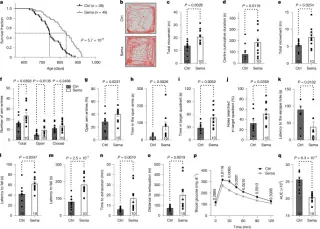
A new study in Nature shows that administering semaglutide to 20-month-old female mice extends their median lifespan by approximately 12%, from 742 to 834 days. The drug, known commercially as Wegovy and Ozempic, acts as a 'calorie restriction mimetic' by suppressing appetite and reducing food intake by 24%. Beyond weight loss, treatment improved physiological function, including spatial memory, motor coordination, and glucose control. Researchers found that semaglutide attenuated key hallmarks of aging, such as inflammation, cellular senescence, and genomic instability, while modulating conserved genetic regulators like sirtuins and insulin-IGF1 signaling. Notably, in a direct comparison, semaglutide produced more favorable outcomes in exploratory drive and memory than matched calorie restriction, suggesting benefits beyond simple caloric reduction. While the results are promising, they are limited to female mice, and human applications for anti-aging remain speculative pending long-term clinical trials.
Scientists have discovered that the protein FTL1 accelerates brain aging by affecting iron metabolism and mitochondrial function. Reducing FTL1 levels in mice reversed age-related cognitive decline and improved neural connections, opening new avenues for targeted anti-aging therapies and potential treatments for neurodegenerative diseases.
The Pro-Aging Metabolic Reprogramming (PAMRP) theory suggests aging results from degenerative metabolic reprogramming, combining programmed and random processes. It emphasizes metabolism's role in aging and proposes that interventions like calorie restriction mimetics could potentially slow or reverse aging. While promising, further research is needed to validate the theory and explore its implications for anti-aging treatments.