Tag

Aphelion

All articles tagged with #aphelion

Don't Nod's Aphelion Lands on Xbox Game Pass as a Day-One Adventure
gaming29 days ago

Don't Nod's Aphelion Lands on Xbox Game Pass as a Day-One Adventure

Don't Nod's third-person sci-fi adventure Aphelion launches today on Xbox and PC and is available day one in Xbox Game Pass for Ultimate/PC Game Pass. Players control astronaut Ariane who crash-lands on Persephone, a frozen planet, and must survive and locate her wounded partner Thomas using stealth to avoid a hostile lifeform, all while Earth faces destruction.

Spring Game Pass Expands with Kiln, Aphelion, Final Fantasy V and More
gaming1 month ago

Spring Game Pass Expands with Kiln, Aphelion, Final Fantasy V and More

Xbox Game Pass reveals a busy spring lineup with day-one arrivals like Kiln, Aphelion, Final Fantasy V, and Vampire Crawlers: The Turbo Wildcard, plus titles such as Little Rocket Lab, Sopa: Tale of the Stolen Potato, Trepang2, Heroes of Might & Magic: Olden Era, Sledding Game, and TerraTech Legion rolling out through April and into May; a number of games will depart at the end of April, with further showcases from ID@Xbox and IGN to highlight more coming soon.

Earth's Farthest Point from the Sun and Its Impact on Weather and Seasons
science10 months ago

Earth's Farthest Point from the Sun and Its Impact on Weather and Seasons

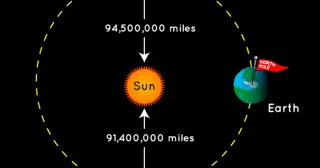
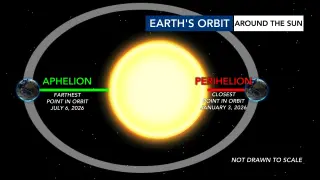
On July 3, 2025, Earth will reach its farthest point from the Sun, called aphelion, at about 152 million kilometers away, but this distance does not determine seasons, which are caused by Earth's axial tilt. The Earth's orbit is elliptical and influenced by gravitational forces from planets like Jupiter and Saturn, causing cyclical changes over thousands of years. Currently, Earth's orbit is nearly circular, affecting the length of seasons, with summer in the Northern Hemisphere being slightly longer than winter.

Halley's Comet Embarks on Epic Return Journey to Earth
astronomy2 years ago

Halley's Comet Embarks on Epic Return Journey to Earth

Halley's Comet, also known as 1P/Halley, has reached aphelion, the farthest point in its orbit from the Sun, and has begun its journey back towards Earth. It is expected to pass by Earth in 2061. Despite its underwhelming appearance during its last visit in 1986, six spacecraft were able to observe its structure. Halley's Comet is a short-period comet that orbits the Sun every 75 to 79 years. Its predictable behavior and short period led to its discovery by astronomer Edmond Halley, who predicted its reappearance in 1705. The comet has been around for at least 16,000 years and creates two meteor showers each year: the Eta Aquariid meteor shower in May and the Orionid meteor shower in October.

Halley's Comet: The Enigmatic Return
astronomy2 years ago

Halley's Comet: The Enigmatic Return

Halley's Comet has begun its 38-year journey back toward Earth after passing its furthest point from the Sun. It will be visible when it enters the area of Jupiter in 2058 and will pass Mars before arriving near Earth in June 2061. Stargazers can find detailed information on Space.com for planning a viewing party to see the comet, including its position in the sky, timing, and the best time to see its blue ion tail.

Halley's Comet Returns: A Spectacular Celestial Event
astronomy2 years ago

Halley's Comet Returns: A Spectacular Celestial Event

Halley's comet, the most famous comet, has reached its farthest point from the sun and is now beginning its journey back. It will increase its orbital velocity on its return trip, but won't be visible to Earth until June 19, 2061, with its closest point to the sun on July 28 that year. The comet's orbit will favor watchers in the Northern Hemisphere, and it is expected to be at least 10 times brighter than its last appearance in 1986. However, the visibility of the comet will depend on future development and potential light pollution.

Halley's Comet Embarks on Return Journey to Earth
astronomy2 years ago

Halley's Comet Embarks on Return Journey to Earth

Halley's Comet is reaching its farthest point from the sun, known as its aphelion, at a distance of about 35 astronomical units (AU). This marks the midway point of its 76-year orbit around the sun. After spending the last 38 years moving away from Earth, the comet will now spend the next 38 years moving closer. Halley's Comet was the first comet predicted to return to Earth's skies, and it will make its next close approach to the sun in 2061. In the meantime, two meteor showers associated with debris from the comet can be observed twice a year.