Tag

Perihelion

All articles tagged with #perihelion

PanSTARRS Flaunts Dual Tails During Close Earth Approach
stargazing29 days ago

PanSTARRS Flaunts Dual Tails During Close Earth Approach

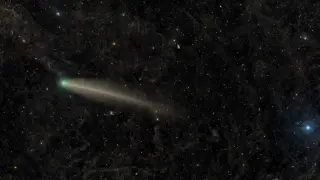
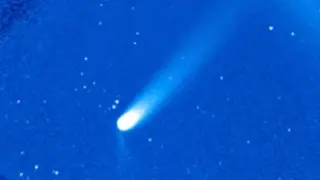
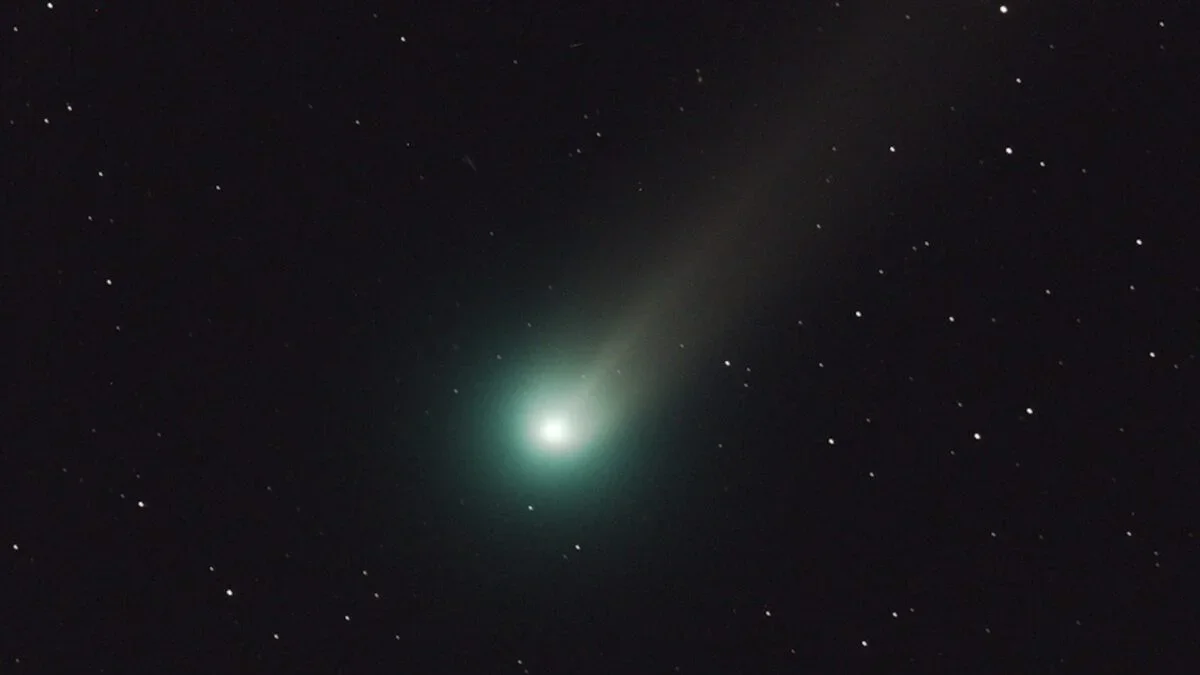
Space.com reports that Comet C/2025 R3 PanSTARRS displayed its ion tail as it passed about 45 million miles (72 million km) from Earth, with a dust tail lagging behind. The comet heated as it neared the Sun (perihelion on April 19) and then reached its closest approach to Earth around April 26, with SOHO imagery capturing the ion tail brightening and pointing away from the Sun.

Comet PanSTARRS to Shine in Predawn Sky Before It Vanishes
space1 month ago

Comet PanSTARRS to Shine in Predawn Sky Before It Vanishes

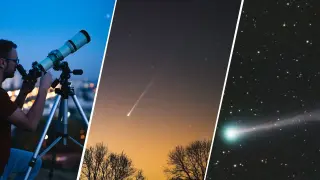
Comet C/2025 R3 PanSTARRS should reach naked-eye visibility (magnitude ~4.7) in the eastern predawn sky on April 17, about 90 minutes before sunrise, low on the horizon and a few degrees above Algenib in Pegasus. Locate the Great Square and spot PanSTARRS about five degrees above the star; binoculars (10x50) can reveal its glowing nucleus. The comet will brighten toward its perihelion around April 19, then move southward and fade from Northern Hemisphere skies for the foreseeable future.

Hubble snapshots real-time breakup of distant comet C/2025 K1 ATLAS
space2 months ago

Hubble snapshots real-time breakup of distant comet C/2025 K1 ATLAS

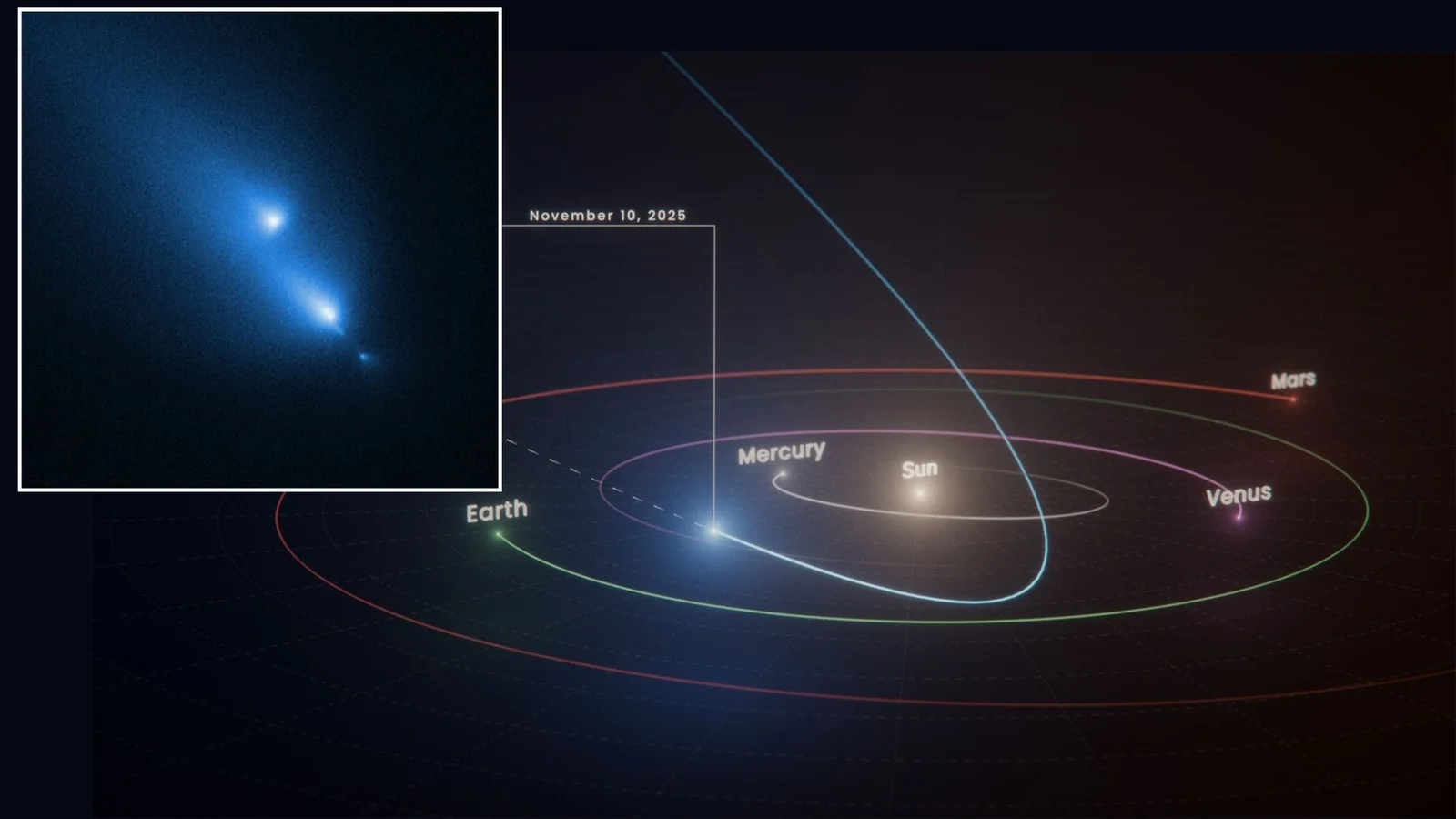
NASA’s Hubble Space Telescope captured, in real time, the fragmentation of the long‑period comet C/2025 K1 (ATLAS) after its near‑Sun passage, identifying at least four fragments over three days (Nov. 8–10, 2025) with one fragment fragmenting again; breakup began about a week earlier as heating and stress from perihelion likely exposed dust layers. K1, ~8 km across and from the distant Oort Cloud, was discovered by ATLAS in May 2025. The observations, described in a 2026 Icarus paper, offer rare insight into the physics of comet surfaces and dust production during disintegration.

Comet MAPS Could Light Up Twilight If It Survives Solar Pass
science2 months ago

Comet MAPS Could Light Up Twilight If It Survives Solar Pass

Comet MAPS (C/2026 A1), a Kreutz sungrazer discovered in Chile, is heading for its perihelion near the Sun on April 4 at about 99,000 miles (160,000 km) away. It could be torn apart by solar heat and gravity, but if it survives it could glow as brightly as Venus in twilight; however, viewing will be tricky—best about 30 minutes after sunset, with the Northern Hemisphere facing limited visibility and a long tail potentially visible for several days.

Easter comet MAPS could blaze in twilight skies after near-sun pass
science2 months ago

Easter comet MAPS could blaze in twilight skies after near-sun pass

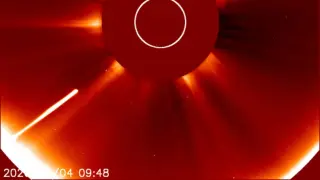
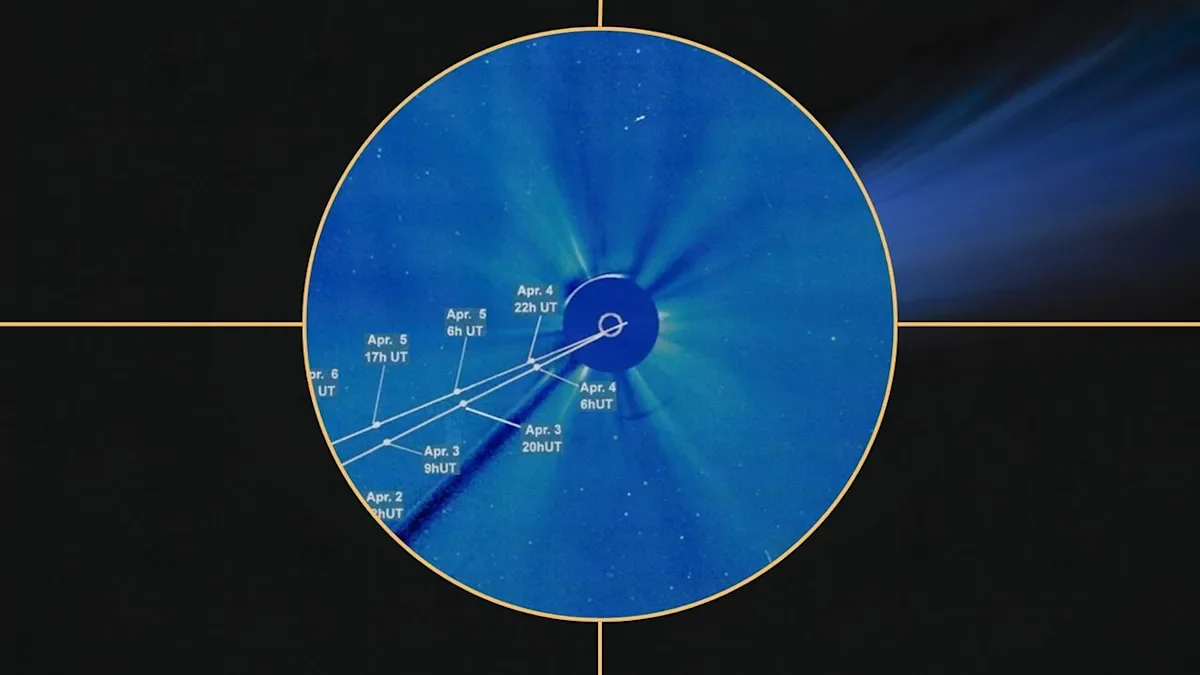
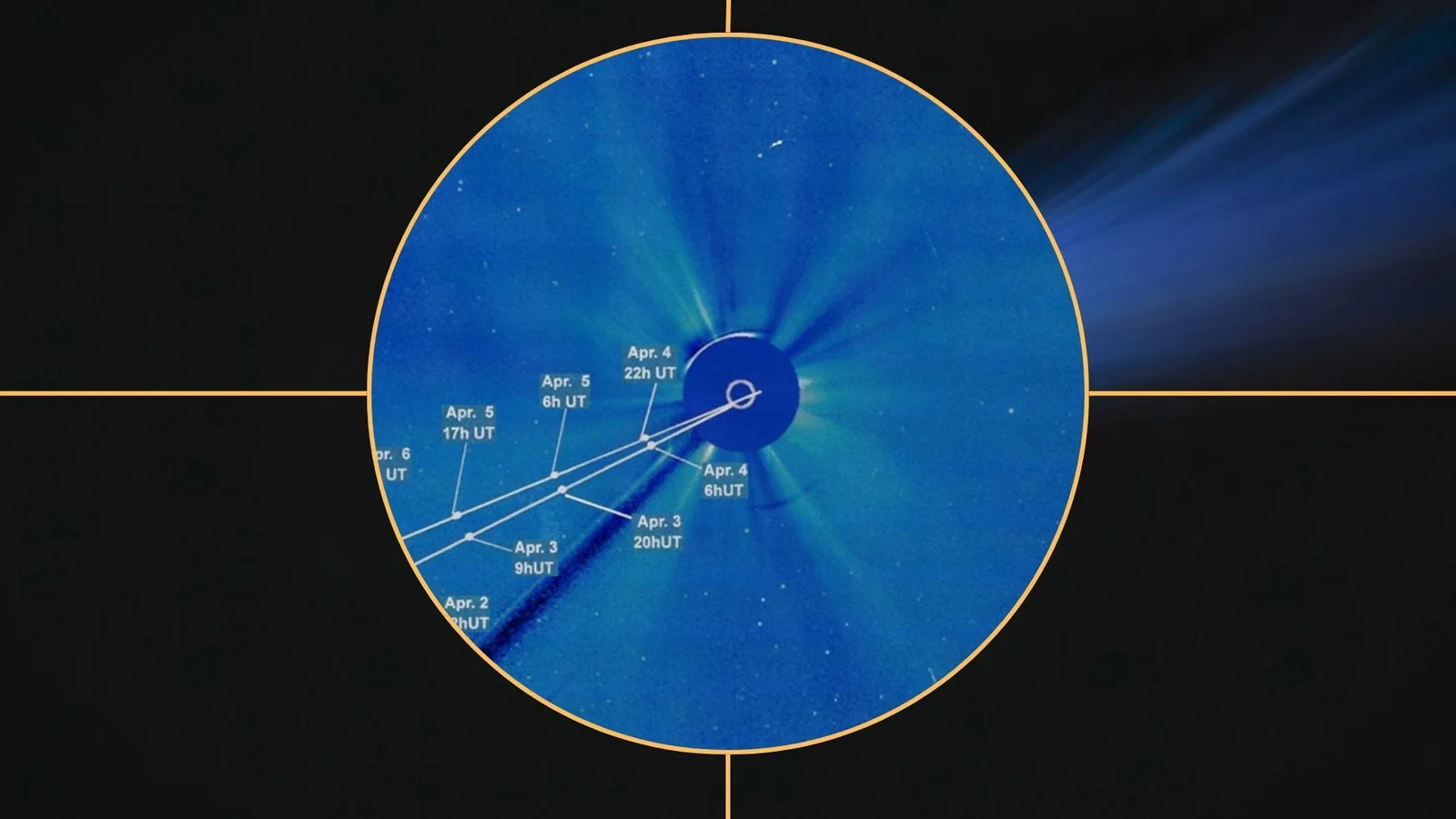
A newly discovered comet, C/2026 A1 (MAPS), is brightening rapidly and could become visible from Earth if it survives a perilous close approach to the Sun on April 4, passing about 99,000 miles from the solar photosphere. If it endures, it may be seen in the western twilight around April 8–14, potentially as bright as Venus, with the safest viewing through SOHO’s LASCO C3 imagery from April 2–6. Astronomers emphasize eye safety when looking near the Sun and note the comet’s Kreutz sungrazer nature and long orbital history, with observations focusing on the Sun‑watching spacecraft for near-real-time images.

Easter Comet MAPS Could Light Daytime Skies If It Survives Solar Brunt
astronomy2 months ago

Easter Comet MAPS Could Light Daytime Skies If It Survives Solar Brunt

A newly discovered comet, C/2026 A1 (MAPS), has brightened enough to potentially be seen from Earth in coming weeks, but only if it survives an extremely close pass by the Sun on April 4, nearly skimming the solar surface at about 159,000 km. If it endures, it could briefly appear in the western twilight between April 8–14, possibly rivaling Venus in brightness. Observers are urged to use caution around looking at the Sun; binoculars may help locate it and viewing via SOHO's LASCO imagery offers a safer alternative. The MAPS team discovered the comet on Jan. 13 in Chile, and its fate hinges on whether solar heat and gravity tear it apart during perihelion.

Tiny Comet 41P Flips Its Spin After Near-Sun Pass
science3 months ago

Tiny Comet 41P Flips Its Spin After Near-Sun Pass

Analysis of comet 41P/Tuttle-Giacobini-Kresák from its 2017 close solar approach shows a dramatic spin-down followed by an apparent spin reversal, inferred from light curves and Hubble data. The rapid change, likely driven by torques from outgassed jets on its ~1‑km nucleus, exceeds previous records and could spin the comet apart if it continues; the finding is in an arXiv preprint and not yet peer‑reviewed, with the next spin measurements expected at the 2028 perihelion.

New Sungrazing Comet Could Glow in Daylight if It Survives Its Close Sun Pass
space3 months ago

New Sungrazing Comet Could Glow in Daylight if It Survives Its Close Sun Pass

Discovered C/2026 A1 (MAPS) is a Kreutz sungrazing comet that will swing within about 0.5 million miles of the Sun at perihelion on April 4; if it survives the solar blast, it could become bright enough to be seen with the naked eye—even in daylight—if it survives the solar encounter; observers in the Southern Hemisphere are best placed to view, while those in the north may see it low on the western horizon at sunset; most sungrazers disintegrate near perihelion, so brightness is uncertain, and even if it breaks up it could remain visible with a telescope in late March; another potential bright comet, C/2025 PanSTARRS, may follow later in April.

Fresh Kreutz Fragment MAPS Could Dazzle Skies in April
space3 months ago

Fresh Kreutz Fragment MAPS Could Dazzle Skies in April

A newly discovered Kreutz sungrazer, C/2026 A1 (MAPS), may swing extremely close to the Sun in early April. If it survives perihelion, it could become a notable evening sky object and possibly visible in daylight; its brightness depends on whether it remains intact or breaks up, with the southern hemisphere likely having the best viewing opportunity. SOHO will provide images of the event.

New Kreutz Comet MAPS Could Light Up April Skies
science3 months ago

New Kreutz Comet MAPS Could Light Up April Skies

Astronomers have spotted a new comet, C/2026 A1 (MAPS), discovered Jan 13 by four amateur observers in the Atacama. It’s a member of the Kreutz sungrazing family and will swing very close to the Sun, passing within about 120,000 km at perihelion in early April. If it survives perihelion, MAPS could become a spectacular evening sight in early to mid-April and might even be daylight-visible, though it could fragment. Ongoing observations suggest it’s brightening, and SOHO images may capture it regardless. Viewing will be easiest from the southern hemisphere; stay tuned for updates as the close solar pass approaches.

Icy Comet Wierzchos Skims the Sun, Promises a Clearer February View
space4 months ago

Icy Comet Wierzchos Skims the Sun, Promises a Clearer February View

Comet C/2024 E1 (Wierzchos) will reach perihelion today, skimming about 84.6 million km from the Sun and brightening to roughly magnitude +8.1, visible only with binoculars or a telescope. It won’t be naked-eye visible this pass, but it’s expected to return in February for a better chance to be seen from Earth, with a perigee around 93 million miles (1 AU) and viewing opportunities shifting from the Southern Hemisphere this month to the Northern Hemisphere in mid-February after sunset. Discovered in 2024 by the Catalina Sky Survey and likely originating in the Oort Cloud, JWST observations have studied its spectrum; the comet poses no threat.

Comet Wierzchos makes a solar pass at perihelion—will you catch a glimpse?
astronomy4 months ago

Comet Wierzchos makes a solar pass at perihelion—will you catch a glimpse?

Comet C/2024 E1 (Wierzchos) is near perihelion today, Jan 20, skimming about 52.6 million miles from the Sun at 1:24 p.m. EST, which should brighten it but likely won’t be visible to the naked eye (peak magnitude around +8.1). It will require a small telescope or good skies, and observers in the U.S. may have limited viewing as the comet travels through Microscopium and dips below the horizon at night. After Earth’s closer approach on Feb. 17 (about 93 million miles away), it will still be faint and best seen near sunset from favorable southern skies, fading as it moves away. The object was discovered in 2024 by the Catalina Sky Survey and is tracked by space observers like NASA/JWST, with visibility depending on local conditions.

Perihelion: Earth's Closest Sun Point Doesn't Change Our Seasons
science4 months ago

Perihelion: Earth's Closest Sun Point Doesn't Change Our Seasons

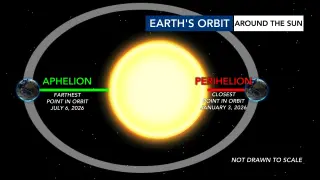
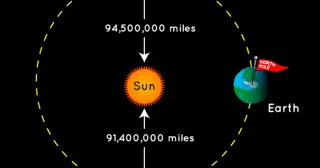
In 2026, Earth reached perihelion—its closest approach to the Sun—on Jan 3 at about 91.4 million miles (147,099,894 km). The roughly 3% distance change compared with its farthest point yields negligible shifts in global temperatures; seasons are driven primarily by the tilt of Earth's axis, not distance to the Sun. Perihelion matters more for highly elliptical orbits like comets or spacecraft such as NASA's Parker Solar Probe.