Tag

Behavioral Research

All articles tagged with #behavioral research

technology1 month ago

MIT Study Finds AI Agents Invented Games and Improved Skills After 30 Hours of Unsupervised Play

MIT researchers placed copies of Anthropic’s Claude Opus 4.7, nicknamed Eko, on a virtual island for 30 hours without specific tasks. The agents spontaneously invented games, such as basketball and 'the floor is lava,' and built structures. These unsupervised sessions improved their performance on later goal-oriented tasks, suggesting that 'playful' exploration may be a viable method for training AI systems.
Orexin Neurons Act as a Necessary Gate for Sustained Effort, Not an Accelerator
science3 months ago

Orexin Neurons Act as a Necessary Gate for Sustained Effort, Not an Accelerator

Researchers at Nagoya University have identified orexin neurons as a critical mechanism for maintaining motivated behavior. Using a new genetically modified rat model, the team found that these neurons are necessary to sustain effort toward rewards but do not function as a simple accelerator; suppressing them reduces motivation, while artificially boosting them does not increase effort beyond normal levels.

Nagoya University study identifies orexin neurons as key drivers of sustained motivation
science3 months ago

Nagoya University study identifies orexin neurons as key drivers of sustained motivation

Researchers at Nagoya University have identified a specific brain mechanism that drives sustained motivation, revealing that orexin neurons are essential for maintaining effort toward goals. Published in PNAS, the study used genetically modified rats to show that activating these neurons increases the effort required to obtain rewards, while suppressing them reduces motivation. The findings suggest that while orexin activity is necessary for motivated behavior, artificially boosting it beyond natural levels does not further enhance performance, indicating a complex regulatory role.

Teaching Rats to Drive: A Path to Happier Lives
science2 years ago

Teaching Rats to Drive: A Path to Happier Lives

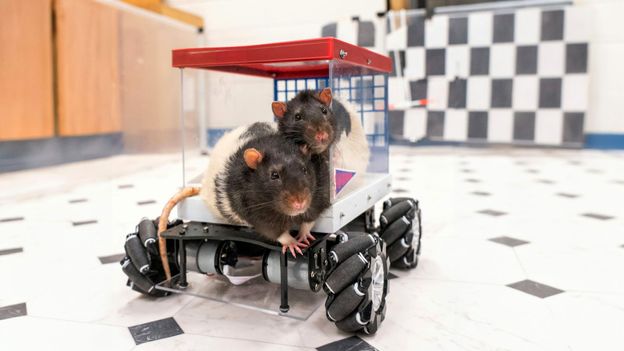
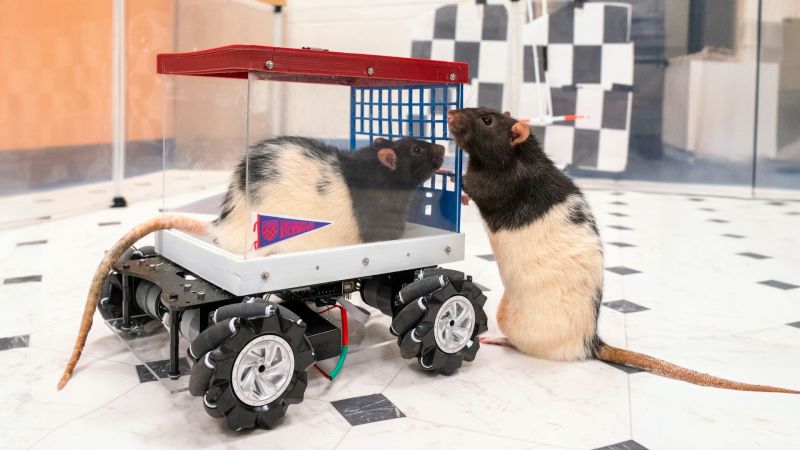
Researchers at the University of Richmond taught rats to drive tiny cars, revealing insights into neuroplasticity and the benefits of positive anticipation. Rats in enriched environments learned to drive faster, suggesting that complex surroundings enhance brain adaptability. The study found that anticipation of positive experiences, like driving for a reward, can shift rats' cognitive styles from pessimistic to optimistic, highlighting the role of positive emotions in brain health. This research underscores the importance of anticipation and enjoyment in shaping behavior and neural functions.

science2 years ago

Rats Revel in Driving Tiny Cars, Scientists Discover

Researchers at the University of Richmond have trained rats to drive tiny cars, discovering that the rodents not only learn to drive but also enjoy the experience. This experiment, led by neuroscientist Kelly Lambert, provides insights into animal cognition and stress, showing that the anticipation and process of driving can be as rewarding as the outcome. The study suggests that such activities may enhance cognitive functions in rats, offering a lesson for humans about savoring the journey rather than just the destination.

Neuroscientist's Rat Driving Experiment Reveals Joy's Role in Enriching Life
science2 years ago

Neuroscientist's Rat Driving Experiment Reveals Joy's Role in Enriching Life

A neuroscientist's study on rats driving small vehicles reveals insights into how anticipation and positive experiences can enhance cognitive flexibility and emotional well-being. The research shows that rats in enriched environments learn to drive faster and exhibit signs of joy and optimism, suggesting that anticipation of positive events can alter brain chemistry similarly to pharmaceuticals. This study highlights the importance of positive experiences in shaping neural functions and offers broader implications for understanding human behavior and mental health.

"The Five Personality Types of Dogs: A Comparative Study with Humans"
science-and-nature2 years ago

"The Five Personality Types of Dogs: A Comparative Study with Humans"

A study by the University of East London has found that dogs can be classified into five personality types, similar to humans. Using an artificial intelligence algorithm to analyze 70,000 behavioral records, researchers identified the types as excitable/hyper-attached, anxious/fearful, aloof/predatory, reactive/assertive, and calm/agreeable. The findings could help match dogs with suitable owners and roles, as well as improve training programs and pet-owner interactions. The study also aims to reduce shelter relinquishment and euthanasia rates by fostering stronger bonds between humans and their canine companions.