
Tag

Cellular Rejuvenation

All articles tagged with #cellular rejuvenation

Bonn Team Rejuvenates 80-Year-Old Blood Cells to Under 20 Years Old
science17 minutes ago

Bonn Team Rejuvenates 80-Year-Old Blood Cells to Under 20 Years Old

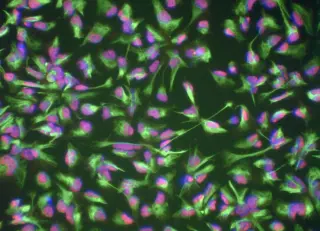
Researchers at the University of Bonn and University Hospital Bonn have successfully reprogrammed blood cell precursors from an 80-year-old donor into neural stem cells with an epigenetic age of under 20 years. Published in Aging Cell, the study demonstrates a direct conversion method that bypasses the traditional pluripotent stem cell stage. This approach allows for a gradual, 100-day rejuvenation process, providing a new experimental model to study molecular aging and potential treatments for neurodegenerative diseases.
Bonn Researchers Rejuvenate 80-Year-Old Blood Cells to Youthful Brain State
science1 day ago

Bonn Researchers Rejuvenate 80-Year-Old Blood Cells to Youthful Brain State

Researchers at the University of Bonn have successfully transformed blood cell progenitors from an 80-year-old donor into neural stem cells with an epigenetic age of under 20. This new method bypasses the traditional pluripotent stem cell stage, allowing for a gradual, trackable rejuvenation process over 100 days. The findings offer a potential model for studying how molecular aging affects the brain and could help identify factors that accelerate or slow down cellular rejuvenation.

Four Transcription Factors May Rejuvenate Aging Cells
science8 months ago

Four Transcription Factors May Rejuvenate Aging Cells

A UCSF study identifies four transcription factors (E2F3, EZH2, STAT3, ZFX) that, when modulated, push aging cells toward a younger state; boosting EZH2 in the liver of old mice reduced scarring and improved glucose tolerance, while lab-grown fibroblasts showed rejuvenation-like traits, suggesting a possible universal blueprint for cellular rejuvenation—though long-term safety and broader applicability remain to be confirmed.

"The Science Behind FMD Diet Fasting"
health-and-wellness2 years ago

"The Science Behind FMD Diet Fasting"

The fast-mimicking diet (FMD) involves five days of restricted eating per month and has been shown to offer benefits beyond weight loss, including potential cellular rejuvenation and metabolic effects. Preliminary studies suggest that FMD may reduce inflammation, improve cognition, and possibly protect against diseases like cancer and Alzheimer's. However, more research, particularly with larger sample sizes, is needed to fully understand its effects. While FMD may be beneficial for certain individuals, such as those who are overweight or have specific health conditions, it's important to consult a doctor before starting this diet, especially for those with medical conditions or a history of disordered eating.

"Unlocking the Secrets of Longevity: From Cold Showers to Healthspan Restoration"
health-and-science2 years ago

"Unlocking the Secrets of Longevity: From Cold Showers to Healthspan Restoration"

Life Biosciences is focused on targeting the underlying biology of ageing to restore and prolong healthspan, defined as the number of healthy years lived. By addressing biological mechanisms of ageing, such as epigenetic modifications, the company aims to develop therapeutics that can reverse ageing and treat age-related diseases. Their lead program utilizes partial epigenetic reprogramming to treat age-related optic neuropathies, with plans to initiate human clinical trials in 2025. Additionally, they are exploring the potential of cellular rejuvenation in treating neurodegenerative diseases and other age-related conditions.

"Exploring Chemical and Blood-based Approaches to Reverse Aging and Cognitive Decline"
science-and-technology3 years ago

"Exploring Chemical and Blood-based Approaches to Reverse Aging and Cognitive Decline"

Researchers have identified six chemical cocktails that can reverse cellular aging and rejuvenate cells to the same extent as overexpression of certain transcription factors. The cocktails were found to restore nucleocytoplasmic compartmentalization, reduce transcriptomic age, and reverse key transcriptional signatures of senescence. These findings offer potential alternatives to genetic-based approaches for regenerative medicine and whole-body rejuvenation, with the aim of treating injuries and age-related diseases. Further research is needed to understand the long-term effects of these treatments in vivo.