Tiny Chemical Group Helped RNA Survive Earth's Harshest Era
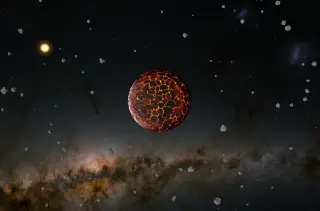
Researchers at the University at Buffalo and Princeton University have identified a specific chemical feature that may explain how RNA survived the extreme conditions of early Earth. Published in Nature Communications, the study focuses on the 2-hydroxyl group, a molecular component present in RNA but absent in DNA. This group allows RNA to form gel-like droplets at high temperatures, potentially protecting it from degradation during the Hadean Eon. These self-organized structures may have served as precursors to early cellular life, bridging the gap between simple molecules and complex organisms.