Tag

Molecular Biology

All articles tagged with #molecular biology

Cellular Repair Mechanisms Form the Foundation for Modern Gene Editing
science1 day ago

Cellular Repair Mechanisms Form the Foundation for Modern Gene Editing

Cells face up to 100,000 daily DNA damage events, necessitating robust repair systems that evolved alongside DNA itself. These natural mechanisms, including nonhomologous end joining and homologous recombination, are critical for maintaining genomic stability and serve as the biological basis for modern gene-editing technologies like CRISPR-Cas and base editing.
Engineered Bacterial Nanosyringes Enable Targeted Protein Delivery in Plant Cells
science6 days ago

Engineered Bacterial Nanosyringes Enable Targeted Protein Delivery in Plant Cells

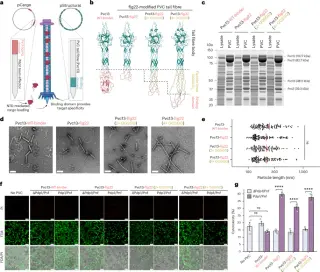
Researchers have successfully reprogrammed the Photorhabdus virulence cassette (PVC), a bacterial nanomachine, to deliver proteins into plant cells. By modifying the PVC tail fibers to recognize the plant surface receptor FLS2, the team achieved efficient intracellular delivery of cargo proteins, including Cre recombinase and the R2 genome editor. This method bypasses traditional genetic transformation hurdles, offering a precise tool for plant genetic engineering.

Live-cell imaging reveals nuclear pore barrier remains liquid, stabilized by importin-beta and glycosylation
science13 days ago

Live-cell imaging reveals nuclear pore barrier remains liquid, stabilized by importin-beta and glycosylation

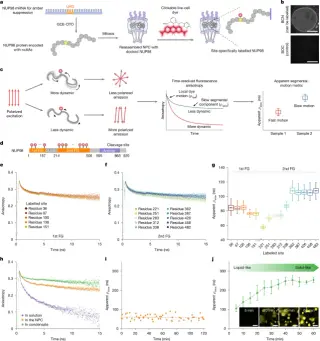
Researchers have resolved a long-standing debate about the physical state of the nuclear pore complex (NPC) barrier by demonstrating that its phenylalanine-glycine-rich nucleoporins (FG-NUPs) maintain liquid-like, nanosecond-scale segmental motion in living cells. Using site-specific labeling and time-resolved fluorescence anisotropy, the study shows that while isolated FG-NUPs in vitro transition from liquid to solid over time, cellular factors prevent this aging. Importin-beta and O-linked beta-N-acetylglucosamine (O-GlcNAc) modifications are identified as key regulators that stabilize this dynamic state. The findings indicate that importin-beta accumulates near the pore periphery while FG domains extend into the central channel, creating a radial organization that facilitates selective and rapid molecular transport between the nucleus and cytoplasm.

China's AutoDNA Lab Achieves Full Autonomy in DNA Sequencing and Synthesis
science-and-technology20 days ago

China's AutoDNA Lab Achieves Full Autonomy in DNA Sequencing and Synthesis

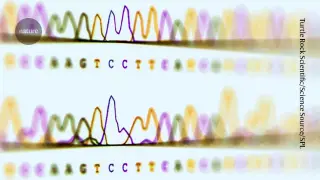
A new AI-driven laboratory in China, named AutoDNA, has demonstrated the ability to design and execute complex molecular biology experiments with minimal human intervention. Developed at Shanghai Jiao Tong University, the system integrates over 20 types of instruments to perform tasks such as DNA sequencing, synthesis, and mutation detection. The facility operates based on simple prompts from human operators, who are only required to refresh reagents and maintain hardware. This advancement represents a significant step toward fully autonomous 'self-driving' labs, moving beyond partial automation to end-to-end experimental management.

Squid Rewrite Proteins Without Altering DNA, Unlocking Vast Biological Flexibility
science1 month ago

Squid Rewrite Proteins Without Altering DNA, Unlocking Vast Biological Flexibility

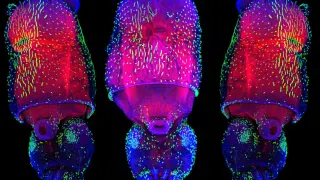
New research reveals that squids possess an unmatched ability to alter protein function through RNA editing, allowing them to adapt biological traits without changing their DNA. This process, driven by ADAR enzymes, affects nearly 8,000 sites across over 2,000 proteins, influencing everything from nervous system communication to cellular energy production. The study suggests cephalopods may generate a theoretical diversity of protein variants exceeding 10^248, highlighting a unique evolutionary strategy for rapid adaptation.

Tiny Chemical Group Helped RNA Survive Earth's Harshest Era
science1 month ago

Tiny Chemical Group Helped RNA Survive Earth's Harshest Era

Researchers at the University at Buffalo and Princeton University have identified a specific chemical feature that may explain how RNA survived the extreme conditions of early Earth. Published in Nature Communications, the study focuses on the 2-hydroxyl group, a molecular component present in RNA but absent in DNA. This group allows RNA to form gel-like droplets at high temperatures, potentially protecting it from degradation during the Hadean Eon. These self-organized structures may have served as precursors to early cellular life, bridging the gap between simple molecules and complex organisms.

Water Caps Identified as Key Mechanism in Tau Protein Misfolding for Alzheimer's
science1 month ago

Water Caps Identified as Key Mechanism in Tau Protein Misfolding for Alzheimer's

Researchers at Northwestern University and UC Santa Barbara have identified a specific molecular mechanism by which tau proteins misfold into fibrils in Alzheimer's disease. Published in PNAS, the study reveals that water molecules form stabilizing caps around hydrophobic 'hotspots' on mutated tau proteins. When these caps release energy, they trigger the proteins to stack into rigid fibrils, which eventually kill brain cells and spread the disease. Blocking this hotspot with chemical tags halted fibril growth in tests, suggesting a potential target for future therapies.

BC200: A Human Brain Gene That Retains Mobility and Infects Viruses
science1 month ago

BC200: A Human Brain Gene That Retains Mobility and Infects Viruses

Researchers have identified BC200, a human gene that uniquely combines a stable cellular function in neurons with the ability to move and insert itself into other genomes. Published in Science, the study reveals that BC200 has jumped into the molluscum contagiosum virus and appears in diseased cells, challenging the assumption that functional genes lose their mobility.

Cryo-EM reveals sequential mechanism for human spliceosome termination and intron decay
science1 month ago

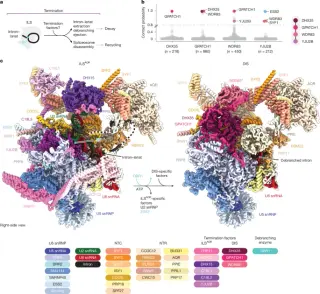
Cryo-EM reveals sequential mechanism for human spliceosome termination and intron decay

Researchers have mapped the molecular steps of spliceosome termination in human cells using cryo-electron microscopy. The study identifies two distinct intermediate states, the ILSAQR and the DIS, which facilitate the extraction, debranching, and ejection of introns. This process ensures the recycling of spliceosome components and the degradation of intronic RNA, maintaining cellular RNA homeostasis.

Engineered Avian Retrotransposons Achieve 60% Targeted Gene Integration in Human Cells
science-and-technology1 month ago

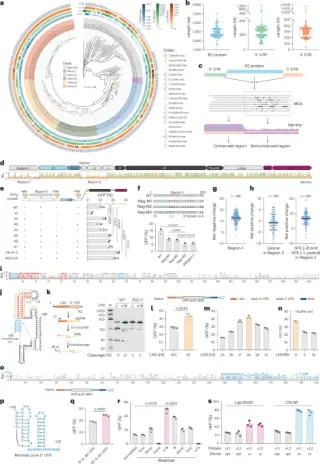
Engineered Avian Retrotransposons Achieve 60% Targeted Gene Integration in Human Cells

Researchers at the Beijing Institute of Genomics identified 159 new avian R2 retrotransposons by scanning 1,139 bird genomes. By engineering these elements, they created an all-RNA system that achieves up to 60% site-specific gene integration in human primary cells, offering a new tool for precise genome editing without double-strand DNA breaks.

Yeast Study Shows Genetic Variation Acts Through Protein Networks, Not Just Gene Expression
science2 months ago

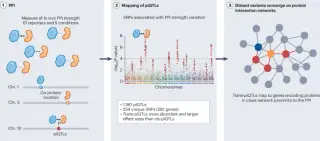
Yeast Study Shows Genetic Variation Acts Through Protein Networks, Not Just Gene Expression

A large-scale genetic screen in yeast has identified 'protein interaction quantitative trait loci' (piQTLs), demonstrating that natural genetic variation frequently alters how proteins interact rather than just changing gene expression levels. Published in Nature Genetics, this study suggests that the 'hidden wiring' of the genome is largely defined by these interaction networks, offering a new framework for understanding how genetic differences influence biological traits.

Maynooth University Unveils DNA Computer That Solves Math in a Drop of Saline
science2 months ago

Maynooth University Unveils DNA Computer That Solves Math in a Drop of Saline

Researchers at Maynooth University in Ireland have developed a new DNA-based computer, termed the Scaffolded DNA Computer (SDC), capable of performing complex calculations without continuous electrical power. Published in Nature on September 16, the system uses billions of DNA strands in a saline droplet to self-assemble into answers via thermodynamic favorability. It successfully executed 100-bit additions in 14 hours and simple sums in 30 seconds, marking a significant leap in molecular computing speed and efficiency.

Epigenome Editing Targets Environmental Scars to Treat Disease Without Altering DNA
science2 months ago

Epigenome Editing Targets Environmental Scars to Treat Disease Without Altering DNA

A new biotechnology frontier called epigenome editing aims to treat or prevent diseases by modifying the chemical tags that regulate gene expression, rather than rewriting the DNA sequence itself. This approach mimics the natural biological reset that occurs during reproduction, where molecular scars accumulated over a lifetime are erased to provide a clean slate for the next generation. By targeting the epigenome, researchers hope to reverse the biological detritus of past experiences and environmental exposures, offering a potential avenue for later-life disease treatment that does not involve permanent genetic changes.

Systematic mutation of phage ΦX174 reveals AI's limits in predicting biological outcomes
science2 months ago

Systematic mutation of phage ΦX174 reveals AI's limits in predicting biological outcomes

Researchers at the Wellcome Sanger Institute and other institutions systematically mutated every nucleotide and amino acid in the bacteriophage ΦX174, creating over 44,000 variants. While half of single-nucleotide changes and 60% of amino-acid alterations proved harmful, current AI models failed to accurately predict these biological consequences, highlighting significant gaps in computational biology despite the virus's extensive prior study.