Tag

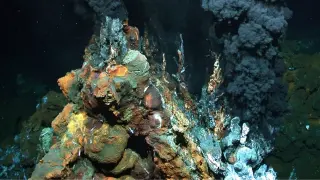
Hydrothermal Vents

All articles tagged with #hydrothermal vents

Volcanic Warmth Creates Hidden Nursery for Giant Deep-Sea Skate Eggs
science-and-technology12 days ago

Volcanic Warmth Creates Hidden Nursery for Giant Deep-Sea Skate Eggs

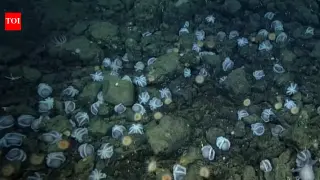
Scientists discovered large rectangular eggs of the Pacific white skate at about 3,500 meters beneath an active seafloor volcano off Vancouver Island. The geothermally heated water provides a gentle incubator that can accelerate embryo development in the cold, high-pressure deep sea, potentially shaving years from the lengthy incubation. The finding links volcanism to biodiversity, highlighting conservation needs for geothermal nurseries and offering new questions about how vent activity shapes reproductive success. Researchers used ROVs, high-def imagery, temperature readings, and geochemical data to map the thermal landscape where eggs cluster.

Antarctic Earthquakes Trigger Rapid Surface Phytoplankton Blooms
environment1 month ago

Antarctic Earthquakes Trigger Rapid Surface Phytoplankton Blooms

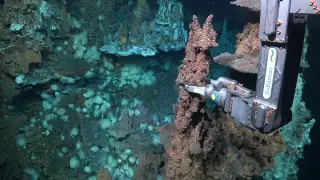
New research links underwater earthquakes near the Australian Antarctic Ridge to boosted surface phytoplankton blooms by enhancing iron release from hydrothermal vents, speeding nutrient delivery to the surface and cascading through the Southern Ocean food web, with potential implications for ocean carbon uptake and climate models. The study combines decades of satellite data with seismic records and points to a surprising, faster-than-expected pathway from deep-sea fluids to surface life.

Europa's Seafloor Shows Little Activity, Reducing Life Prospects
science3 months ago

Europa's Seafloor Shows Little Activity, Reducing Life Prospects

A new study suggests that Europa's ocean floor likely lacks significant tectonic activity and hydrothermal vents, reducing its chances for supporting life, though other energy sources might still exist. The findings imply that Europa may be less hospitable for life than previously thought, but the search continues with upcoming missions like NASA's Europa Clipper.

Underwater Thermal Vents Likely Origin of Life's First Molecules
science5 months ago

Underwater Thermal Vents Likely Origin of Life's First Molecules

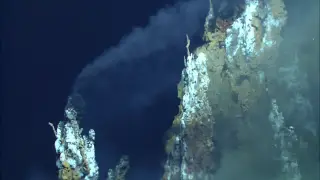
Scientists recreated ancient ocean conditions in the lab, demonstrating that natural gradients at hydrothermal vents could have driven the first chemical reactions of life, supporting the theory that life’s building blocks formed through inorganic processes powered by environmental energy, without the need for enzymes or organic molecules.

Deep-Sea Yellow Worm Converts Poison into Gold-Like Crystals
science7 months ago

Deep-Sea Yellow Worm Converts Poison into Gold-Like Crystals

Scientists discovered a bright yellow worm, Paralvinella hessleri, thriving in the toxic, high-temperature environment of Pacific hydrothermal vents. The worm's survival strategy involves detoxifying arsenic by forming a non-toxic mineral called orpiment, which also gives it its distinctive color. This finding offers insights into extreme life adaptations and potential environmental applications, though further research into the molecular mechanisms is needed.

Massive Undersea Hydrothermal System Discovered, Outshining the 'Lost City' with Billion-Euro Hydrogen Potential
science7 months ago

Massive Undersea Hydrothermal System Discovered, Outshining the 'Lost City' with Billion-Euro Hydrogen Potential

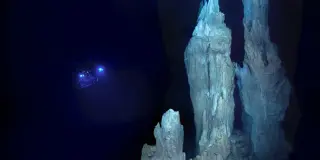
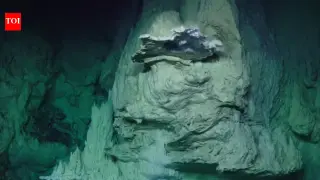
Scientists have discovered a massive new hydrothermal field called Kunlun in the Pacific Ocean, which is over a hundred times larger than the famous Lost City. This site features unique, hydrogen-rich vents that could provide insights into the origins of life on Earth and potential energy sources, challenging previous assumptions about where such systems can occur. The discovery highlights the ocean's vast, unexplored ecosystems and geological diversity.

Deep Ocean Discovery Surpasses 'Lost City' in Magnitude
science7 months ago

Deep Ocean Discovery Surpasses 'Lost City' in Magnitude

A massive new hydrothermal field called Kunlun has been discovered in the Pacific Ocean, significantly larger than the famous Lost City, with unique geological features and rich hydrogen emissions that could shed light on the origins of life and potential energy sources. The site hosts diverse deep-sea life and challenges previous assumptions about hydrogen generation far from mid-ocean ridges.