Tag

Cuprates

All articles tagged with #cuprates

science21 hours ago

Cuprate Studies Reveal Quantum Rivalry and Room-Temperature Pairing Bottlenecks

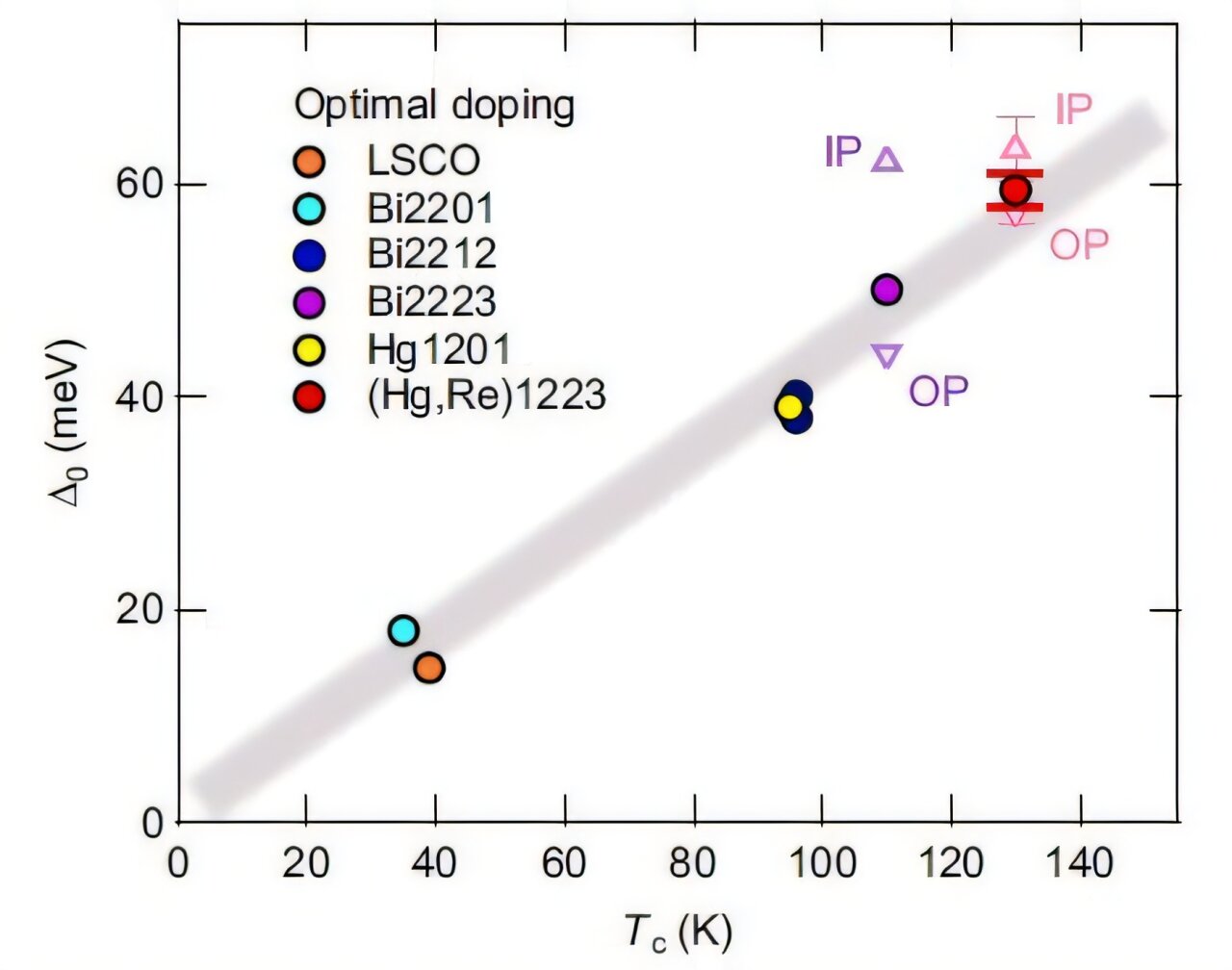
Two major studies published in late 2026 advance the understanding of high-temperature superconductors. Researchers at INRS in Canada found that the pseudogap competes with superconductivity in copper-based materials, while a team from Utrecht, Leiden, and Munich demonstrated that electron pairs can remain stable at room temperature, identifying phase coherence as the primary barrier to achieving lossless electricity at ambient conditions.
Noise measurements link cuprate pseudogap to electron pairing, shifting focus to phase coherence
science16 days ago

Noise measurements link cuprate pseudogap to electron pairing, shifting focus to phase coherence

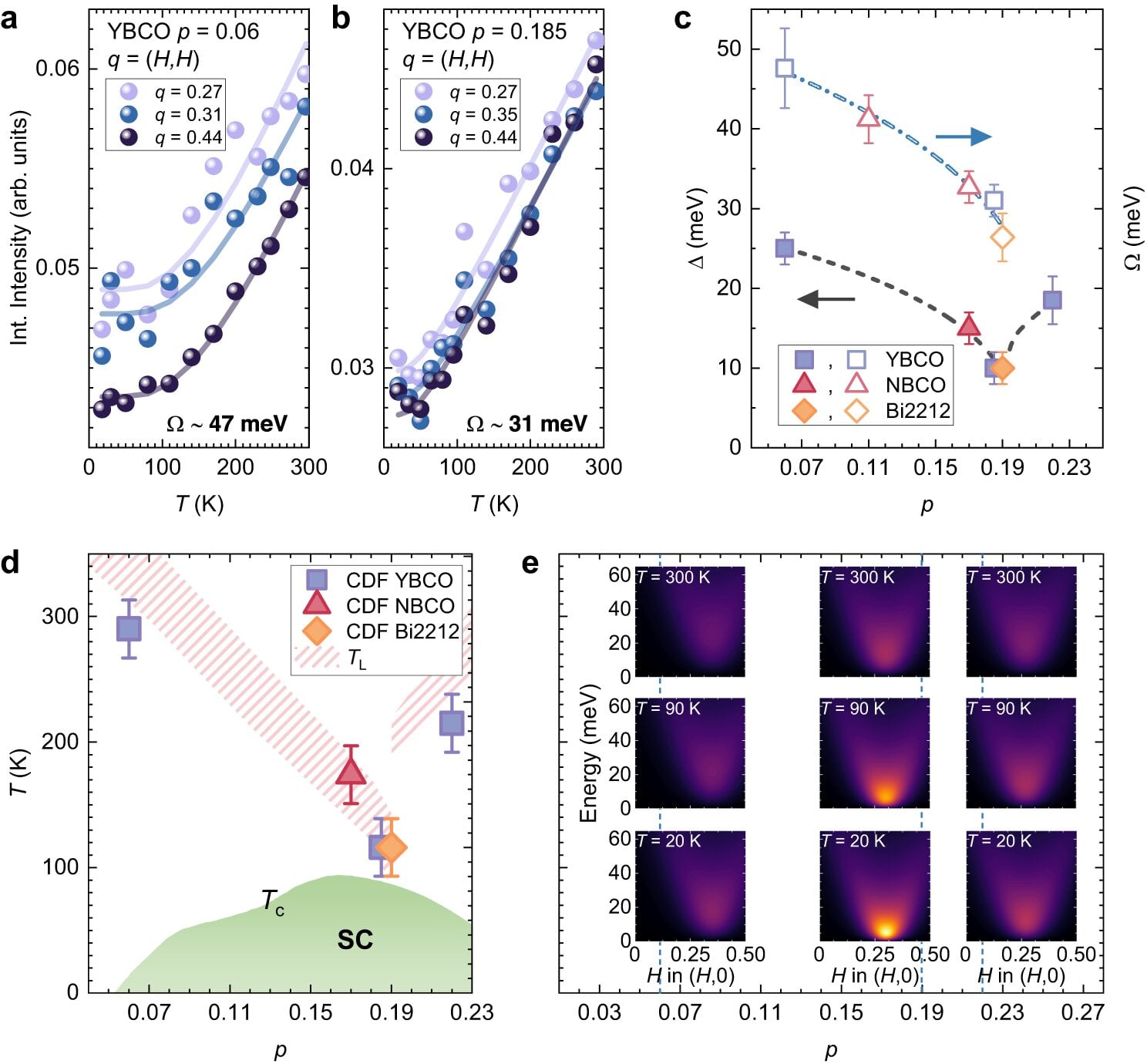
Researchers from Munich, Utrecht, and Leiden have used electrical noise measurements to show that electron pairing in cuprate superconductors occurs at energies associated with the pseudogap, not just superconductivity. This suggests pairing happens before phase coherence, identifying coherence as the primary bottleneck for achieving room-temperature superconductivity.

Bristol Team Links Magnetic Spin Fluctuations to Superconductivity in Electron-Doped Cuprates
science1 month ago

Bristol Team Links Magnetic Spin Fluctuations to Superconductivity in Electron-Doped Cuprates

Researchers at the University of Bristol have identified antiferromagnetic spin fluctuations as the primary mechanism driving superconductivity in electron-doped copper-oxide materials. By analyzing resistance changes across a gradient of doping levels, the team linked the strength of these magnetic interactions directly to the material's critical temperature. While this clarifies the pairing mechanism for electron-doped cuprates, it does not yet explain the higher transition temperatures observed in hole-doped variants, leaving a key component of the broader superconductivity puzzle unresolved.

Cuprate Superconductors Revealed as Patchwork of Structures, Not Uniform Crystals
science1 month ago

Cuprate Superconductors Revealed as Patchwork of Structures, Not Uniform Crystals

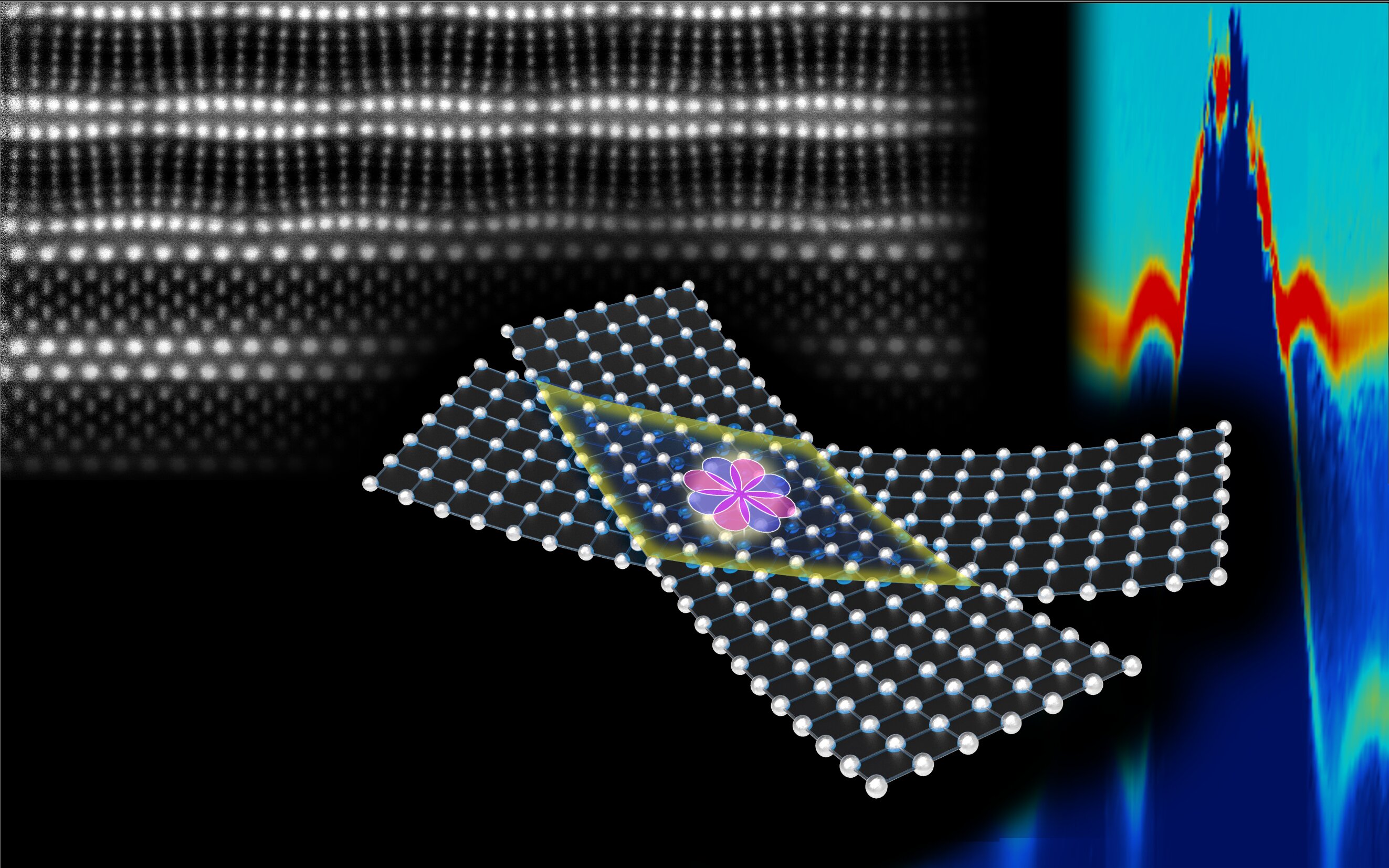
Researchers have overturned a 40-year assumption that cuprate superconductors possess a uniform internal crystal structure. Using 3D X-ray diffraction, scientists found that these materials are actually composed of a patchwork of different atomic arrangements separated by wide boundaries. This discovery suggests that previous theoretical models were oversimplified and may help explain why certain superconductors perform better than others.

Substrate Sculpting Boosts Ultrathin Superconductors Toward Practical Electronics
science5 months ago

Substrate Sculpting Boosts Ultrathin Superconductors Toward Practical Electronics

Chalmers University researchers show that nanoscale sculpting of the substrate beneath an ultrathin cuprate superconducting film creates an interfacial electronic landscape that stabilizes superconductivity at higher temperatures and under strong magnetic fields, a design principle that could accelerate practical superconducting electronics, energy systems, and quantum devices.

"Harvard's Breakthrough: Revolutionizing High-Temperature Superconductors"
science-and-technology2 years ago

"Harvard's Breakthrough: Revolutionizing High-Temperature Superconductors"

Harvard researchers, led by Philip Kim, have developed a high-temperature superconducting diode using cuprates, a breakthrough that could advance quantum computing. By fabricating a clean interface between two thin layers of cuprate crystals, the team demonstrated directional supercurrent and control over quantum states. This development opens doors for studying exotic materials and topological phases, paving the way for new forms of superconductivity in previously unattainable materials. The research was supported by the National Science Foundation, the Department of Defense, and the Department of Energy.

Unveiling the Secrets of High-Temperature Superconductors
science-and-technology2 years ago

Unveiling the Secrets of High-Temperature Superconductors

Researchers at Harvard University have developed a new method for creating and manipulating higher-temperature superconductors called cuprates. Using a low-temperature device fabrication technique, they have successfully engineered a high-temperature superconducting diode made from thin cuprate crystals. This breakthrough could have implications for industries like quantum computing, which rely on sustained mechanical phenomena. The team achieved this by creating a clean interface between two layers of cuprate crystals and demonstrated electronic control over the interfacial quantum state. This research opens doors for further exploration of exotic materials and topological phases.

Unraveling the Enigma: Unveiling the Puzzling Behavior of Cuprates and its Superconductor Implications
science-and-technology2 years ago

Unraveling the Enigma: Unveiling the Puzzling Behavior of Cuprates and its Superconductor Implications

Researchers have discovered a quantum critical point connected to the "strange metal" phase of high-critical-temperature copper-based superconductors. The study, based on X-ray scattering experiments, reveals the existence of charge density fluctuations that make cuprates behave like "strange" metals. This discovery could lead to the development of better materials with higher critical temperatures, advancing superconductivity research and contributing to sustainable technologies.

"Unveiling the Timeless Influence of an Old Law on Quirky Quantum Materials"
science-and-technology3 years ago

"Unveiling the Timeless Influence of an Old Law on Quirky Quantum Materials"

A theoretical study by researchers at SLAC National Accelerator Laboratory, Stanford University, and the University of Illinois suggests that the 170-year-old Wiedemann-Franz law, which relates the ratio of electronic conductivity to thermal conductivity in metals, still approximately holds for copper oxide superconductors (cuprates), a type of quantum material. The researchers propose that other factors, such as vibrations in the material's atomic lattice, may account for experimental results that make it seem like the law does not apply. This finding is significant for understanding unconventional superconductors and other quantum materials.