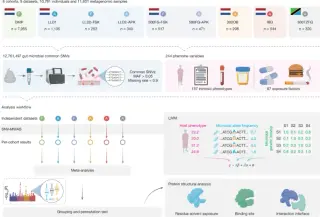
Gut Microbial Genetic Variants Linked to 69 Host Health Traits
A large-scale study identified 940 associations between gut microbial genetic variants and human health factors, revealing new biological connections at the base-pair level.

All articles tagged with #disease
A large-scale study identified 940 associations between gut microbial genetic variants and human health factors, revealing new biological connections at the base-pair level.

The epizootic hemorrhagic disease (EHD) outbreak in Wisconsin has expanded to six counties, according to Yahoo News. This follows earlier reports of over 700 dead white-tailed deer in Washington and Waukesha counties. The virus, spread by midges, poses no risk to humans but continues to decimate local deer populations.
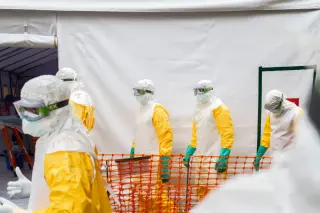
The Democratic Republic of Congo's Ebola outbreak has swelled to around 2,473 cases and 999 deaths, prompting WHO to label it a public health emergency of international concern. Emergency physician Dr. Simon Mardel warns it could be unprecedented due to undetected transmission and cross-border spread (including into Uganda), with Nigeria considered a potential flashpoint; factors like mining communities complicate containment. Rapid case finding, tracing and infection control are crucial to preventing a wider catastrophe, and the virus strain involved (Bundibugyo) currently has no vaccine.
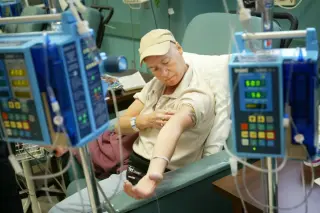
The World Health Organization warns global cancer cases could rise from about 20.6 million today to around 35 million by 2050, driven by aging populations and rising costs that threaten access to care. In the U.S., cancer care spending reached about $209 billion in 2020, and roughly 45–60% of patients experience catastrophic health expenditures. The report calls for unified action to expand prevention and care, highlighting high returns on investment and the role of lifestyle, vaccination (HPV), and policy in reducing future cancer burden.

Renowned biohacker Bryan Johnson, 48, disclosed on social media that he has incurable autoimmune gastritis—an immune-driven attack on his stomach lining—described as his stomach 'eating itself.' He plans to monitor ferritin and iron levels, pursue repeated biopsies, and explore treatments using AI and multiomics, insisting that nothing is truly incurable if pursued with today’s tech. The diagnosis comes as he maintains an extreme health regimen and aging-focused lifestyle as part of his ongoing quest to defeat death.

Bryan Johnson, the 48-year-old tech entrepreneur known for extreme health experiments, revealed he has autoimmune gastritis, an incurable autoimmune disease that attacks his stomach lining. He says the condition likely stems from years of fast food and sugary drinks before his biohacking regimen and plans to keep monitoring ferritin and iron levels, undergo repeated biopsies, and pursue new treatments with AI and biotech as part of his “don’t die” quest to extend healthspan.
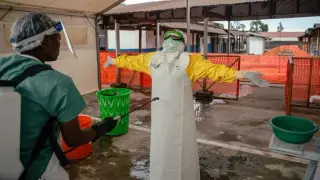
News of disease outbreaks can trigger the brain's behavioural immune system, making people more conformist, less trusting of outsiders, and harsher in moral judgments; while individual responses vary and depend on many factors, the underlying mechanism helps explain how outbreak coverage can subtly shape attitudes during epidemics.

Researchers from the University of Florida used field data and mathematical models to show how young coquí frogs balance growth and immune defense in the face of a deadly fungal pathogen. When infection is low, they grow quickly to reach maturity; as infection rises, they allocate more energy to fighting disease, slowing growth and delaying maturity. Seasonal timing also matters: warmer seasons boost food and infection risk, influencing survival and lifetime reproduction. The study highlights how pathogens cause hidden costs in development and has implications for conservation and captive release timing.

Researchers analyzed online search trends linked to media coverage of Vitamin A as a measles treatment and found spikes in related searches after appearances by Joe Rogan and other figures; medical experts caution Vitamin A can aid recovery but does not prevent measles and can be toxic in high doses, with a rise in Vitamin A exposures reported by poison centers. The study highlights media influence on health-seeking behavior during outbreaks and calls for clearer, science-based guidance from trusted sources.
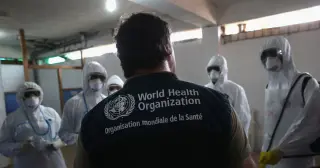
Health authorities are investigating two humanitarian workers who returned to Italy from Uganda for possible Ebola infection; while not yet confirmed, they show symptoms consistent with the disease. The Bundibugyo variant currently causing the outbreak has a fatality rate of about 25–40% and no approved vaccine or specific treatment. The outbreak has prompted around 1,000 suspected cases and more than 230 deaths in Uganda and the Democratic Republic of Congo, with the WHO declaring it a public health emergency of international concern.
A 2026 review of decades of research links alcohol to a broad spectrum of diseases, injuries, cancers, infections, and neurological problems, concluding that its harms outweigh any potential benefits. The authors, led by Sinclair Carr of Harvard T.H. Chan School of Public Health, emphasize a cautious but clear message that alcohol is a major health risk, supported by Mendelian randomization studies and NIH/NIAAA funding.

A major review in Addiction synthesizes decades of evidence showing alcohol contributes to dozens of diseases and injuries across nearly every organ, weakens immune defenses and raises infection risk, and while some harms can lessen with reduced or stopped drinking, many damages persist; potential heart benefits of light drinking remain disputed.

A new review in Addiction confirms that alcohol causes more than 60 diseases and injuries that are entirely attributable to consumption, raises infection risk, and is linked to five broad non-communicable disease categories (cancer, cardiovascular disease, type 2 diabetes, neuropsychiatric, and gastrointestinal diseases). Some short‑term harms and certain cardiovascular markers can improve with abstinence, but chronic damage such as cirrhosis and much brain injury are not fully reversible, leading to the conclusion that alcohol’s overall harms outweigh any potential benefits (with evidence for heart protection at low intake remaining inconclusive).

Hantavirus is a rodent-borne illness that can cause severe respiratory disease. It spreads when people inhale virus particles from infected rodents’ urine, droppings, or saliva or come into contact with contaminated materials. Early signs often include fever, fatigue, muscle aches, and headaches, with some cases progressing to coughing or shortness of breath as the lungs are affected. There is no specific cure; treatment focuses on supportive care, and prevention centers on reducing rodent access and avoiding disturbance of droppings in places like homes, sheds, and cabins.
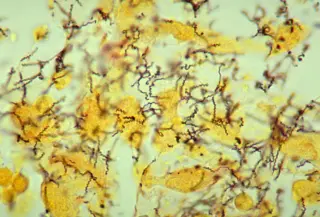
Researchers studying noma in Nigerian children identified elevated levels of a previously unknown Treponema bacterium, Treponema A, suggesting this bacteria may contribute to noma’s mouth and facial destruction and could become a target for prophylactic antibiotics to halt progression.