Tag

Epfl

All articles tagged with #epfl

Alpine Solar Wall Delivers Winter Power, but Swiss Regulation Stalls the Next Wave
energy23 days ago

Alpine Solar Wall Delivers Winter Power, but Swiss Regulation Stalls the Next Wave

Switzerland’s Muttsee dam hosts 4,872 solar modules on its south face, delivering a surprisingly strong winter share of annual output (43% of energy in the cold half) thanks to altitude and a steep tilt, but a five‑foot gap to the concrete is left so inspectors can map cracks—limiting the rear-face (bifacial) gain to about 1.5%. The project, funded by Axpo/IWB under the Solar Express regime, shows that site conditions and the regulatory framework largely determine alpine solar viability, with many such projects stalled or canceled despite measured performance that exceeds a valley reference plant.


MIT-EPFL’s $300 robotic bird masters air-to-water-to-air flight
technology1 month ago

MIT-EPFL’s $300 robotic bird masters air-to-water-to-air flight

MIT and EPFL built a bird-sized robot that can fly, dive underwater, swim, and launch back into the air using flexible wings. Costing about $300, it completes an air-to-water-to-air cycle with flapping wings alone—the first bird-scale machine to do so—though autonomous navigation and saltwater durability remain for future work, with potential applications in environmental monitoring.

Chip-scale ultrafast laser breakthrough could bring lab-grade power to handheld devices
technology1 month ago

Chip-scale ultrafast laser breakthrough could bring lab-grade power to handheld devices

Scientists demonstrated a Mamyshev-oscillator-based ultrafast laser on a photonic chip, producing 1.05 nanojoules in 147-femtosecond bursts on a chip compact enough to fold from a long laser cavity, potentially enabling portable, cost-effective imaging, diagnostics, and timing applications by leveraging silicon-photonic fabrication.

Phase-Controlled Holographic 3D Printing Delivers 70x Efficiency Boost
technology3 months ago

Phase-Controlled Holographic 3D Printing Delivers 70x Efficiency Boost

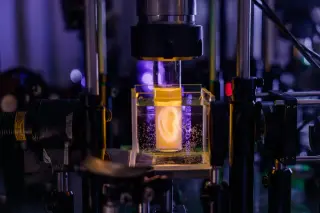
EPFL researchers have dramatically increased the efficiency of holographic volumetric additive manufacturing by 70x by using a phase-controlled laser beam inside a resin-filled vial. The system prints millimeter- to centimeter-scale structures in seconds to minutes, supports self-healing beams to improve accuracy in scattering materials, and has demonstrated a life-sized human ear with viable embedded cells, signaling progress toward bioprinted tissue and implants.

Detachable Crawling Robotic Hand Fetches Objects and Reattaches
technology7 months ago

Detachable Crawling Robotic Hand Fetches Objects and Reattaches

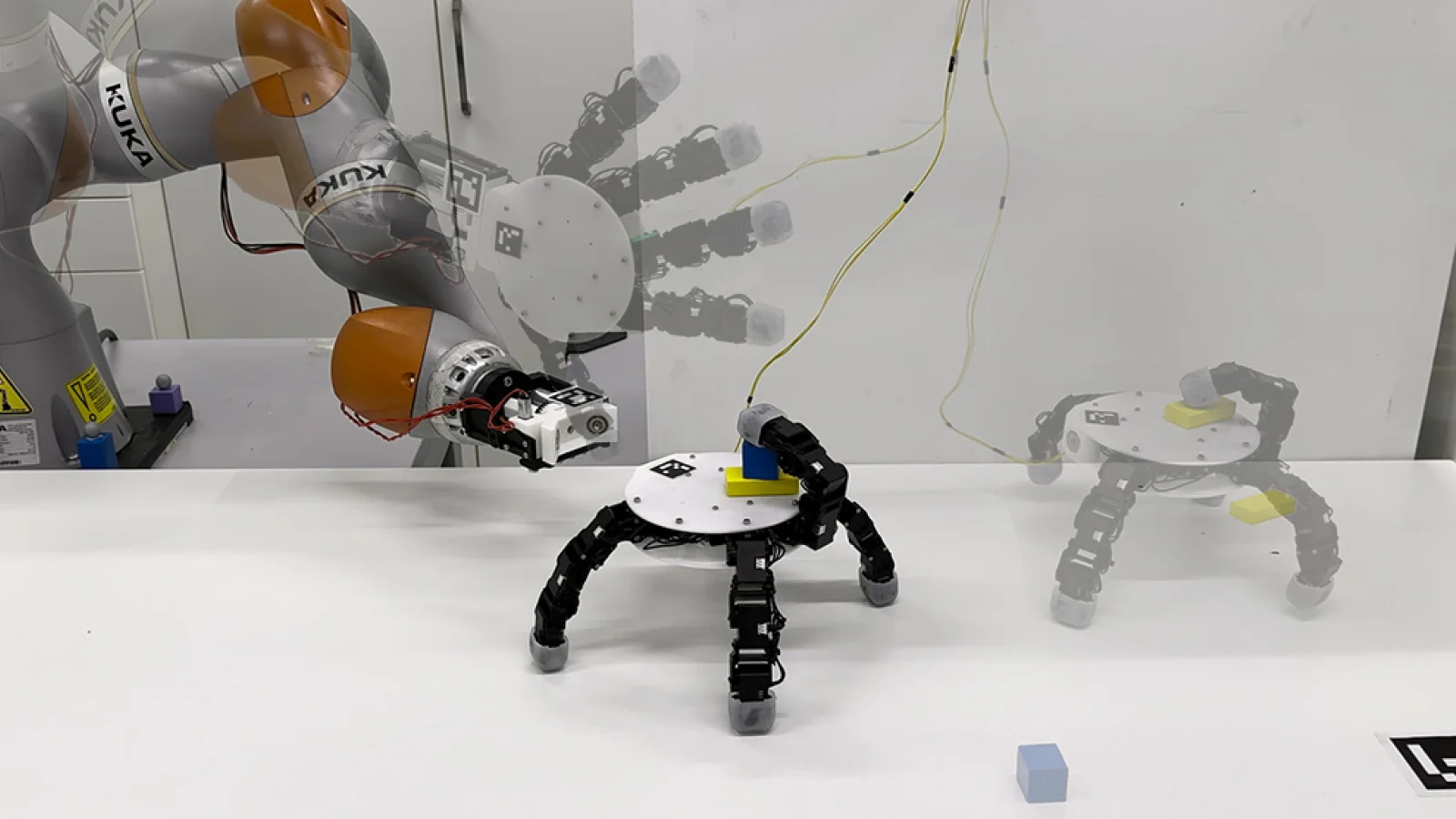
EPFL researchers have built a self-contained, detachable crawling robotic hand that can grip multiple objects (up to four), move to retrieve items from tight or hazardous spaces, and reattach to its arm using a snap-and-lock system. With bidirectional fingers and magnets guiding reattachment, the device combines manipulation and locomotion and could inform future prosthetics and specialized environments.

Unraveling the Mystery of the 'Rule of Four' Pattern in Materials
science2 years ago

Unraveling the Mystery of the 'Rule of Four' Pattern in Materials

Scientists have discovered a puzzling "Rule of Four" pattern in the basic structure of the majority of inorganic materials, with the total number of atoms in the unit cell being a multiple of four. Despite ruling out several possible explanations, the reason behind this phenomenon remains unsolved. However, a promising finding suggests that artificial intelligence can predict if a compound will follow the Rule of Four with an 87 percent success rate, hinting at the existence of small chemical groups that may explain the pattern.

"Room-Temperature Milestone: Controlling Quantum Phenomena and Achieving Heisenberg Microscope"
science-and-technology2 years ago

"Room-Temperature Milestone: Controlling Quantum Phenomena and Achieving Heisenberg Microscope"

Researchers at EPFL have achieved a breakthrough in quantum mechanics by controlling quantum phenomena at room temperature, using an innovative experimental setup that combines quantum physics and mechanical engineering. By creating an ultra-low noise optomechanical system with specialized cavity mirrors and a large mechanical oscillator, they were able to minimize thermal noise and demonstrate optical squeezing, a quantum phenomenon, at room temperature. This achievement opens up new possibilities for quantum technology applications and the study of macroscopic quantum systems.