Why Andromeda's Glow Hides Its Planets: The Physics of Extragalactic Detection
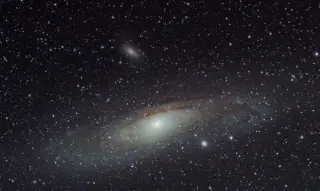
While the Andromeda galaxy is visible to the naked eye due to the combined light of over a trillion stars, detecting an Earth-like planet within it remains impossible with current technology. The planet would appear 10 billion times fainter than its host star and separated by only 1.3 microarcseconds, a gap far smaller than the resolution limits of the James Webb Space Telescope. Direct imaging requires a hypothetical 100-kilometer aperture, while indirect methods like microlensing offer limited statistical insights but no atmospheric data.