A large international team has confirmed that Earth-mass planets can maintain stable orbits in the habitable zone of the nearby binary star system 70 Ophiuchi. By analyzing a century of radial velocity data, researchers ruled out the presence of Jupiter-sized giants, resolving a 171-year-old mystery, while showing that smaller rocky worlds could still exist undetected.
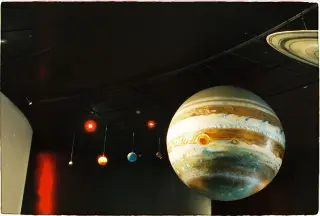
Jupiter and the Sun orbit a common centre of mass called the barycentre; at Jupiter’s average distance this barycentre sits about 742,000 km from the Sun’s centre, roughly 46,000 km beyond the Sun’s visible surface, meaning Jupiter does not orbit a fixed Sun but both bodies move around a shifting balance point. This concept helps explain planetary motion and underpins the radial-velocity method used to detect exoplanets by observing stellar wobbles.
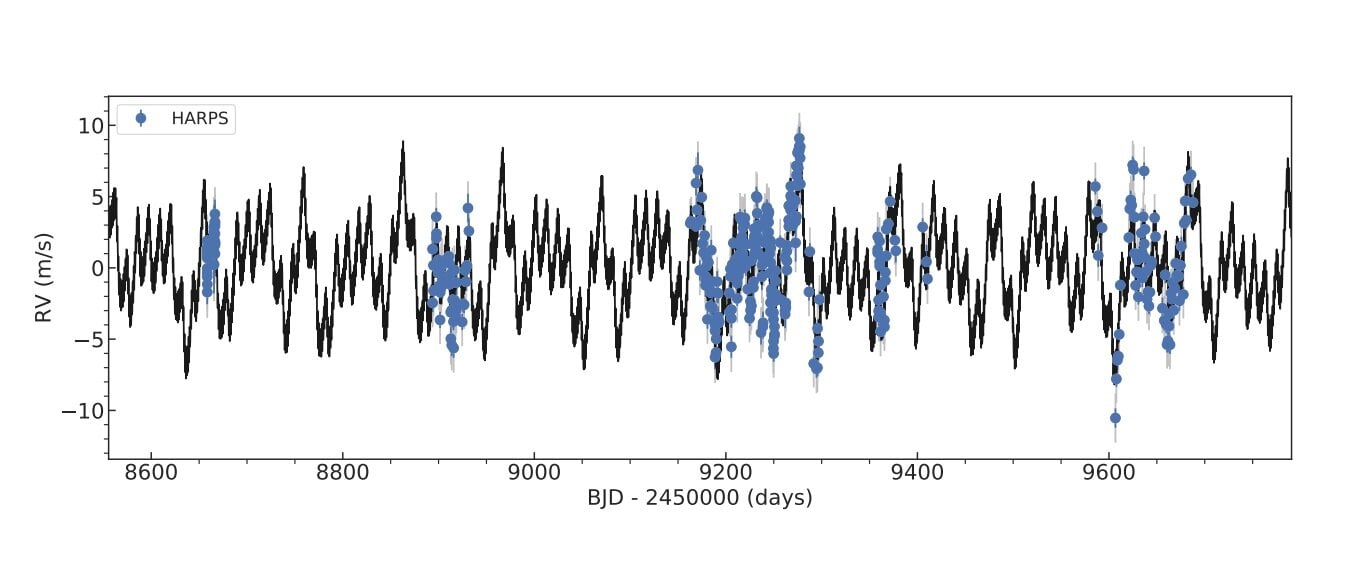
In 2026, astronomers confirmed GJ 887 d, a planet in the habitable zone of the nearby red dwarf GJ 887 (about 10.7 light-years away), orbiting every 50.77 days with a minimum mass around six Earths, making it the second-closest such world after Proxima Centauri b. The detection, based on 277 HARPS radial-velocity measurements plus ESPRESSO data and Gaussian-process modeling to separate stellar activity, provides strong evidence for a real planet rather than stellar noise, though the planet does not transit, so its radius and atmosphere are unknown. Its equilibrium temperature is ~241 K, and it receives ~81% of Earth’s insolation. While GJ 887 is relatively magnetically quiet for a red dwarf, flares can occur; future direct-imaging efforts with missions like Habitable Worlds Observatory or LIFE could probe the planet, but current data只能 constrain mass and orbit. The system likely hosts at least four planets, with a fifth signal still unconfirmed.
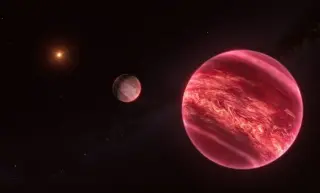
Astronomers using the Very Large Telescope report evidence for a moon-sized object orbiting a brown dwarf in the CD-35 2722 system, an exosatellite that defies simple labeling as either moon or planet; detected via radial-velocity wobble rather than transit, this may mark the first exomoon, with confirmation likely from future observations with the ELT.
Astronomers have identified the first known exomoon—a Jupiter-mass satellite orbiting a brown dwarf (CD-35 2772) about 71 light-years away—discovered via radial velocity measurements, challenging how we classify planets and moons and signaling more exomoon hunts with the forthcoming ELT.
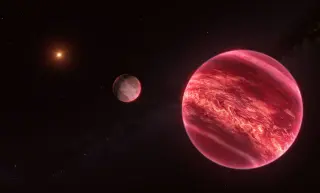
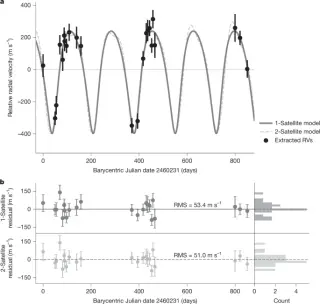
Astronomers using high-resolution infrared radial-velocity measurements from VLT/CRIRES+ detected a periodic signal indicating a planetary-mass exosatellite orbiting CD-35 2722 B, a directly imaged brown-dwarf companion to a star. The best-fit model suggests the satellite has a minimum mass of about 0.9 Jupiter masses with an orbital period of roughly 170 days, marking the first evidence of a satellite around a companion brown dwarf and the first time this RV approach has been used to probe exosatellites. It remains uncertain whether this object meets the formal criteria for an exomoon, but the result demonstrates a promising path toward unambiguous exomoon detections as instrumentation advances; data and code are publicly available.
Astronomers have revised the mass of the nearby exoplanet Gliese 3378 b down to about 2.3 Earth masses, shifting it from the edge of a mini-Neptune into the rocky regime. Its 21.45-day orbit places it in the star’s habitable zone at roughly 25 light-years away, making it a promising candidate for a rocky world; however, the existence of a solid surface or an atmosphere—and thus true habitability—still requires confirmation.
A nearby red-dwarf system hosts GJ 251 c, a candidate 3.8-Earth-mass super-Earth in the star’s habitable zone detected by radial-velocity methods; its radius and atmosphere remain unknown, but at ~18 light-years away its geometry could let future 30-meter telescopes directly image it and probe for water, air, and possible biosignatures—though no definitive signs exist yet.
Astronomers propose a method that uses spectra from magnetically quiet stars and radial-velocity analysis to efficiently spot planets. In a study of 24 stars from the Dispersed Matter Planet Project, they identified 14 stars hosting 24 exoplanets (7 new), with an occurrence rate 8–10 times higher than previous radial-velocity surveys. If scaled to about 16,000 nearby stars, the approach could reveal roughly 300 more planets around stars showing low magnetic activity, suggesting a more targeted planet search could be fruitful.
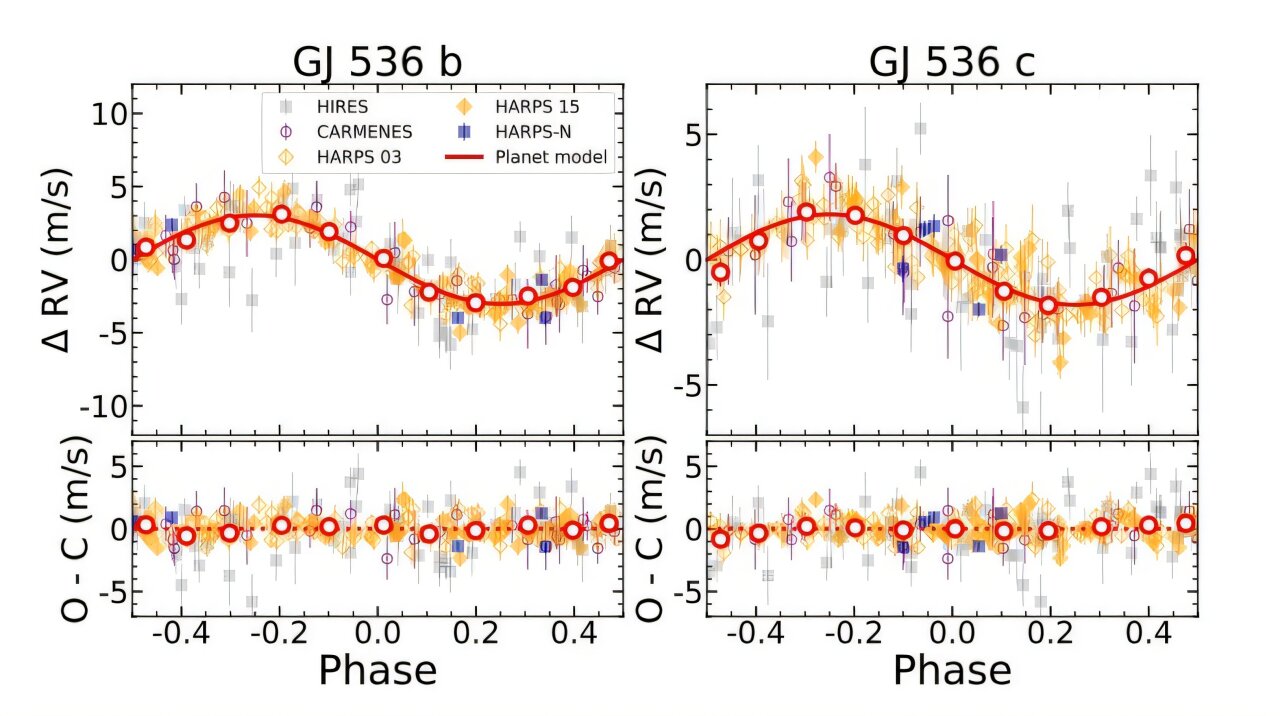
Astronomers have discovered a second exoplanet orbiting the nearby star Gliese 536 using radial velocity measurements, revealing a low-mass planet about 5.89 times the Earth's mass with a 32.76-day orbit, making it a promising target for atmospheric studies.
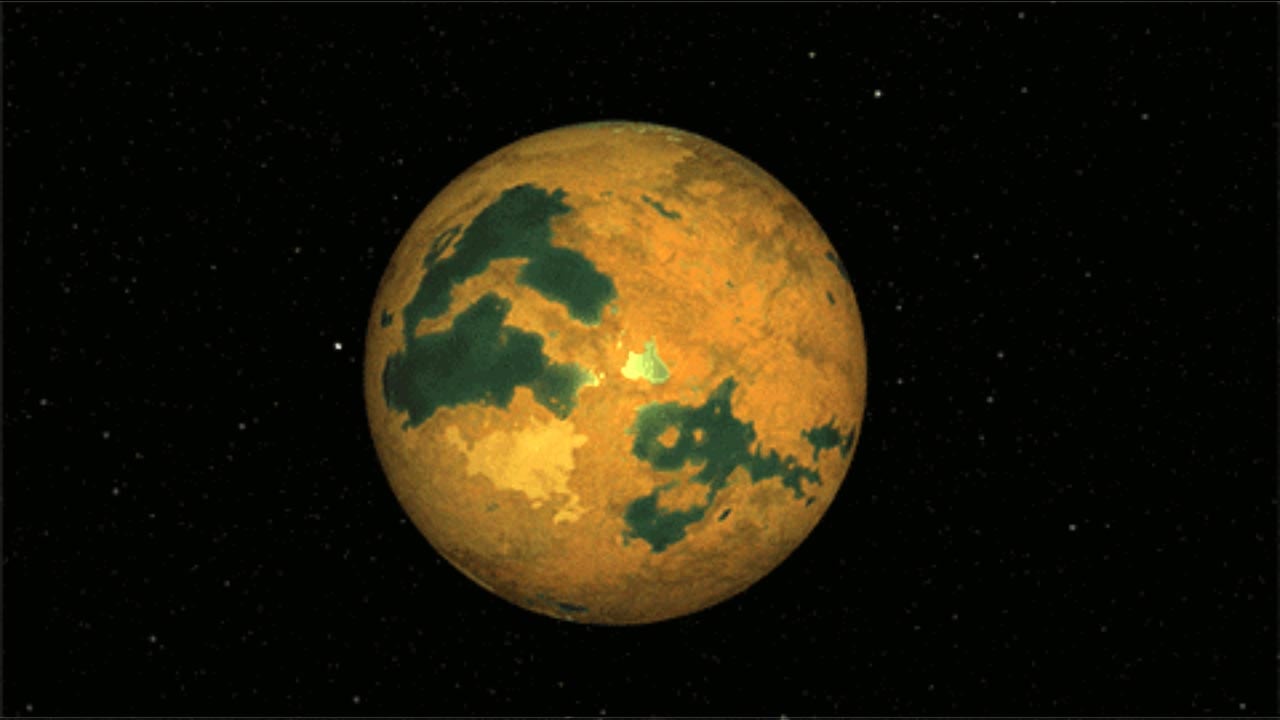
New research using the NEID instrument at Kitt Peak National Observatory has debunked the existence of the planet Vulcan, thought to orbit the star 40 Eridani A, by attributing the detected signals to the star's surface activity rather than an actual planet.
Astronomers have confirmed that the signals previously thought to indicate the existence of a planet orbiting the star 40 Eridani A, known as Vulcan in Star Trek, were false positives caused by the star's own activity. This finding underscores the importance of advanced tools in accurately identifying exoplanets and ruling out false signals.
A new study led by astronomer Abigail Burrows reveals that the planet thought to orbit 40 Eridani A, often compared to Star Trek's fictional Vulcan, is actually an illusion caused by the star's own activity. High-precision measurements from the NEID instrument show that the supposed planet signal is due to stellar jitters, not an actual planet.
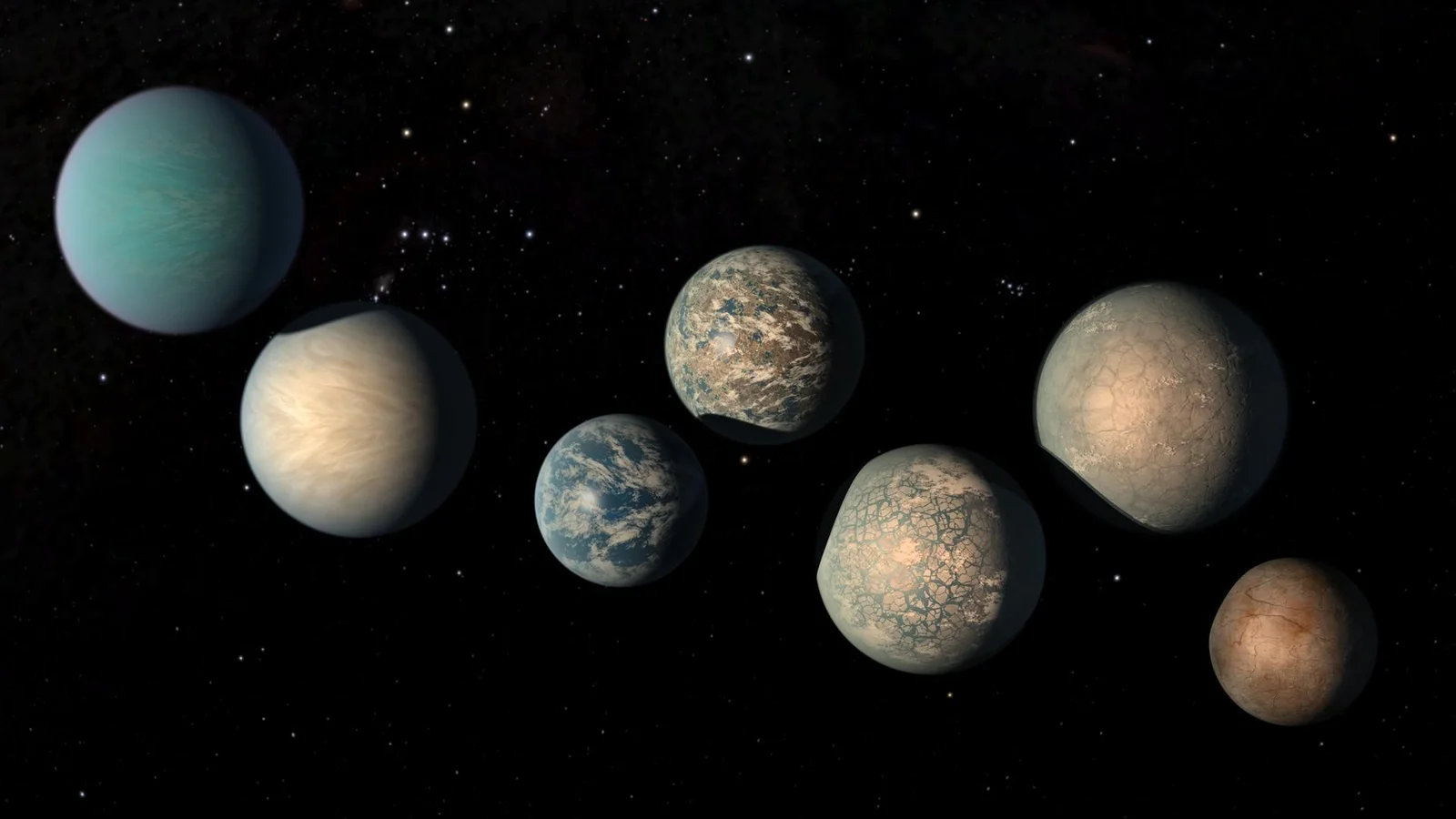
Astronomers using the HARPS spectrograph have discovered two additional exoplanets in the GJ 367 planetary system, located 30.7 light years away. The newfound planets, GJ 367 c and GJ 367 d, are at least four times the mass of Earth and have orbital periods of 11.5 days and 34 days, respectively. The study also refined the mass and radius determinations for the previously discovered planet, GJ 367 b. These findings contribute to our understanding of multiplanetary systems and the formation of ultra-short-period exoplanets.
Scientists have theorized that planets made of dark matter could exist and have laid out how they could be detected. These hypothetical planets could be detected through transit data and radial velocity measurements, which could reveal anomalies in their properties that defy our current understanding of planet formation. defy our current understanding of planet formation. The researchers also suggest that the light curve of a dark matter exoplanet could be distinguishable from that of an ordinary exoplanet due to its tiny but non-vanishing interaction strength with Standard Model particles. Further study is needed to set bounds on dark matter exoplanet abundance if they are not detected.