Tag

Cosmic Microwave Background

All articles tagged with #cosmic microwave background

The Big Bang: not an explosion, but the birth of space and time
science8 days ago

The Big Bang: not an explosion, but the birth of space and time

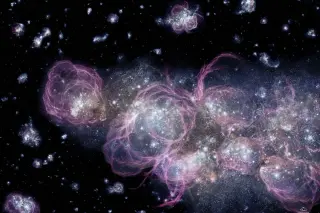
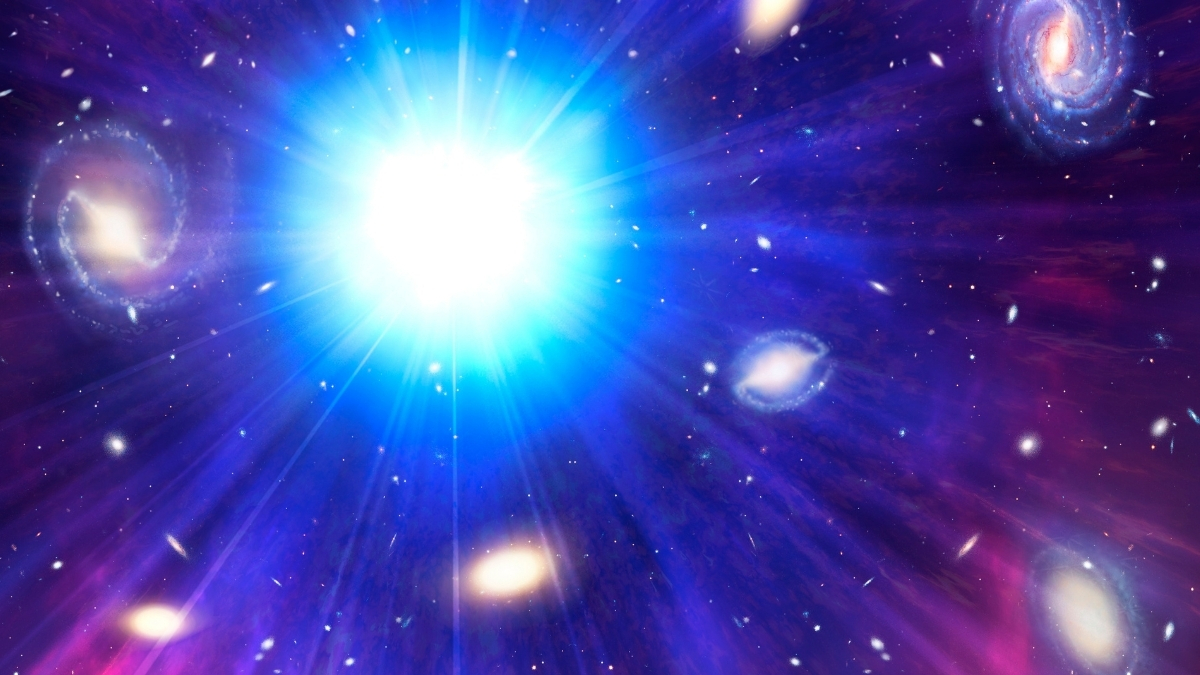
The article explains that the Big Bang was not a violent explosion but the starting expansion of the universe, which has been growing for about 13.8 billion years. Evidence from galaxies moving apart and the Cosmic Microwave Background supports this view. Importantly, there was no space or time before the Big Bang, so asking what happened “before” is tricky. The universe’s expansion continues today and is accelerating, a behavior tied to dark energy though its nature remains not well understood.

The Oh-My-God Particle: A 50-Joule Cosmic Ray That Still Defies Its Source
science1 month ago

The Oh-My-God Particle: A 50-Joule Cosmic Ray That Still Defies Its Source

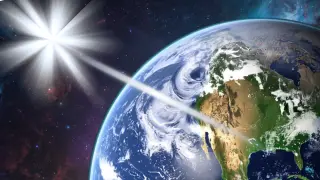
On Oct 15, 1991, the Fly’s Eye detector in Utah observed the Oh-My-God particle—a single cosmic ray with about 3.2×10^20 eV, roughly 51 joules, far more energy per particle than any human accelerator. The event arose from an atmospheric shower tracked via ultraviolet fluorescence; the primary was likely a nucleus, though its exact composition remains uncertain. In per-particle terms, its energy was about 47 million times that of an LHC proton, though the collider holds far more total energy overall. At these energies, interactions with the cosmic microwave background (the GZK effect) limit how far such particles can travel, implying a relatively nearby source, yet no definitive origin has been identified. Later observations confirm such extreme events are rare, and the origin of this particle remains unknown, illustrating how nature can push matter beyond present human-made accelerators.

Cosmic Speed Limit in Question: Rethinking How Fast the Universe Expands
science1 month ago

Cosmic Speed Limit in Question: Rethinking How Fast the Universe Expands

Quanta Magazine’s The Joy of Why interview with Adam Riess traces how Type Ia supernovae revealed the universe’s accelerating expansion, explains the local vs. early-universe measurements of the Hubble constant, and frames the current Hubble tension that challenges the Lambda-CDM model. Riess discusses how standard candles and redshift work together to map expansion, the role of dark energy (potentially a cosmological constant), and how upcoming observatories like the Nancy Grace Roman Space Telescope, Rubin Observatory, Euclid, and JWST aim to resolve whether the tension signals new physics or hidden systematics.

Boomerang Nebula: The Coldest Natural Spot in the Universe
space1 month ago

Boomerang Nebula: The Coldest Natural Spot in the Universe

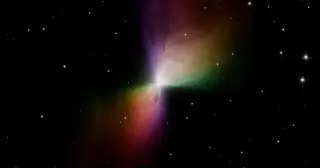
Astronomers have identified the Boomerang Nebula, a fast-expanding shell around a dying star about 5,000 light-years away, as the coldest natural object known at roughly one degree above absolute zero—colder than the cosmic microwave background of 2.7 K. The extreme chill arises from rapid gas expansion acting like a refrigerator, and the temperature was inferred from how the gas absorbs background radiation. This is a transient stage in a Sun-like star’s death, and the outer gas will warm over time; no colder natural places have been found yet.

Baby Universe in High Definition: Clearest View Yet of the Cosmic Dawn
science2 months ago

Baby Universe in High Definition: Clearest View Yet of the Cosmic Dawn

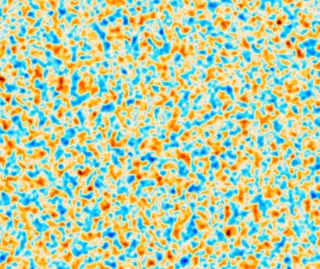
Astronomers using the Atacama Cosmology Telescope have produced the clearest image yet of the cosmic microwave background, revealing light from about 380,000 years after the Big Bang and mapping tiny temperature fluctuations that seeded the formation of galaxies. The improved data tighten constraints on cosmological parameters, including neutrino masses, and set the stage for future polarization measurements with the Simons Observatory, as researchers seek to connect early-Universe physics with observations of the modern cosmos.

Milky Way and Local Group Ride the Cosmic Tug-of-War Between Mass and Void
space2 months ago

Milky Way and Local Group Ride the Cosmic Tug-of-War Between Mass and Void

The Milky Way and its neighboring galaxies are moving through space at about 2.3 million kilometres per hour, driven by a tug‑of‑war between distant mass concentrations pulling us forward (the Great Attractor and the Shapley Concentration) and a vast, nearly empty region behind us pushing away (the Dipole Repeller). The motion is inferred from the cosmic microwave background dipole, showing the Local Group sliding toward denser regions while being repelled by emptiness, a phenomenon shaped by the universe’s large‑scale structure.

TV Snow Carried the Universe’s Oldest Light, Mostly Hidden in Plain Sight
science3 months ago

TV Snow Carried the Universe’s Oldest Light, Mostly Hidden in Plain Sight

A Space Daily explainer shows that some analog TV static came from the cosmic microwave background, the faint relic light from the early universe, though the exact share is device- and environment-dependent and often overstated as a fixed percent. Most of the snow was from the TV set itself and terrestrial noise, not the CMB. The CMB was discovered by Penzias and Wilson in 1964–65 and interpreted as Big Bang relic light by Dicke’s group; it dates to about 380,000 years after the Big Bang (recombination) and has cooled to ~2.7 kelvin today. With analog broadcasting retired, the historical “oldest light” is a memory, though the science remains.

High-Altitude Submillimeter Eye Opens on Chilean Summit
science4 months ago

High-Altitude Submillimeter Eye Opens on Chilean Summit

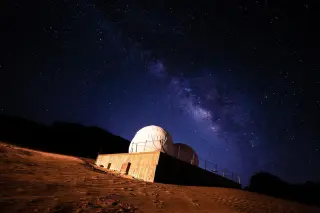
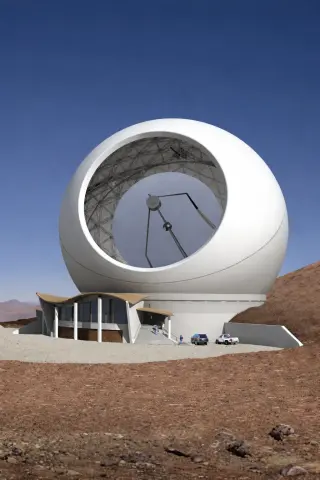
Chile’s Cerro Chajnantor summit hosts the Fred Young Submillimeter Telescope (FYST), a 6‑m instrument designed for rapid, wide-field surveys in submillimeter light using a Crossed-Dragone design and Prime Cam with up to seven detector modules and about 100,000 superconducting detectors. The dry, high-altitude site enables deep, dust-penetrating observations to map the cosmic microwave background, galaxy clusters, star formation, and the epoch of reionisation. Built for CCAT Observatory by an international collaboration, FYST represents 34 years of effort and will soon begin delivering unprecedented views of the universe.