Tag

Gelatin

All articles tagged with #gelatin

Gelatin Desserts May Boost Gut, Joints and Skin Health
health16 days ago

Gelatin Desserts May Boost Gut, Joints and Skin Health

Gelatin-based, low-calorie desserts are highlighted as a way to support gut health, joint strength and aging due to the amino acids in collagen. Gelatin can help skin and cartilage, aid gut lining and calcium absorption via lysine, and may reduce inflammation with glycine. The dessert is low in calories (about 10 per tablespoon) and provides roughly 6 g protein, 2 g sugar and no fat; NIH guidance suggests 5–15 g daily if taken as a supplement for up to six months, though human evidence is still limited and much of the data comes from animal studies.


Gelatin pre-meal trick isn’t Ozempic, dietitians say
health22 days ago

Gelatin pre-meal trick isn’t Ozempic, dietitians say

A viral pre-meal mix of warm water and unflavored gelatin may briefly increase fullness and help with portion control by expanding in the stomach and triggering a gut hormone, but it is not a substitute for prescription GLP-1 drugs like Ozempic/Wegovy. Treat it as a low-cost pre-meal appetite aid, not a meal replacement, and be aware of nutritional risks (gelatin is not a complete protein and can create amino acid gaps if relied on long term). For healthy adults, the suggested approach is 1 tablespoon gelatin in hot water, then diluted with room-temperature water or tea, 15–30 minutes before one daily meal, and consult a physician if pregnant, breastfeeding, kidney disease, or allergies.

The Science Behind Jell-O's Ingredients and Nutritional Value.
food3 years ago

The Science Behind Jell-O's Ingredients and Nutritional Value.

Gelatin dessert, commonly known as Jell-O, is made by mixing powdered gelatin with hot water, sweeteners, flavorings, and sometimes fruit or other ingredients. Gelatin, the primary ingredient in Jell-O, is derived from collagen, a protein found in the connective tissues, bones, and skin of animals. It is not considered a nutritious food on its own since it doesn't provide significant amounts of vitamins or minerals, but it is low in calories and fat and doesn't contain cholesterol. Hospitals serve Jell-O because it's easy to swallow and digest, provides hydration, and can be used to create coatings for pills or capsules.

Uniform DNA-encapsulating microgels mimic living cells.
science3 years ago

Uniform DNA-encapsulating microgels mimic living cells.

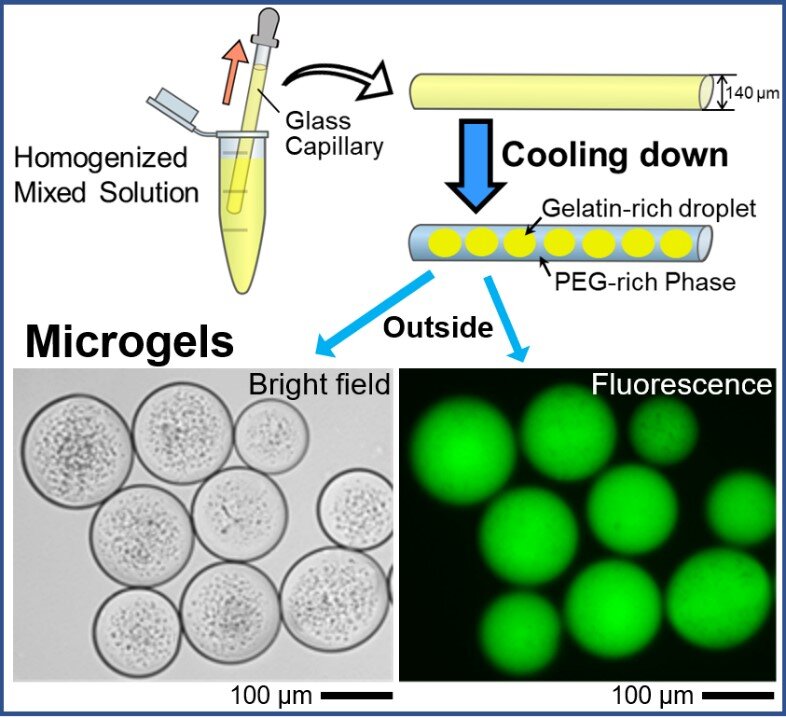
Researchers from Doshisha University in Japan have developed a one-step method for producing uniform gelatin-based cell mimetics called "microgels" that can be used to study cellular self-assembly. The microgels are created by generating domain structures comprising of polyethylene glycol (PEG) and gelatin, which are transformed into gel state by decreasing the temperature. The addition of DNA molecules to the gelatin-rich droplets spontaneously entrap them, giving rise to cell-mimicking microgels. The method proposed in the study may be useful for producing microgels for food, medicines, cosmetics, and other materials.