Tag

Global Population

All articles tagged with #global population

Pew Projections: Islam to Overtake Christianity by 2035 as Fertility Gaps Reshape Global Faith
world8 days ago

Pew Projections: Islam to Overtake Christianity by 2035 as Fertility Gaps Reshape Global Faith

A new Pew Research Center study projects that Islam will surpass Christianity as the world's largest religion by 2035, driven primarily by higher Muslim fertility rates and younger age profiles. By 2070, Muslims are expected to number 3.64 billion, while Christians will reach just under 3 billion. The report highlights shifting geographic centers of faith, with sub-Saharan Africa becoming the dominant hub for Christianity and Pakistan overtaking Indonesia as the country with the largest Muslim population. In India, the Hindu share of the population is projected to decline from 79% to 76%, while the Muslim share rises from 15% to 20%, a shift attributed to demographic momentum rather than conversion.

Pew Projects Islam to Overtake Christianity by 2035, Driven by Fertility and Youth
world8 days ago

Pew Projects Islam to Overtake Christianity by 2035, Driven by Fertility and Youth

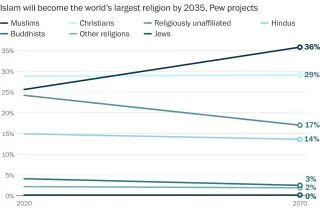
A new Pew Research Center report projects that Islam will become the world's largest religion by 2035, surpassing Christianity. This shift is attributed to higher fertility rates and younger age structures among Muslims, not mass conversions. By 2070, the global Muslim population is expected to reach 3.6 billion, while Christians will number just under 3 billion. The report also highlights a major geographic shift, with sub-Saharan Africa becoming the center of Christianity and the United States losing its Christian majority.

Pew Projects Islam to Surpass Christianity by 2035 as Africa Becomes Christian Hub
global-affairs9 days ago

Pew Projects Islam to Surpass Christianity by 2035 as Africa Becomes Christian Hub

A new Pew Research Center study projects that Muslims will outnumber Christians globally by 2035, driven by higher fertility rates and younger age profiles. By 2070, the Democratic Republic of Congo is expected to replace the United States as the nation with the most Christians, while sub-Saharan Africa will host over half of the world’s Christian population. Conversely, North America is projected to lose its Christian majority, with unaffiliated individuals rising to 41% of the U.S. population.

Genetic Evidence Confirms Globe Skimmer Dragonfly as World’s Longest-Distance Flying Insect
science3 months ago

Genetic Evidence Confirms Globe Skimmer Dragonfly as World’s Longest-Distance Flying Insect

A 2016 study by Rutgers University researchers, recently highlighted in a Times of India feature, confirms that the globe skimmer dragonfly (Pantala flavescens) is the world’s longest-distance flying insect. By analyzing DNA samples from six continents, scientists found that the species forms a single, interbreeding global population rather than isolated regional groups. This genetic evidence supports estimates that the dragonfly travels over 4,400 miles, surpassing the monarch butterfly’s migration range. The study attributes this capability to specialized wing structures that allow energy-efficient gliding and a migration pattern driven by seasonal moisture availability.

Global Cancer Incidence and Mortality Rates Surge in 2022
health2 years ago

Global Cancer Incidence and Mortality Rates Surge in 2022

The release of 2022 cancer data reveals that global cancer cases could increase by 77% by 2050 due to population growth, with nearly 20 million new cases and 9.7 million deaths reported in 2022. Lung cancer, female breast cancer, colorectal cancer, prostate cancer, and stomach cancer are the most common types globally, with prevalence varying by region and human development level. The study emphasizes the need for targeted cancer control measures, including prevention efforts to address key risk factors such as smoking, obesity, and infections.

"Global Cancer Burden Set to Surge with Aging Population: New Study"
health2 years ago

"Global Cancer Burden Set to Surge with Aging Population: New Study"

A new report predicts that the number of cancer cases will continue to rise, reaching 35 million annually by 2050, largely due to the aging global population. Unhealthy lifestyle choices also contribute to the increasing burden of cancer. Lung cancer remains the most commonly diagnosed and leading cause of cancer death worldwide, with prevention, including tobacco control and HPV vaccination, offering the most cost-effective strategy for cancer control. Inadequate screening and treatment services in low-income countries contribute to high cancer death rates despite fewer overall cases.

Global Life Expectancy Drops Significantly Due to COVID-19
health-global-affairs2 years ago

Global Life Expectancy Drops Significantly Due to COVID-19

A new Lancet study revealed that the global average life expectancy dropped by 1.6 years during the first two years of the Covid-19 pandemic, with the United States experiencing the highest excess mortality rate among high-wealth nations. Global mortality rates, which had been declining for 70 years, saw a significant increase during the pandemic, leading to a 22% rise in mortality for men over 15 and a 17% rise for women. While global deaths in children declined, the pandemic had a profound impact on adult mortality, with 84% of countries experiencing a decline in life expectancy. The study also highlighted the impact of population changes on global health, including an aging population and potential social, economic, and political challenges.

Global Water Crisis: A Quarter of Humanity Faces Extreme Water Stress
environment3 years ago

Global Water Crisis: A Quarter of Humanity Faces Extreme Water Stress

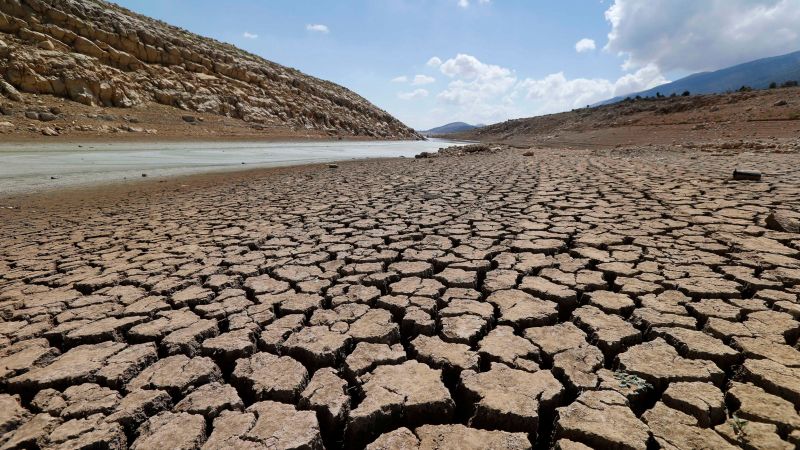
A new report by the World Resources Institute warns that a quarter of the world's population currently faces extreme water stress, with an additional 1 billion people expected to be affected by 2050. The report highlights the soaring demand for water, driven by factors such as population growth and unsustainable water use policies, along with the accelerating climate crisis. The Middle East and North Africa are predicted to be the most water-stressed regions, with sub-Saharan Africa experiencing a 163% increase in water demand by 2050. The report emphasizes the need for urgent action, including nature-based measures, efficient watering techniques, and renewable energy sources, to prevent water stress from turning into a global water crisis.

food-and-health3 years ago

"The Impact of Going Vegetarian: Global Rates and Personal Health Effects"

India has the highest rate of vegetarians, with nearly 24% of the population following a vegetarian diet, followed by Mexico, Brazil, and Taiwan. Vegetarianism is influenced by cultural beliefs, such as non-violence towards animals, and health-conscious choices. Countries like Croatia and Chad have significant differences in vegetable consumption per capita, reflecting efforts to maintain health standards and agricultural abundance. Vegetarianism is considered a sustainable food choice, but it is still not as popular globally, with 86% of respondents surveyed in 21 countries stating that their diet contains meat. Several companies, including Beyond Meat, Kellogg Company, and Tyson Foods, are innovating to create meat alternatives and cater to the growing demand for vegetarian products.

"The Intersection of World Population, Women's Reproductive Health, and Climate Goals"
world3 years ago

"The Intersection of World Population, Women's Reproductive Health, and Climate Goals"

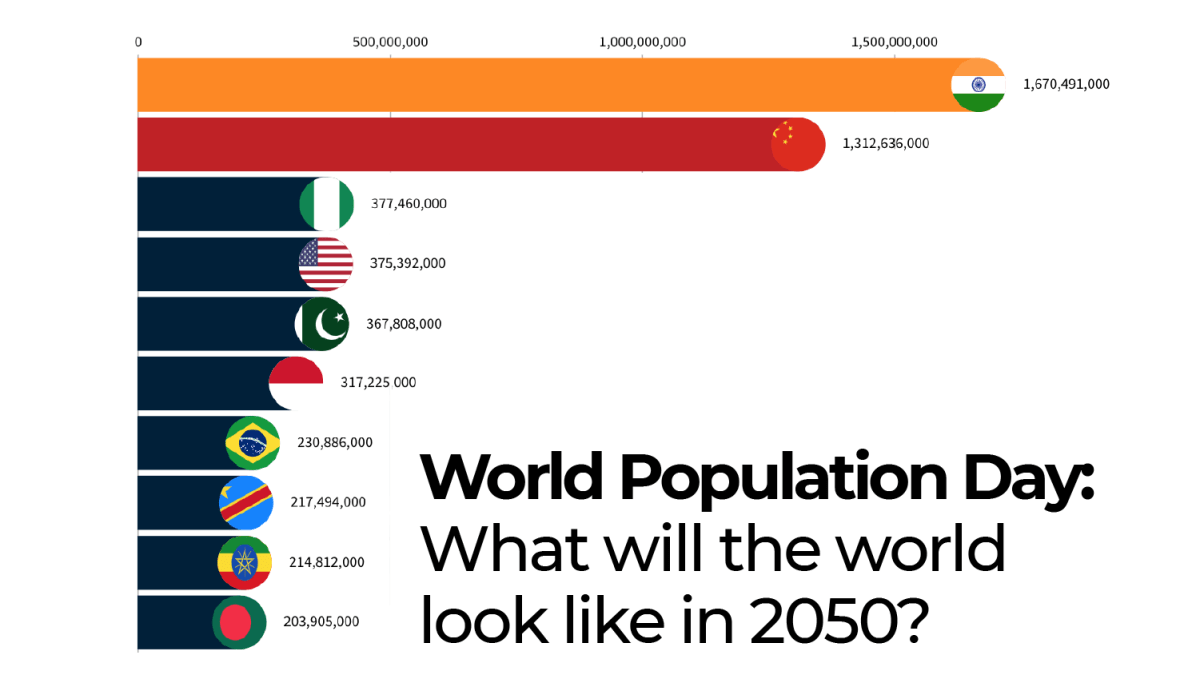
On World Population Day, the United Nations highlights the urgency of population issues. The global population reached eight billion in 2022, with India surpassing China as the most populous country. While population growth is slowing, declining birth rates in countries like South Korea, Japan, and China pose challenges. By 2050, Nigeria is projected to become the third most populous nation, followed by the United States, Pakistan, Indonesia, Brazil, the Democratic Republic of the Congo, Ethiopia, and Bangladesh. Africa is the fastest-growing continent, while Europe and East Asia face shrinking populations. The global median age is now above 30 years. The world's population is expected to peak at around 10.4 billion in the 2080s and remain at that level until 2100.