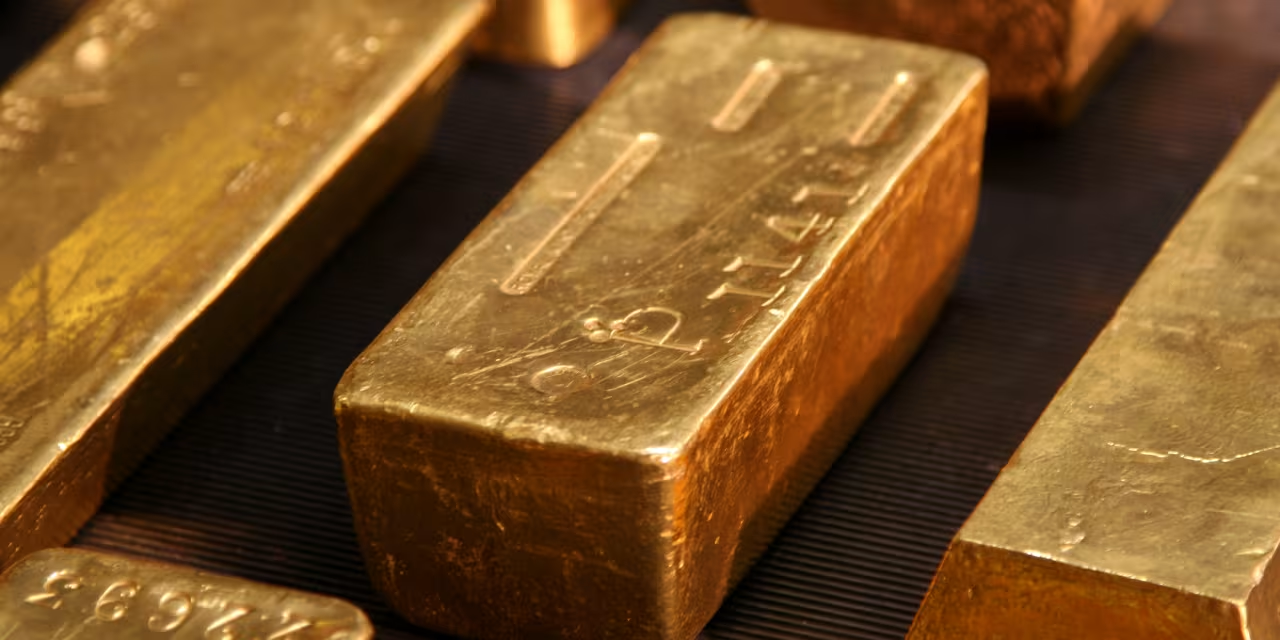
Gold extended its rally despite only modest shifts in U.S. initial jobless claims, with spot prices around $4,467/oz as traders weigh the labor market’s resilience against expectations for Fed policy and upcoming non-farm payrolls data.
Stocks fell on Aug. 11 as hopes for a U.S.-Iran deal faded, with the Dow sinking over 180 points and the S&P 500 and Nasdaq retreating, while gold settled at a two‑month high amid caution ahead of inflation data.
UBS expects gold to climb to $5,000 per ounce in the first half of 2027, though near-term risks remain as Middle East tensions and inflation concerns influence markets. Spot gold hovered around $4,295/oz, having fallen about 23% from a January record. The Fed left rates at 3.50%–3.75%; UBS sees inflation moderating gradually, keeping rates on hold this year and resuming a easing cycle in 2027, with weakness toward $4,000/oz potentially a buying opportunity.
If inflation stays elevated, gold is likely to stay strong or rise through 2026 as investors seek a haven outside fiat currencies, with a forecast near $5,000 per ounce. A Federal Reserve rate hike could choke demand and push prices down, while easing inflation may reduce hedging demand but prices should remain elevated due to central-bank demand, geopolitical risk, debt and diversification needs. Experts advise buying on dips and aiming for a 5-10% gold allocation in a long-term portfolio, rather than trying to time the exact bottom.
Gold futures fell about 2.5% to roughly $5,181 an ounce as escalating Middle East tensions coincided with a stronger dollar, tempering gold’s haven appeal as traders liquidated positions to cover losses; mining stocks dropped, and the S&P 500 futures slipped, while investors weighed energy-price signals and a higher odds of a June Fed hold.
Gold rose back above $5,000/oz in Asian trading as renewed U.S.–Iran tensions boosted haven demand, with spot gold up about 2.3% to $5,060.28/oz and April futures up 2.9% to $5,078.96/oz. Gains followed reports of U.S. forces shooting down an Iranian drone and Iranian gunboats near a tanker in the Strait of Hormuz, even as talks between Tehran and Washington were expected later this week. Analysts say the rally is supported by haven demand, physical buying, and central-bank purchases, keeping gold up about 15% in 2026. Silver rose ~2.8% to around $87.50/oz and platinum ~3% to about $2,286/oz, with OCBC noting the strength could persist and projecting further targets for year-end; some profit-taking after a prior run toward record highs was also noted.
Gold fell about 7% and silver as much as 15% after Donald Trump named Kevin Warsh to head the Fed, boosting the dollar and prompting traders to reprice expectations for monetary policy as the market tempered the previous debasement rally.
Gold has surged about 17% this year, climbing past $5,000 per ounce as political headlines—especially Donald Trump's threats against America's European allies—boost demand for the safe-haven metal.
Gold futures surged above $5,000 for the first time, continuing a sharp rally fueled by geopolitical uncertainty, concerns about Federal Reserve independence, and fears of a US government shutdown, while silver also extended gains as part of a broader precious-metals rally; the move comes as Gold has outperformed the S&P 500 so far this year.
Gold is rallying toward $5,000 as escalating geopolitical tensions and renewed concerns about Federal Reserve policy boost demand for bullion, reinforcing its status as a safe-haven asset amid inflation worries and potential rate moves.
Gold prices rose by 0.9% to $4,368.30 per ounce following increased geopolitical tensions after the U.S. captured Venezuelan President Nicolás Maduro, supporting gold demand as a safe-haven asset amid global political unrest.
Gold prices remained steady around $3,992 per ounce amid mixed US employment data, with potential rate cuts by the Fed influencing demand, and gold continuing its long-term upward trend.
Gold prices have fallen below $4,000 an ounce as the market's 'froth' subsides, indicating a cooling in the recent rally and potential shifts in investor sentiment.
Gold prices are declining after a record-breaking run, with a recent sharp drop and technical overbought signals prompting a pause in its nine-week winning streak. Factors influencing the market include trade talks between the US and China, concerns over overbuying, and upcoming US inflation data, which investors are watching closely.