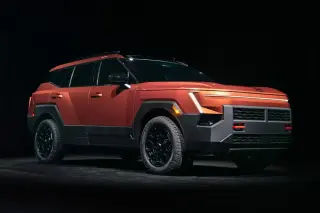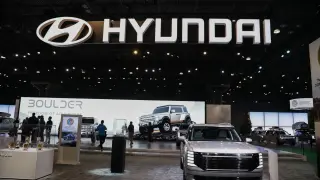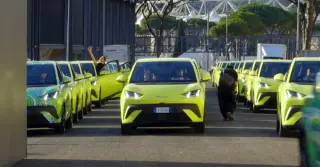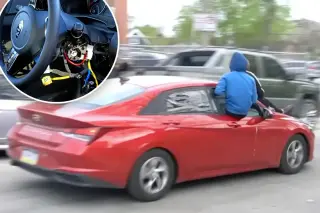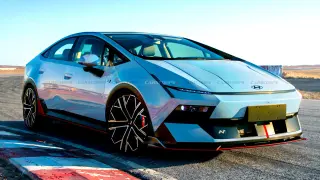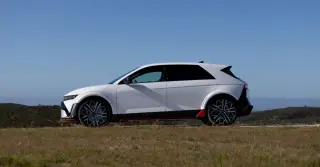
The Carscoops piece imagines an IONIQ V N by Hyundai's N division, blending the IONIQ V's Lamborghini-like styling with an N-level drive experience—potentially leveraging the Ioniq 6 N's 601–641 hp and even a patented electronic manual transmission, plus upgraded chassis and interior to echo the Elantra N.
Hyundai says the IONIQ 5 N’s virtual gear shift and N Active Sound+ are just the start, with future N EVs set to gain more realism—potential features include idling, exhaust backfiring, and cabin vibration—while the company moves to a new IMA platform that preserves 800V charging and promises incremental gains in thermal management and efficiency, building on the IONIQ 5 N and IONIQ 6 N.
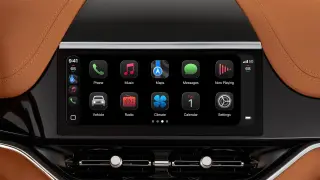
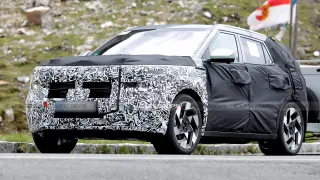
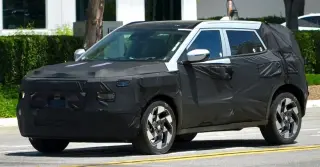
Hyundai is developing the third-generation Kona for the 2028 model year, previewed by spy shots that suggest a boxier, less quirky design with sharper A-pillars and revised lighting. The new Kona is expected to offer multiple powertrains—ICE, hybrid, and all-electric—with a possible range-extender, and will ride on Hyundai’s K3 platform with the Pleos Connect infotainment system.
Hyundai is launching a completely new third-generation Kona EV with a bolder, boxier, rugged look (mirroring the Santa Fe/Tucson family and inspired by the Crater Concept) and a refreshed Pleos Connect infotainment system. Prototypes spotted in Korea, the US, and Europe suggest a design shift from a mid-cycle refresh, with a launch expected around 2027 for the 2028 model year and powertrain options including pure electric, hybrid, and gasoline.
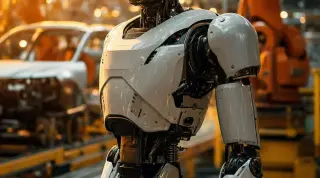
Hyundai Motor Group will pay $325 million to buy SoftBank's remaining 9.65% stake in Boston Dynamics, gaining full ownership and signaling a shift from demos to production. Atlas is slated to begin in Hyundai's Georgia Metaplant by 2028 with sequencing tasks first, expanding to heavier automation by 2030, aided by Hyundai Mobis components; SoftBank pivots toward AI infrastructure via Roze AI, while Boston Dynamics becomes a manufacturing platform within Hyundai's ecosystem.
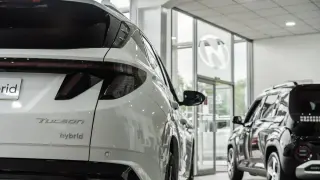
Hyundai is recalling more than 421,000 2024–2026 vehicles (including 2025–2026 Santa Cruz and Tucson in both gas and hybrid forms) after the NHTSA found a software glitch that can cause the forward-c collision-avoidance system to brake unexpectedly; 376 reports of unexpected braking were logged between Oct 2024 and Apr 2026. Owners will be notified by July 17 and can check the recall status by VIN or license plate in the NHTSA database; Hyundai dealers will install a software update. The recall also covers related Hyundai models such as Elantra Hybrid (2024–2026), Ioniq 5 (2025), and Ioniq 9 (2026).
Hyundai and Hyundai Glovis demonstrated the Interoceanic Corridor of the Isthmus of Tehuantepec by moving 900 vehicles from South Korea to Brunswick, Georgia in about 72 hours: rail from Salina Cruz to Coatzacoalcos (Line Z) followed by a second ocean leg, illustrating a fast, multi-modal route that could reduce reliance on the Panama Canal amid climate-driven water constraints. The corridor—with Lines Z, FA, and K—is expanding, but full capacity isn’t expected until mid-2026, and the project faces Indigenous land-use concerns and a safety incident in 2025.
Hyundai halted sales of the 2026 Palisade Limited and Calligraphy after a fatal Ohio incident and is finalizing a recall for about 68,500 units due to power-folding second- and third-row seats that may not detect contact, potentially crushing occupants. An interim over-the-air software update to improve contact detection will be deployed by the end of March; a formal recall and dealer repairs will follow at no cost, with rental cars offered until a full fix is available. The NHTSA is involved.
A used-car dealership won nearly $10 million in a court case against Hyundai after a judge found that Hyundai destroyed evidence and lied, highlighting a high-stakes legal dispute over corporate conduct in the auto market.
Hyundai is discontinuing the Ioniq 6 in the US for 2026, keeping only the high‑performance Ioniq 6 N; tariff costs and the removal of the $7,500 EV tax credit helped drive weak sales. The car’s distinctive design and strong range could make it a compelling used EV, with the Ioniq 6 N still expected around $70k and many new units remaining on dealer lots.
Hyundai will discontinue the regular Ioniq 6 in the U.S. for 2026 and will only offer the high-performance Ioniq 6 N, which is set to arrive later in 2026 with 641 hp (601 hp standard) and enhanced performance, as weak sales and tariff considerations weighed on the model's future; 2025 Ioniq 6 sedans remain at dealers for now, and the car features 800-volt charging with fast 350 kW charging capability.
Consumer Reports warns that Hyundai, Kia, and Genesis electric vehicles can experience ICCU (Integrated Charging Control Unit) failures that compromise the 12-volt system and cause power loss or inoperable features, even with adequate main-battery charge. CR surveyed about 380,000 owners; ICCU-related issues affected roughly 2–10% of Hyundai/Kia EV owners, far higher than typical charging problems. The fault stems from a transistor in the ICCU failing due to overvoltage at the start or end of charging. Repairs vary from software updates to replacing the ICCU and fuse plus a coolant flush, with some costs reimbursed. Hyundai says parts are shipping and some expenses will be reimbursed; Kia has parts in stock; Genesis did not comment. The Ioniq 5 performed relatively well in CR’s testing, but ICCU reliability drags overall scores and recalls have occurred in the past.
Hyundai Motor Group did not exercise its option to repurchase its former factory in St. Petersburg by the January deadline, making it the second foreign carmaker to lose the buyback right as sanctions and the war in Ukraine continue to reshape Russia’s auto market. Hyundai and Kia suspended operations in 2022; Hyundai sold the plant to AGR Automotive Group in 2024 for 140,000 won and its vehicles have since been marketed under the Solaris brand, while Hyundai says it will still provide warranty and after-sales support for vehicles already sold. Mazda was the first to lose buyback rights in November 2025, and other brands such as Renault, Mercedes-Benz, Volkswagen, and Toyota have exited Russia, leaving Chinese automakers to fill the gap.
Hyundai Motor Group plans to deploy humanoid Atlas robots at its Georgia factory from 2028 to automate high-risk and repetitive tasks, with expansion into assembly and complex operations by 2030, aiming to enhance safety and efficiency in manufacturing.
Hyundai, owning Boston Dynamics, is making significant strides in humanoid robotics, challenging Tesla's ambitious robot plans and shifting the narrative around robot dominance from Tesla to Hyundai/Boston Dynamics, with Hyundai emphasizing practical, manufacturing-ready robots and Tesla's Optimus still in development.